
Rice Water for Skin, Explained: What a 2024 Review Calls Scarce Evidence, and What Fermented Rice Bran and a Rice Drink Studies Actually Tested
Rice water is one of the longest-running beauty traditions on social media: soak or rinse rice, keep the cloudy liquid, and put it on your face. Skincare brands have followed with rice toners, rice essences and "fermented rice water" ampoules. The marketing language is confident. The published research is much thinner than the language suggests, and much of it concerns something other than the liquid in your kitchen. This article sorts what has actually been studied from what has only been repeated. It summarizes published research and does not predict how your own skin will react.
What "rice water" can mean
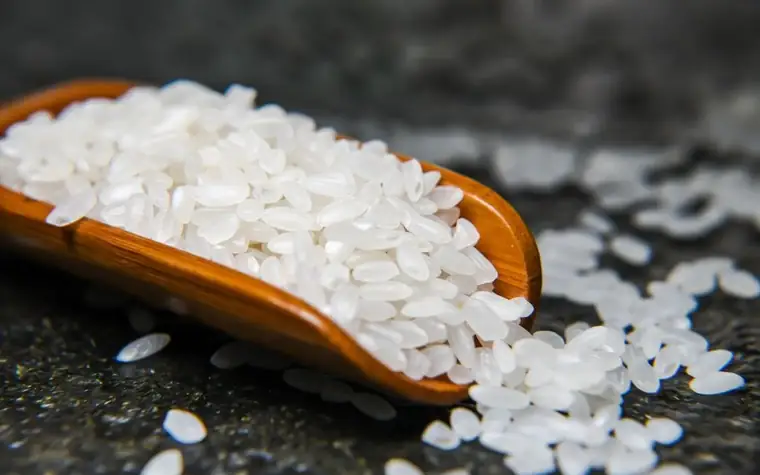
The phrase covers at least three different things. The first is the water left after soaking or rinsing raw rice, which is mostly water with traces of starch and whatever dissolves out of the grain. The second is the water from boiling rice, which carries more starch. The third is a fermented version, where the liquid is left for a period so microbes act on it, or where a manufacturer ferments rice or rice bran in a controlled process. These are not interchangeable, and a study on one tells you little about the others.
What the review literature and a TikTok analysis say
A 2024 systematic review in the Journal of Food Science and Technology collected the traditional and scientific uses of rice-washed water, covering plant growth, Ayurveda, food and cosmetics. It describes the water as a source of minerals and nutrients, but its own conclusion is notable: it states that there is little research on rice-washed water and that its conventional uses need more scientific validation. That sentence is the most useful starting point for any claim you read. A tradition can be long without being tested.
A 2025 cross-sectional analysis in the Journal of Cutaneous Medicine and Surgery looked at how rice water for hair and skin is presented on TikTok. I could only access the citation, not the abstract, so I am not going to summarize its numbers. The existence of a dermatology journal paper on the trend is itself informative: researchers have studied what people say about rice water more than they have measured what it does to skin. Treat video claims as claims, not as evidence.
What was tested on fermented rice bran
The closest thing to laboratory evidence concerns rice bran, not rice water. A 2025 study in Frontiers in Pharmacology fermented a rice bran extract with the mold Aspergillus oryzae for 14 days and analyzed its contents. It reported eight key compounds, including azelaic acid, ferulic acid, gamma-tocotrienols and squalene. In cultured cells the extract increased collagen expression, and in mice the authors reported about 10% more skin collagen and more than 10% higher moisture content and elasticity than untreated animals. Those are cell and mouse results from a purpose-built extract. They suggest a mechanism worth studying; they do not show that a rice-water toner changes human skin.
A human trial that used a drink, not a toner
A randomized, double-blind, placebo-controlled trial published in 2022 in Clinical, Cosmetic and Investigational Dermatology tested koji amazake, a non-alcoholic Japanese drink made from rice fermented with Aspergillus oryzae. Sixty adults concerned about dry skin were split into two groups of 30, and the drink group consumed 118 g a day for 8 weeks. Cheek water content in the drink group stayed about level (a change of 0.19), while the placebo group dropped by 3.98. Transepidermal water loss did not differ significantly between the groups, and the effect appeared only on the left cheek. The authors pointed to glucosylceramide in the drink as a possible reason. This was an oral product, so it cannot be used to support a topical one.
Antioxidant research on soaked rice water
A 2025 paper in Antioxidants isolated plant-derived nanovesicles from soaked rice water and found gamma-oryzanol, an antioxidant from rice bran, in them. The vesicles were non-toxic to cultured keratinocytes, and brown-rice versions showed stronger antioxidant activity in those cells than gamma-oryzanol alone. It is a laboratory study of an isolated fraction made by precipitation, not a test of the cloudy water you would pour on your face. It does show that soaked rice water is chemically more than plain water, which is a reasonable thing to say and a long way from a skin-benefit claim.

Practical points for homemade and bottled versions
Homemade rice water has no preservative system. A water-and-starch liquid left at room temperature is a food for microbes, so smell and appearance can change, and putting a spoiled liquid on skin is an avoidable risk. Fermenting it at home makes the result even less predictable than a factory process. Bottled products contain preservatives and a defined formula, which is a different thing from the kitchen version. On a label, look for Oryza sativa in the ingredient list and wording such as extract, ferment or filtrate, and note that the percentage is not disclosed. If you already use a fragrance-heavy toner, our explainer on fragrance-free versus unscented labels covers a more common source of reactions.
How it relates to other brightening and fermented claims
Rice water is often marketed for brightening, and that is the claim with the least direct support in the studies above: none of them measured pigment in human skin. If you want to understand how a brightening ingredient is actually tested, our article on kojic acid and tyrosinase inhibition shows what a concentration-based claim looks like. The broader pattern of microbe-processed ingredients is covered in our guide to fermented ingredients in K-beauty, and a comparable case of an ingredient whose natural source varies is propolis extract.
What the research does not settle
No source here is a controlled trial of topical rice water on human skin. The review calls the evidence scarce, the fermented bran work used cells and mice, the one human trial used a drink, and the antioxidant paper was done on isolated vesicles in cultured cells. Rice-containing products may feel pleasant and may suit you, but that is a personal observation rather than a research finding. Rice-derived products can also irritate some people, as any botanical can.
This article summarizes published research and is not medical advice. Patch test any new product first, following our guide to patch testing a new skincare product, and consult a dermatologist if your skin reacts or the problem persists.
All content is fact-checked under our editorial standards.