
Kojic Acid, Explained: The Tyrosinase Inhibitor That Struggles to Survive the Bottle It Ships In
Kojic acid shows up on ingredient lists as a brightening agent almost as often as vitamin C or arbutin, but it works through a completely different mechanism, has a much narrower safe concentration range, and has a genuine formulation problem the other two don't share as severely: it tends to fall apart in the bottle before it ever reaches your skin.
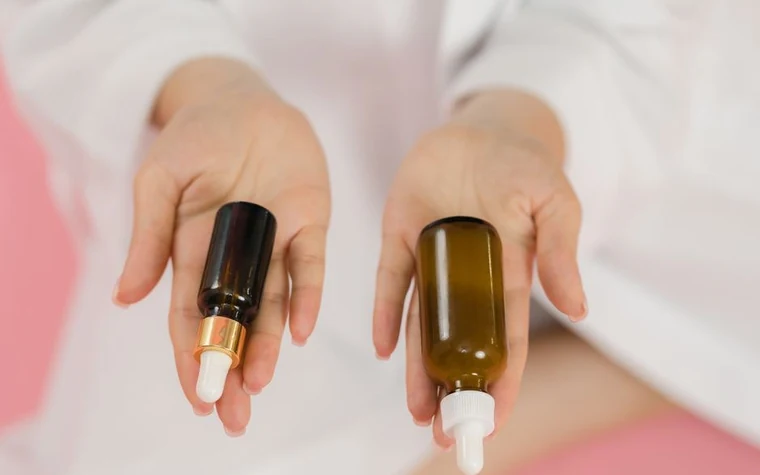
What it actually is
Kojic acid is a byproduct of fermentation -- it's produced by certain species of Aspergillus and Penicillium fungi, the same genus used to ferment soy sauce and sake, which is where it was first isolated. It isn't a synthetic acid in the AHA/BHA sense; it's a small organic molecule that happens to share tyrosinase-inhibiting behavior with several other pigmentation ingredients, arrived at through an entirely separate chemical path.
How it fades pigmentation: copper, not oxidation
Tyrosinase, the enzyme that drives melanin production, needs a copper ion sitting in its active site to function. Kojic acid's main mechanism is chelating that copper -- binding it and pulling it out of the reaction -- which is why researchers classify it as a mixed-type tyrosinase inhibitor rather than a simple competitive one. This is mechanistically distinct from vitamin C, which mostly interferes further downstream in the pigmentation pathway, and from tranexamic acid, which works upstream by blocking UV-triggered inflammatory signaling rather than touching the enzyme directly.
The concentration ceiling is lower than you'd guess
Safety reviews from the Cosmetic Ingredient Review (CIR) panel point to cytotoxicity concerns above roughly 1%, and while some data supports use up to about 2%, the panel's conclusion was that dermal sensitization and any meaningful skin-lightening effect are unlikely to show up at concentrations below 1% in the first place. That's a much tighter window than niacinamide or most peptides get, and it's a large part of why kojic acid rarely appears as the sole active in a product -- formulators tend to pair a modest dose of it with arbutin, azelaic acid, or vitamin C rather than push the concentration up on its own.
Why it degrades in the bottle
Kojic acid is genuinely unstable: it's sensitive to light, heat, and oxidation, and its effectiveness erodes with pH drift and temperature swings well before a jar reaches its use-by date. This isn't a minor packaging footnote -- a kojic acid serum stored on a sunny windowsill or a bathroom shelf that gets warm and humid can lose meaningful potency months before the product is finished. It's also part of why kojic dipalmitate, a more stable derivative, shows up in some formulations as a substitute or partner ingredient, trading some raw potency for a molecule that actually survives shelf life.
What that means for the bottle you buy
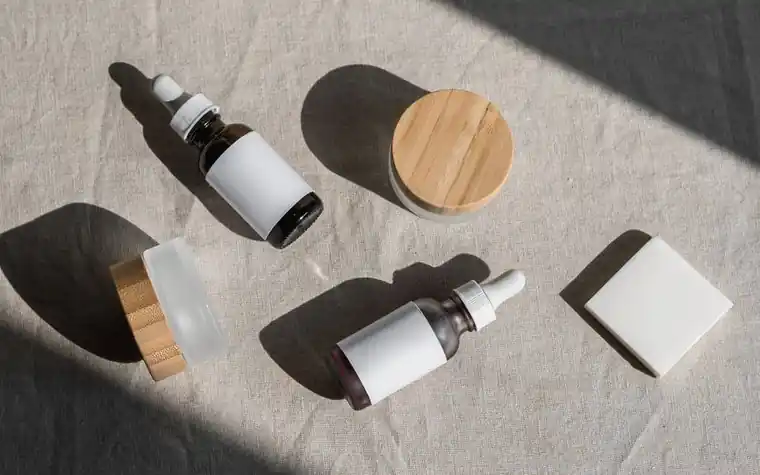
Opaque, airless-pump packaging does more real work for a kojic acid product than for most other actives, since it blocks the light and air exposure that specifically drive this ingredient's breakdown. A clear glass jar you scoop with a finger is close to the worst-case packaging for kojic acid -- every open-and-close introduces air, and any light exposure during storage chips away at what's left. If a brand doesn't disclose which form (free kojic acid vs. kojic dipalmitate) or concentration it's using, that's a harder ingredient to evaluate on trust alone than most.
The irritation trade-off
Kojic acid carries a real sensitization risk that's part of the reason its safe concentration ceiling sits where it does -- contact dermatitis, redness, and erythema are documented reactions, more so than with gentler brighteners like alpha arbutin. Anyone with reactive or already-compromised skin barrier function is more likely to notice irritation from it than from niacinamide, and layering it with other exfoliating actives on the same night raises that risk rather than compounding the brightening benefit.
Where it fits next to the other pigmentation ingredients
This site has already covered the mechanism differences between alpha arbutin, tranexamic acid, and vitamin C, and kojic acid's copper-chelation route makes it a fourth, genuinely distinct mechanism rather than a repeat of any of those three. It's sometimes combined with azelaic acid, which works through a separate pathway again, and both frequently appear in routines built around melasma and sun-triggered pigmentation, where combining mechanisms is common practice rather than redundancy.
Bottom line
Kojic acid earns its place in pigmentation-focused routines through a mechanism none of the other common brighteners use, but it demands more from both the formulator and the user than most: a tight concentration ceiling, packaging that actually protects it from light and air, and a higher baseline irritation risk to watch for. This article explains ingredient mechanisms and does not diagnose or treat any skin condition -- persistent or worsening pigmentation is worth a dermatologist's evaluation, and any new kojic acid product should be patch-tested before it goes on your face.
All content is fact-checked under our editorial standards.