
Heartleaf (Houttuynia Cordata) Toners, Explained: What an 8-Week Trial With 0.05% Extract Found, and Why the Plain Toner Nearly Matched It
Heartleaf (Houttuynia cordata) anchors a whole shelf of K-beauty toners, and the labels usually imply it controls oil. The human evidence is one small 2023 trial, and its own tables tell a more cautious story than its abstract.

What is actually in the test toner
The trial, by Anurukvorakun and Numnim in Cosmetics (2023), soaked dried leaves in 95% ethanol and evaporated the solvent, for a 3.85% yield. In the toner the extract was just 0.05% of the formula. The rest was water, 3% glycerin, 0.3% panthenol, surfactants and a preservative.
How the trial was run
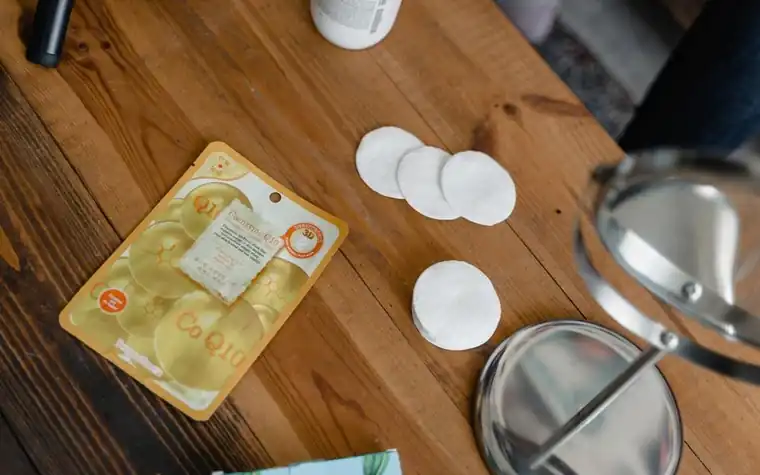
Twenty-one volunteers were recruited and sixteen passed a patch test. They were split into two groups of eight, one using the heartleaf toner and one using an identical toner without the extract. Each person applied ten drops on a cotton pad every morning for eight weeks. Oil and hydration were read with a Sebumeter and a Corneometer.
The sebum numbers, read closely
The abstract highlights a "4.6 times" drop. The table is quieter. In the heartleaf group the average change at week 8 was -31.26 Sebumeter units (p = 0.05). The extract-free group also fell, by -14.79 (p = 0.04). At weeks 5, 6 and 7 the heartleaf change was not statistically significant (p = 0.36, 0.65, 0.16). Working back from the table, the heartleaf group also began near 40 and the other near 30.
The hydration numbers
On the left cheek, the heartleaf group's Corneometer reading rose by 30.44 units at week 8. But the groups started at 58.55 and 76.15, and finished almost level: 88.99 against 90.39 for the extract-free toner. Both bases contained glycerin and panthenol, covered in our pieces on glycerin and panthenol.
The lab work on the essential oil
A 2025 paper in Scientific Reports tested heartleaf essential oil, a different material from the ethanol extract. Its main components were n-decanoic acid (46.21%), beta-myrcene (14.08%) and 2-undecanone (11.01%). In cell and test-tube assays it inhibited several microbes, including Cutibacterium acnes, The authors state it was in vitro only.
What this does and does not support
A test-tube result does not transfer to a toner holding 0.05% extract, and eight people per arm can show a direction, not a size. The fair summary is an eight-week fall in oil that a plain toner nearly matched. Compare our look at mugwort, another herb sold on soothing claims.
Buying and using it sensibly
Check whether the label lists the extract or the essential oil. Plant extracts and fragrance components can irritate some people. Start once a day, as the trial did, and stop if a toner stings. Persistent breakouts belong with a dermatologist, not a toner.
This article describes research and promises no result. Patch test any new product first (see this method), and talk to a dermatologist about any skin concern.
All content is fact-checked under our editorial standards.