
Oily Skin and Moisturizer, Explained: What the AAD Says About Skipping It, Choosing a Gel, and Reading Oil-Free and Noncomedogenic Labels
"I have oily skin, so I skip moisturizer" is one of the most common routine rules, and it is also one the American Academy of Dermatology (AAD) treats with more nuance than the slogan suggests. Its public pages on oily skin and on choosing a moisturizer give specific advice about when to skip, when a gel is the better option, and which label words to look for. This article walks through that published advice, explains the reasoning where the AAD gives it, and marks where the advice stops. It summarizes what a professional body says about product choice, not a treatment plan for your skin.

What the AAD actually says about moisturizer and oily skin
On its moisturizer page, the AAD quotes a dermatologist advising people with oily skin to either skip the moisturizer or choose a gel, which is lighter than other types. The same page adds a caution: too much moisturizer can clog pores and lead to acne. On its separate page about controlling oily skin, the AAD takes a slightly different position and says to apply moisturizer after cleansing to keep skin hydrated. Read together, the advice is not "never" or "always." It is that a heavy product is the thing to avoid, and that the choice between a light product and no product depends on how your skin behaves. The AAD does not give a rule for deciding between the two.
Gel, lotion, cream, ointment: the texture ladder
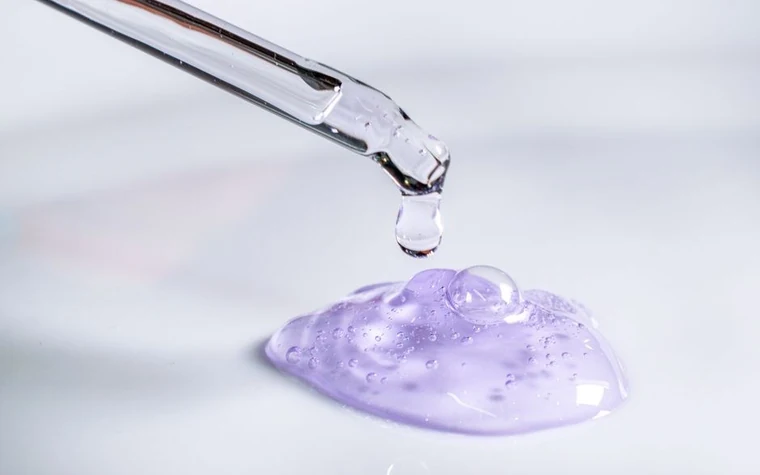
The AAD describes four formulation types in order of thickness. A gel is water-based and tends to feel lighter than a lotion. A lotion sits in the middle. A cream is thicker and has a higher oil content than a lotion or gel, which makes it more hydrating. An ointment is the thickest and, according to the AAD, the most effective for dry skin. For dry skin the page recommends a cream or ointment and skipping lotions altogether, and for oily skin it points the other way, to the light end of the ladder. If you want the underlying chemistry of why products feel different, our explainer on humectants, occlusives and emollients breaks down the three ingredient roles that make up most moisturizers.
"Oil free" and "noncomedogenic" on the label
For oily skin the AAD tells readers to choose products marked "oil free" and "noncomedogenic," and explains that these labels indicate a product will not clog pores or cause breakouts. The moisturizer page repeats the same label advice, suggesting terms such as "oil-free," "non-comedogenic" or "won't clog pores." The AAD describes these as the descriptions to look for. It does not say what testing, if any, stands behind a given brand's claim, so a label is a starting filter rather than a guarantee. If a product still seems to cause breakouts for you, the label does not settle the question, and the ingredient list and your own experience matter more.

Cleansing without stripping
The AAD advises cleansing the face up to twice a day and after sweating, and warns against scrubbing, which it says irritates the skin and makes its appearance worse. It recommends a mild, gentle face wash, and says harsh products can paradoxically trigger more oil production. It also says to avoid oil-based or alcohol-based cleansers for oily skin. Cleanser chemistry is a separate topic, and our piece on cleanser pH and the acid mantle covers what the research shows about soap versus syndet cleansers. The practical point from the AAD is that more washing is not the same as better oil control.
Acids the AAD mentions, and the irritation caveat
Among helpful ingredients for oily skin, the AAD names salicylic acid, glycolic acid and lactic acid, and adds that you should stop using a product if irritation develops. That caveat is important, because the same page that lists the acids also warns against irritating the skin. The AAD does not specify concentrations or frequency on that page. Our ingredient article on salicylic acid (BHA) explains the pH and concentration range recognized in the US over-the-counter framework, which is the detail the AAD page leaves out.
Sunscreen as the moisturizer step
The AAD suggests choosing a moisturizer that contains broad-spectrum sunscreen with SPF 30 or higher, so that two steps become one. For oily skin it recommends sunscreens using zinc oxide and titanium dioxide, and says to skip fragranced or oil-containing sunscreens. This is an interesting detail for people who skip moisturizer entirely: if you do, the sunscreen step still has to happen separately. How the two layers interact is covered in our article on sunscreen before or after moisturizer.
Makeup, blotting and hands
For makeup, the AAD recommends oil-free, water-based products, mentions that those labeled "matte" help minimize shine, and says to remove all makeup before sleep. During the day it recommends blotting papers, pressed gently against the skin for a few seconds rather than rubbed, and avoiding unnecessary face touching, which it says spreads bacteria and oil. These are habits, not products, and they cost little. They also help with a problem moisturizer skipping cannot solve, which is shine that returns within hours.
Combination skin, ingredients to avoid, and when to ask a dermatologist
For combination skin, the AAD moisturizer page quotes a dermatologist suggesting you treat the face as two faces: moisturize the dry spots and skip the oily areas. The same page lists ceramides and hyaluronic acid as ingredients to seek, and fragrance, alcohol and alpha-hydroxy acids among those to avoid in a moisturizer, with a reminder that "all natural" does not mean hypoallergenic. Our explainers on ceramides and hyaluronic acid give the ingredient background. The AAD says to see a board-certified dermatologist if you are concerned about oil production or struggling with blackheads or acne.
This article summarizes one organization's published advice and is not medical advice. Because oily skin can still be dehydrated, it is worth reading how sebum and hydration are measured separately. Patch test any new product first, following our guide to patch testing a new skincare product, and consult a dermatologist if your skin reacts, breaks out repeatedly, or does not improve.
All content is fact-checked under our editorial standards.