
Sulfates in Cleansers (SLS and SLES), Explained: What the CIR Concluded, What Patch Tests at 0.5% Measured, and the FDA's 1,4-Dioxane Position
Sulfates are one of the most argued-over words on a cleanser label. Sodium lauryl sulfate (SLS) and sodium laureth sulfate (SLES) are the two names people usually mean, and they are often described as either harmless foaming agents or as skin-stripping villains. The published record is more specific than either slogan. This article walks through what the Cosmetic Ingredient Review (CIR), the FDA, and a handful of patch-test and cleanser studies actually report, and what they leave open. It summarizes published research and does not predict how your own skin will react.
What a sulfate does in a cleanser
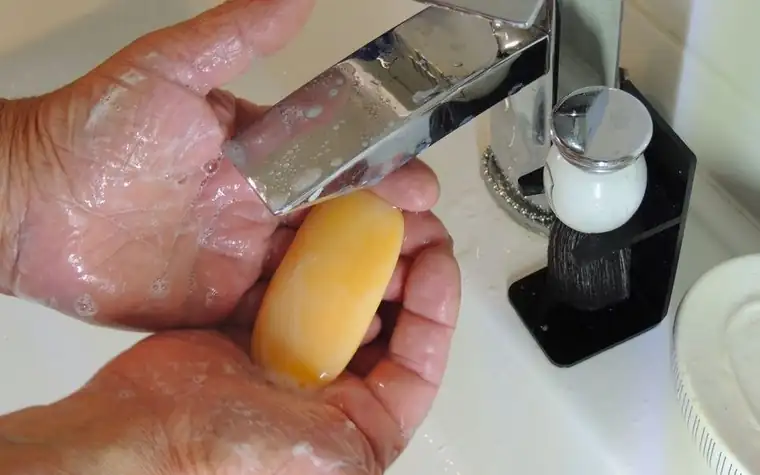
Sulfates are surfactants, molecules with a water-loving end and an oil-loving end. In a face wash they let water lift sebum and dirt off the skin, and they create the lather that many people read as "clean." SLS is the plain version; SLES is the same family with a short ethoxylated chain added, which is why it can carry the prefix "laureth" and why the word "sulfate" alone does not tell you which one you are looking at. Related ingredients such as sodium coco-sulfate belong to the same chemical group.
What the CIR reviews say about SLS and its relatives
The CIR is the industry-funded but independently staffed expert panel that reviews cosmetic ingredients. Its 2010 report on sodium cetearyl sulfate and related alkyl sulfates notes that these surfactants are used at concentrations from 0.1% to 29%, mostly in soaps and shampoos, and that the panel had previously completed a safety assessment of sodium and ammonium lauryl sulfate. The earlier SLS report dates to 1983. Secondary summaries of it describe irritation as concentration dependent, with concentrations below 1% essentially non-irritating and concentrations above 10% producing moderate to strong irritation. I could not open the 1983 text itself, so treat those figures as a summary of a summary and check the CIR directly before quoting them.
For SLES the wording is clearer. The CIR's amended 2010 assessment of sodium laureth sulfate and related salts says it was demonstrated to be a dermal and ocular irritant but not a sensitizer. The panel added that the potential to produce irritation exists, but that in practice these salts are not regularly seen to be irritating because of the formulations in which they are used, and that they should be used only when they can be formulated to be nonirritating. In other words, the regulator-style conclusion depends on the whole product, not on the ingredient name alone.
Why SLS became the skin-irritation yardstick
Dermatology researchers use SLS on purpose, as a reliable irritant, to test how reactive a person's skin is. A 2001 study in the British Journal of Dermatology patch-tested SLS at 0.125%, 0.25%, 0.5%, 1.0% and 2.0% for 3 to 48 hours and measured water loss and blood flow. It concluded that the concentration of SLS influenced the outcome to a larger degree than the exposure time. A separate 2001 study in the European Journal of Dermatology suggested a 48-hour patch with 0.5% SLS on the forearm as a routine screen and treated a mild redness score as normal. These are deliberately occlusive, controlled tests. They show that SLS irritates in a dose-dependent way when held against skin, not that a rinse-off wash does the same.

What a 21-person cleanser comparison measured
A 2019 randomized, blinded half-side study in the Journal of Cosmetic Dermatology compared a standard SLES face cleanser with a botanical cleanser built on disodium cocoyl glutamate, a milder surfactant. Twenty-one healthy volunteers with normal to oily skin used each product twice a day on one side of the forehead for 15 days. The SLES cleanser lowered sebum by day 15, but sebum rose again after a 48-hour break, while the botanical cleanser kept sebum down. Redness measurements showed no irritation from either product. The authors suggested that cleansing without SLES might suit sensitive skin. It is a small study of one SLES product, so it describes that formula, not every sulfate wash.
Residue, hard water and the rinse step
How a surfactant is rinsed matters as much as which one it is. Our summary of an 80-person study in hard water and SLS cleanser residue shows that more cleanser left on skin raised water loss and irritation. That fits the patch-test logic above: contact time and concentration drive the reaction. Our explainer on cleanser pH and the acid mantle covers the other variable that differs between soap-style and syndet cleansers.
The 1,4-dioxane question
SLES, unlike SLS, is ethoxylated, and the FDA notes that 1,4-dioxane can form as a manufacturing byproduct of ingredients with names containing PEG, polyethylene or "-eth-." The FDA states that it is not used as an ingredient in cosmetics but may be present in extremely small amounts, that international safety assessments considered trace levels of 10 ppm or less safe for consumers, and that the substance evaporates readily. It also reports that its surveys found a significant decline over time as manufacturers changed their processes, with many products showing no detectable amount. Whether you accept that level of reassurance is a personal choice; the point here is only that the concern belongs to ethoxylated ingredients, not to plain SLS.
A practical way to read the label
Look for where the surfactant sits in the ingredient list, since listing order reflects amount. Notice whether the product is rinse-off or leave-on, because the concentration studies above concern different exposures. If a wash leaves your face tight or stinging, that is a signal about the whole formula and your rinse habits, not proof that sulfates are the cause. Our guide to irritant versus allergic contact dermatitis explains how clinicians separate those possibilities.
What the research does not settle
None of the sources above ranks sulfate cleansers against sulfate-free ones for everyone, and the one head-to-head study here is small. Many people wash with sulfate products without trouble, and sulfate-free products can irritate for other reasons, including fragrance or preservatives. The studies describe concentrations and test conditions; they do not diagnose a reaction.
This article summarizes published research and is not medical advice. Patch test any new cleanser first, following our guide to patch testing a new skincare product, and consult a dermatologist if your skin reacts or the problem persists.
All content is fact-checked under our editorial standards.