
How Often Should You Wash Your Face? What the AAD's Twice-a-Day Limit Rests On, and What a Trial of One, Two and Four Washes Found
"How often should I wash my face?" sounds like a question with one answer, and the standard answer is twice a day. The more useful question is what that number rests on. This article looks at the American Academy of Dermatology's face-washing instructions, at a randomized trial that compared washing once, twice and four times a day in men with acne, and at a forearm experiment that washed skin repeatedly with mild cleansers. It summarizes published sources and does not tell you what your own skin will do.

What the AAD actually says
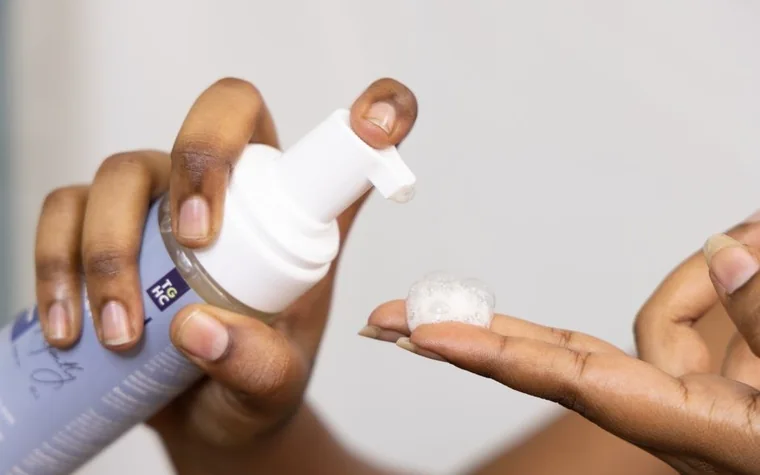
The Academy's public face-washing guidance is specific. It says to limit washing to twice a day and after sweating: once in the morning, once at night, and again after sweating heavily. It says to wet the face with lukewarm water, apply a gentle, non-abrasive cleanser that does not contain alcohol with your fingertips, rinse with lukewarm water and pat dry with a soft towel. It adds that moisturizer is appropriate if the skin is dry or itchy. Notice that the instruction is a ceiling as well as a habit: the wording is "limit," not "at least."
The same guidance says perspiration, especially when you wear a hat or helmet, irritates the skin, and that you should wash as soon as possible after sweating. This is the one exception to the twice-a-day cap, and it is framed around irritation rather than dirt. If you finish a workout and your skin feels itchy or stings under a cap strap, a rinse and a gentle wash is the documented advice; a third wash on a quiet day at a desk is not what the rule describes.
The trial behind "twice a day"
The most-cited experiment on washing frequency is a single-blinded, randomized, controlled trial by Choi, Lew and Kimball, published in Pediatric Dermatology in 2006. It enrolled males with mild to moderate acne. Everyone first washed twice daily for two weeks with a standard mild cleanser, and was then randomized to wash once, twice or four times a day for six weeks. It is a small, short trial in one group of people, and its design cannot speak for dry, sensitive or older skin.
What the three groups showed
At the end of the six weeks, no statistically significant differences were found between the groups. Within groups, though, the pattern was uneven. The twice-daily group improved significantly in open comedones and in total non-inflammatory lesions. The once-daily group worsened, with significant increases in redness, papules and total inflammatory lesions. The authors concluded that there was slight support, in terms of both efficacy and convenience, for the recommendation to wash twice daily with a mild cleanser. They also noted that washing more often may not be as harmful as previously believed, which is a more modest statement than most online advice about "stripping" the skin.

What repeated washing does to the barrier
A separate experiment looked at the barrier rather than at acne. Healthy volunteers had the volar side of the forearm washed by an automated device 5 or 11 times within four hours, for 60 seconds each, with a standard cleanser, a lipid-containing syndet, or the syndet followed by a rehydrating cream. Researchers measured water loss, hydration, redness and pH, plus markers collected by tape stripping. All the washing procedures produced comparable, mild effects on barrier function and inflammation. Two cautions apply: this was forearm skin, and these were mild cleansers. It says nothing about foaming soaps, hot water or scrubbing.
Where the real irritation comes from
Put the AAD wording next to those two studies and a pattern appears. The avoidable irritants named in the guidance are alcohol-containing cleansers, washcloths, mesh sponges and scrubbing, not the count of washes. A harsh cleanser used twice is a different exposure from a mild one used twice. If you want to understand why the cleanser itself matters, our explainer on cleanser pH and the acid mantle covers soap versus syndet, and the piece on over-exfoliation shows how frequency and strength interact for acids and scrubs.
A practical reading for the evening wash
The evening wash is the one that has to remove sunscreen and any makeup, which is why some routines add a first oil-based step. Whether that step is needed depends on what you wear; see double cleansing, explained for what the oil step dissolves. Counting steps is separate from counting washes: a two-stage evening cleanse still counts as one evening in a twice-a-day pattern. After washing, the AAD's pat-dry and moisturize-if-dry instructions are the part that supports comfort, and the sequence that follows is laid out in our guide to skincare layering order.
A simple checklist from the sources
Taken together, the documents support a short list. Wash in the morning and at night. Add one wash after heavy sweating, especially under a hat or helmet. Use lukewarm water rather than hot. Choose a gentle cleanser without alcohol, apply it with your fingertips instead of a washcloth or mesh sponge, and skip scrubbing. Pat dry instead of rubbing, then moisturize if your skin feels dry or itchy. Nothing on that list requires a particular product, price or number of steps, which is worth remembering when a label promises a "deeper" clean.
What the evidence does not cover
No source above tests a once-a-day routine in dry or sensitive skin, a rinse-only morning, or washing in hard water, and none of it proves that a third wash is harmful or helpful in everyone. The acne trial reported group differences that did not reach significance, so it supports a convention rather than a law. If your skin tightens, stings or flakes after washing, that is information about the cleanser, the water or the technique worth raising with a professional. It is also a reminder that a single number cannot cover every climate, job and skin condition: someone who wears a helmet all day, works in a kitchen or lives somewhere humid has different sweat and grime exposure than someone who works indoors, and the guidance itself builds in the sweat exception for that reason.
This article summarizes published guidance and studies and is not medical advice. Patch test any new cleanser first, following our guide to patch testing a new skincare product, and consult a dermatologist if your skin reacts, breaks out repeatedly, or does not improve.
All content is fact-checked under our editorial standards.