
Fragrance-Free vs Unscented Skincare: Why the FDA Says an Unscented Label Can Still Contain Fragrance
"Fragrance-free" and "unscented" sit side by side on shelves and are often treated as synonyms. They are not guaranteed to mean the same thing. This article looks at what the U.S. Food and Drug Administration says about fragrance on cosmetic labels, why the word "unscented" can still coexist with fragrance ingredients, and how to read an ingredient list to tell the difference. It summarizes published regulator wording and does not predict how your own skin will react.

What the FDA says "fragrance" on a label stands for
The FDA's page on fragrances in cosmetics states that fragrance and flavor ingredients can be listed simply as "Fragrance" or "Flavor." It explains why: fragrance formulas are complex mixtures of many natural and synthetic chemicals, and they are the kind of cosmetic component most likely to be treated as a trade secret. In practice, one word on an ingredient list can stand for a blend of dozens of individual substances, and the label does not tell you which ones. In other markets and on many labels you will see the same entry written as "Parfum," the name used in the international ingredient naming system.
That bundling has a practical consequence. If you react to a product and suspect scent, the ingredient list alone cannot tell you which component was responsible, because the list stops at the single word. This is why dermatology-oriented advice tends to focus on avoiding the whole category rather than on avoiding one named chemical.
Why "unscented" is not a promise of no fragrance
The same FDA page makes the point that matters most for shoppers. It says some products labeled "unscented" may still contain fragrance ingredients, because a manufacturer may add just enough fragrance to mask the unpleasant smell of other ingredients. "Unscented" therefore describes what you smell, not necessarily what is in the jar. A cream with active ingredients that smell sharp, for example, may be balanced with a masking fragrance and still be sold as unscented.
For people who are concerned about fragrance sensitivities, the FDA's suggestion is to choose products that are fragrance free and to check the ingredient list carefully. Notice the second half of that advice: the label claim is a starting point, and the ingredient list is the check.
The limits of the "fragrance-free" claim
The FDA page quoted above describes how the terms are used but, in the text reviewed for this article, does not set out a legal definition of "fragrance-free" or "unscented." That means the claim is, in effect, the brand's own statement. It is also worth knowing that the FDA says it does not have the same legal authority to require allergen labeling for cosmetics as it does for food. A food label has to name major allergens; a cosmetic label is not required to break "Fragrance" into its parts under the rules that page describes.

How EU labeling differs
European rules take a different route. Instead of letting the allergen question disappear inside one word, the EU requires specific fragrance allergens to be named on the label when they exceed set thresholds, and the list of named substances has been expanded. We covered the details, including the substance list and the thresholds, in our explainer on EU fragrance allergen labeling. If you buy products sold in both regions, the same product may therefore show more detail on a European label than on a U.S. one.
A U.S. change that is still pending
The Modernization of Cosmetics Regulation Act of 2022 directed the FDA to propose a rule on disclosing fragrance allergens on cosmetic labels. The statutory date for that proposal, June 29, 2024, has passed, and regulatory-agenda reporting I found says the proposal was pushed back, most recently to an expected November 2026. That timing comes from secondary summaries of the FDA's agenda, so treat it as an expectation rather than a commitment, and look at the FDA's cosmetics pages for the current status. Until a rule is final and in force, the "Fragrance" shorthand described above remains what most U.S. labels show.
Where fragrance can hide besides the word "Fragrance"
Because the term covers a blended formula, it helps to scan for other entries that contribute scent. Plant essential oils are the common example: they are aromatic by nature and are sometimes added for their smell. Our piece on tea tree oil shows how an essential oil can be both a "natural" ingredient and an allergen concern because of how it oxidizes. A "fragrance-free" product that lists a scented essential oil deserves the same scrutiny as one that lists "Fragrance," since the claim and the list should agree with each other.
A short checklist for reading the label
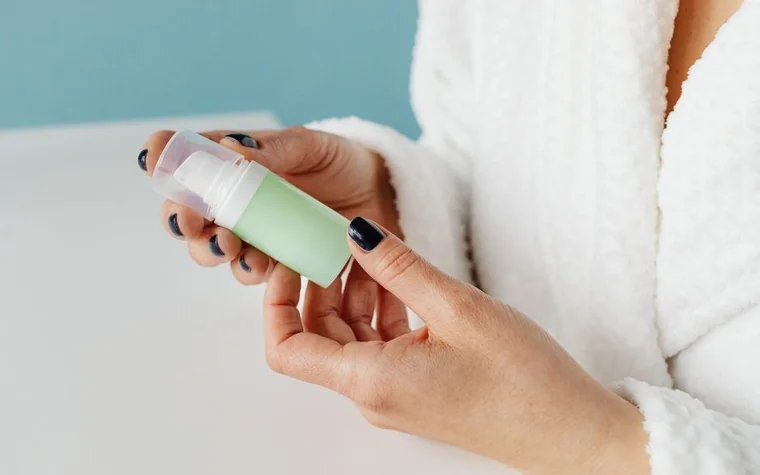
Pulling the regulator wording together gives a practical routine. Read the full ingredient list, not just the front panel. Look for "Fragrance" or "Parfum," and for scented essential oils or plant extracts that are included mainly for aroma. Treat "unscented" as a statement about smell and "fragrance-free" as a brand claim to verify against the list. If your skin is easily upset, our explainer on sensitive skin describes how reactivity is measured, and our look at hypoallergenic and dermatologist-tested claims explains why other front-of-pack words offer little assurance either.
One more habit is worth adding: change one product at a time. If you swap an entire routine for fragrance-free versions in a single week, you cannot tell which change made a difference, and a calmer skin may simply reflect fewer products rather than less scent.
What this does not tell you
Nothing above shows that fragrance harms everyone, or that a fragrance-free product will suit every skin. Many people use scented products without trouble, and unscented products can irritate for reasons unrelated to scent, such as the other ingredients or the way the product is used. The sources here describe how labeling works; they do not diagnose a reaction, and they do not substitute for individual advice.
This article summarizes published regulator information and is not medical advice. Patch test any new product first, following our guide to patch testing a new skincare product, and consult a dermatologist if your skin reacts or the problem persists.
All content is fact-checked under our editorial standards.