
How to Patch Test a New Skincare Product, Actually — Where to Apply It and How Long to Wait
Almost every ingredient explainer on this site ends with the same line: patch-test before applying a new active to your full face. Far fewer explain what that actually means in practice — where on your body, how much product, and how long you're supposed to wait before deciding it's safe. The answer has a real protocol behind it, and it's longer than the one day most people give it.

Why one day isn't enough
Skin reactions fall into two broad categories: immediate irritation, which shows up within minutes to hours as stinging, redness, or itching, and delayed allergic contact dermatitis, which can take a day or more to appear because it involves the immune system recognizing a substance as foreign before it mounts a visible response. A patch test that only runs overnight catches the first category and misses the second, which is exactly the kind of reaction most likely to surprise someone who applied a new product to their whole face after "testing it for a day."
Where to apply it
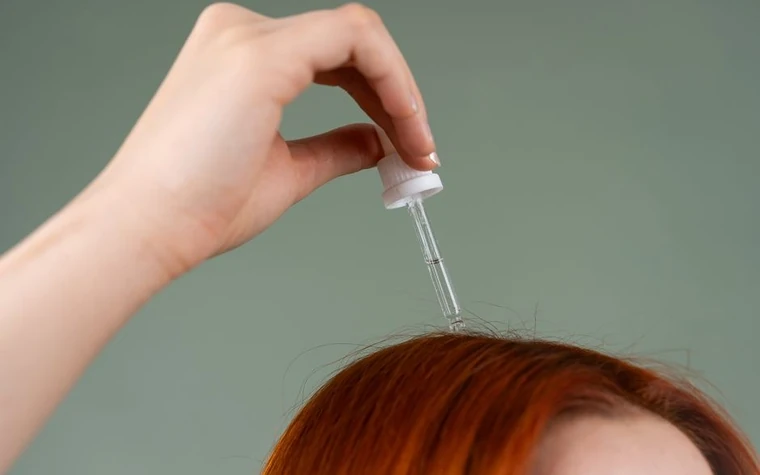
In a dermatologist's office, formal patch testing is typically done on the back, where multiple test substances can be placed at once under adhesive patches. For testing a single new skincare product at home, a small, discreet area works — the inner wrist or forearm, or behind the ear, both reflect facial skin reasonably well. The habit worth building is applying a dime-sized amount to the same small patch of skin, then leaving it alone rather than touching it, washing over it, or covering it with clothing that traps sweat.
How long to actually wait
The professional standard for an initial patch test read is 48 hours. Waiting less than 24 hours will catch immediate irritant reactions but will miss most delayed allergic ones. In formal clinical patch testing, dermatologists don't stop at 48 hours either — they typically ask patients to return for a second reading at 72-96 hours after application, specifically because some allergic reactions take that long to surface. For home testing, applying the product once daily for three to four consecutive days to the same small area — rather than a single application — gives a more realistic read on how your skin handles the ingredient over time, since some irritation only builds with repeated exposure.
What counts as a reaction — and what's just adjustment
Mild, brief tingling on application that fades within a few minutes is common with acids and retinoids and isn't automatically a reason to stop. What crosses the line into an actual reaction is persistent redness, swelling, itching that doesn't fade, small bumps, or a burning sensation that lasts well after application rather than settling quickly. If any of those appear during the patch-test window, that's the signal to not move the product to your full face — not a signal to push through in the name of "purging," which is a different phenomenon specific to certain actives and not a general excuse for a reaction to persist.
Which products need this the most
Not every new product carries equal risk, so it's reasonable to patch-test more rigorously for some categories than others. Retinoids, especially at concentrations near the upper end of what's sold over the counter, exfoliating acids, and any product layered with several actives at once are the categories most likely to cause a visible reaction in someone trying them for the first time. Azelaic acid, despite often being described as gentle, is formulated at a specific pH that can still cause stinging in sensitive or compromised skin, which is exactly the kind of thing a patch test is meant to catch before it happens on your whole face. Fragrance is another common trigger that a patch test will flag faster than reading an ingredient list, since fragrance allergens don't always announce themselves by name on a label.
If your skin is already reactive
Skin that's currently irritated, recently over-exfoliated, or in the middle of a reaction to something else is more likely to react to a patch test itself, which can make the result misleading either way. If your skin is already compromised — including from over-exfoliation — it's worth letting it calm down first and extending the patch-test window to 72 hours rather than the standard 48, since reactive skin can take longer to show its full response. This is also the situation where a dermatologist's opinion is worth more than a home patch test, particularly if you're not sure whether what you're seeing is irritation from the new product or a flare of something that was already there.

FAQ
Can I patch-test more than one new product at the same time? It's better not to — if a reaction shows up, testing one product at a time is the only way to know which one caused it.
Does a clean patch test mean the product is guaranteed safe for my face? No. Facial skin, especially around the eyes and mouth, can be more reactive than the forearm or behind the ear, so a clear patch test lowers the risk but doesn't eliminate it — introduce the product to your face gradually even after a clean test.
Do I need to patch-test products I've used before without issue? Generally no, unless the brand has reformulated it, your skin has changed (pregnancy, a new medication, a recent reaction to something else), or you're using it after a long gap.
This article is for general information and is not a substitute for a dermatologist's evaluation. If you have a history of severe allergic reactions, consult a dermatologist before testing new products at home.
All content is fact-checked under our editorial standards.