
Niacinamide, Explained: What Was Measured at 2%, 5% and 10%
Niacinamide sits in more Korean formulas than almost any other active, and the marketing around it has drifted a long way from the research. Bottles now advertise 10% and 12% as if the number were a grade. The published work says something more specific and more useful: different effects show up at different concentrations, and most of them were measured at 2% to 5%. Here is what the ingredient actually does, where the evidence sits, and how to place it in a routine.
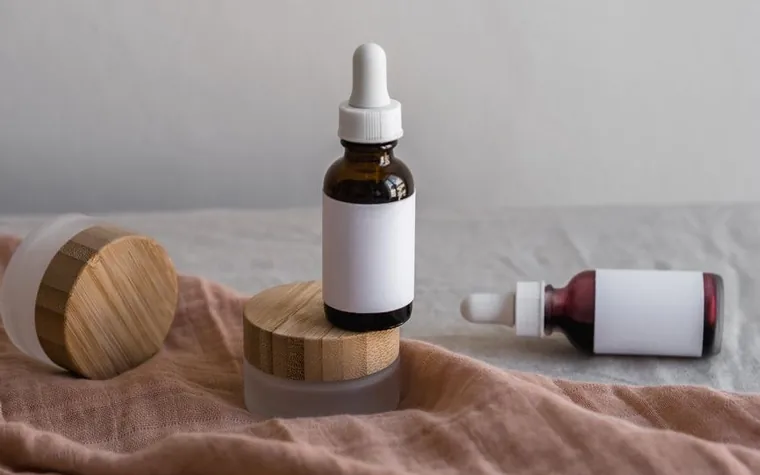
What it is, on the label and in the jar
Niacinamide is the amide form of vitamin B3, and you will find it on an INCI list under exactly that name — sometimes as nicotinamide. It is water-soluble, stable across a wide pH range, and colorless, which is why formulators can drop it into a toner, an essence, a serum, or a cream without redesigning the base.
That versatility is worth noting for one practical reason: you are often using it in more than one product at once. A toner at 2% plus a serum at 5% is a common Korean routine, and the totals matter more than any single bottle.
Barrier support is the best-documented effect
The most consistent finding is structural. Topical niacinamide raises ceramide and free fatty acid levels in the stratum corneum and increases production of epidermal proteins including keratin, involucrin, and filaggrin.
Those are the components of the skin's own barrier. That is why the effect people describe — skin that stays comfortable longer, stings less with other actives — is not really "hydration" in the humectant sense. A hyaluronic acid serum adds water. Niacinamide supports the structure that keeps water from leaving, measured in studies as reduced transepidermal water loss.
The oil and pore data is a 2% story
This is where the concentration question gets concrete. In work by Draelos and colleagues, 2% topical niacinamide over four weeks produced a significant reduction in sebum excretion rate and pore size, first in a Japanese cohort and then with comparable results in a Caucasian group.
Two percent. Not ten. If oil control is the reason you bought the bottle, a well-formulated low-percentage product has the published evidence behind it, and the higher number on a competing label is not buying you documented additional sebum reduction.
Tone: measured with a partner ingredient
For uneven tone, a double-blind, vehicle-controlled study in 42 Korean women tested a formula combining 2% niacinamide with 2% tranexamic acid over eight weeks, and found it significantly more effective at lightening hyperpigmentation than the vehicle alone.
Read that design carefully, because it is a good example of how these claims get flattened in marketing. The measured result belongs to the combination. It is reasonable evidence for a formula built that way, and it is not evidence that niacinamide alone at any percentage produces the same outcome on the same timeline.

Texture and fine lines: the 5% trial
The multi-outcome result most often cited comes from a 12-week trial using a 5% niacinamide moisturizer, which reported improvement across fine lines and wrinkles, hyperpigmented spots, texture, red blotchiness, and sallowness.
The number that deserves your attention there is twelve weeks. Barrier changes can register within four; appearance changes of this kind were measured over three months of consistent use. If you are judging a product at the two-week mark, you are judging it before the study would have.
Where we stop, and why
Niacinamide has also been studied in gel form against acne, at 4% and 5%, with comparisons drawn to prescription topicals. We are not going to translate those results into a recommendation here.
Acne is a medical condition, and so are rosacea, melasma, and eczema. Cosmetics are not permitted to claim they treat or prevent disease, and a skincare article is the wrong place to substitute for a diagnosis. If persistent breakouts, flushing, or patches of discoloration are what brought you to this ingredient, a dermatologist can offer options — including prescription ones — that no serum can match. What we can say is which cosmetic effects have been measured, which is what this article covers. More on how to read a routine is in Routines & How-To.
Higher percentages, and the tolerance question
Across the controlled literature, topical niacinamide has been evaluated roughly from 1.4% up to 10%. It is well tolerated in that range and is generally described as non-irritating, unlike retinoids or hydroxy acids.
But "tolerated at 10%" is not the same claim as "more effective at 10%." The evidence supporting the higher end is substantially thinner than the labels imply, and anecdotal reports of flushing or stinging tend to cluster there — particularly in people already using acids or retinoids. If your skin is reactive, the sensible move is to start low. What "reactive" actually means is covered in Skin Types, and barrier symptoms are in Skin Concerns.
Placing it in a routine
Apply it on damp skin after cleansing and before heavier creams — thinnest texture first, so nothing blocks it from reaching the surface. Morning or evening both work, since niacinamide is not photosensitizing.
About the vitamin C warning that circulates constantly: the chemistry behind it — niacinamide converting to nicotinic acid, the compound associated with flushing — requires heat, acidity, and time that finished cosmetic products are formulated to avoid. The two are combined in commercial formulas routinely. If a specific pairing stings on your face, that is your answer for your skin: separate them by routine step or by time of day. For how these pairings get marketed, see K-Beauty Trends.
Study details above are drawn from published cosmetic dermatology literature on topical niacinamide. Results in controlled trials describe averages across a group and are not a promise for any individual. Patch-test any new product on a small area before applying it to the face, and consult a dermatologist for persistent or worsening skin concerns.
All content is fact-checked under our editorial standards.