
Gua Sha vs. Facial Roller, Explained: What a 2025 Randomized Trial of 34 Women Measured After Eight Weeks, and the Comparison Group It Did Not Have
Gua sha stones and facial rollers sit in a lot of K-beauty routines, usually with big claims about sculpting and lifting. This guide sticks to one 2025 randomized trial in the Journal of Cosmetic Dermatology that put the two tools side by side and measured the result with instruments instead of selfies.
What the study set out to compare
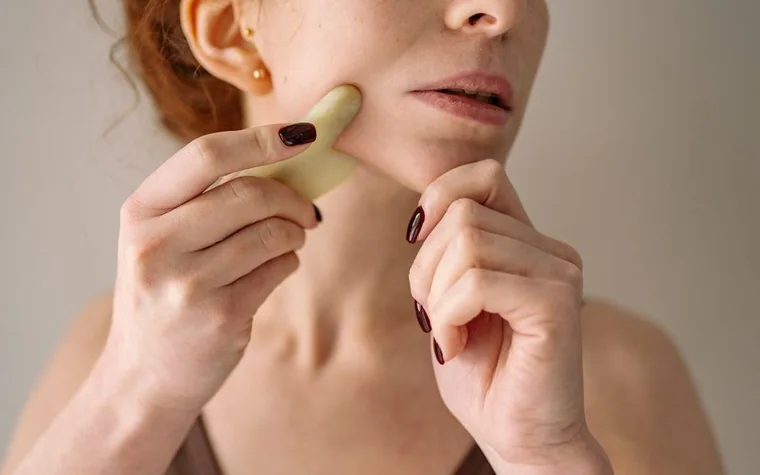
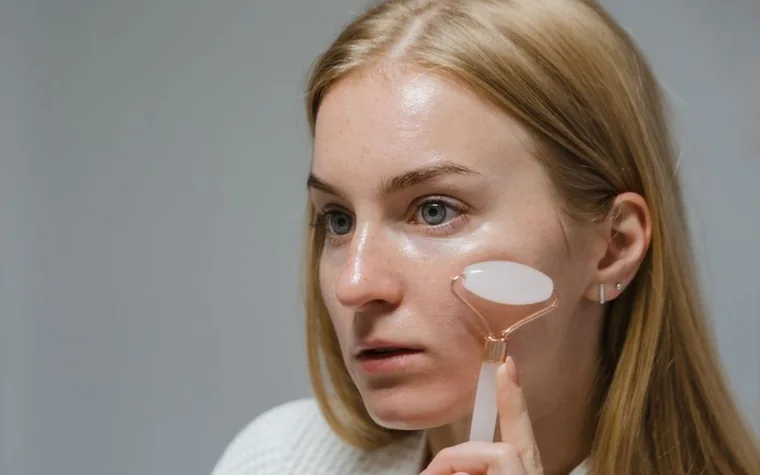
Ahn and colleagues at Yonsei University enrolled 34 women aged 20 to 50 and assigned them at random to a facial roller or a gua sha edge. Both groups used the same dual-function tool, so the material was identical and only the motion differed.
The authors listed funding from a Yonsei University research fund and declared no conflicts of interest.
What participants actually did
Each person ran a standardized 10-minute sequence five times a week for eight weeks, roughly 40 sessions. The sequence started on the neck, moved from the chin toward the ears, then from the cheeks to the temples and along the forehead.
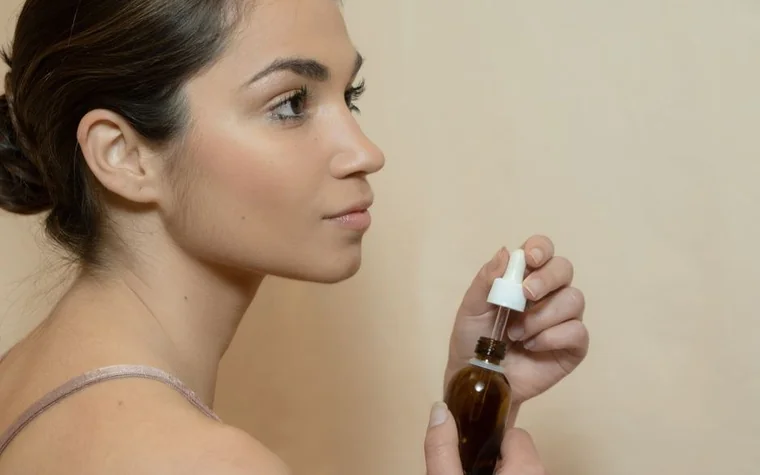
A small amount of facial oil was applied first so the tool could glide. Gua sha users were told to press firmly enough to move the surface tissue without causing bruising, and roller users firmly enough to see the roller leave an impression, both without discomfort.
How the effects were measured
A 3D facial scanner measured four surface distances along the cheek and jaw. A Cutometer, which pulls the skin into a small probe with suction, measured elasticity as R2 (overall recovery) and R7 (elastic recovery).
A MyotonPRO measured the tone and stiffness of the masseter, the jaw muscle. The examiners taking the measurements were blinded to which group each person was in.
What changed after eight weeks
One roller user dropped out for not completing sessions, so 33 people were analyzed. All four surface distances shrank in both groups: by 2.23 to 2.40 mm with gua sha and 2.75 to 3.26 mm with the roller, and the difference between tools was not statistically significant.
The paper notes these changes exceed 2.0 mm, a size it describes as visually perceptible. That is a statement about measurement on a scan, not a promise about how a face looks in the mirror.
Two tools, two different readings
Elasticity moved only in the roller group: R2 went from 0.58 to 0.63 and R7 from 0.40 to 0.43. Gua sha users stayed at about 0.60 to 0.62 for R2 and 0.42 for R7.
The masseter readings went the other way. In the gua sha group, tone fell from 19.96 to 17.94 Hz and stiffness from 424.85 to 368.40 N/m, while the roller group showed no meaningful change. The authors read this as similar contour changes arriving through different mechanisms, though the trial was not designed to prove the mechanisms.
What the trial cannot tell you
There was no group that received no massage and no group that applied oil alone. Without that comparison, the study cannot separate the effect of the tool from the effect of daily oil application and sustained attention to the routine.
Other limits the authors list include no follow-up after the eight weeks, a small sample, a narrow healthy age range, and no standardized photographs. People with eczema, severe acne or rosacea were excluded, so nothing here applies to them.
Where it fits in a routine
Massage is a mechanical step, not a product, so it belongs where slip is needed: on clean skin with a light oil or cream, before sunscreen in the morning. See our guides to layering order and to jojoba oil, a common choice for glide.
For another device-style trend judged the same way, read about LED light masks.
Short version
In one 33-person trial, eight weeks of daily-ish rolling or gua sha shortened scan distances by about 2 to 3 mm, with rolling linked to higher elasticity readings and gua sha to lower jaw-muscle tone, but with no untreated comparison group. This article is educational, not medical advice: patch-test any new oil first with our patch-test guide, and ask a dermatologist before using tools on skin that is inflamed or reactive.
All content is fact-checked under our editorial standards.