
Cocamidopropyl Betaine, Explained: What the CIR's 2018 Alkyl Betaine Review Concluded, the 30 and 6 Percent Use Limits, and Why Patch-Test Results Are Mixed
Check the back of a foaming cleanser or a gentle shampoo and you will often find cocamidopropyl betaine within the first few ingredients. It is also one of the more argued-over names on a label, so this guide follows what two public sources say: a Cosmetic Ingredient Review (CIR) report from 2018 and a 2024 safety review of the ingredient itself.
What it is and why cleansers use it
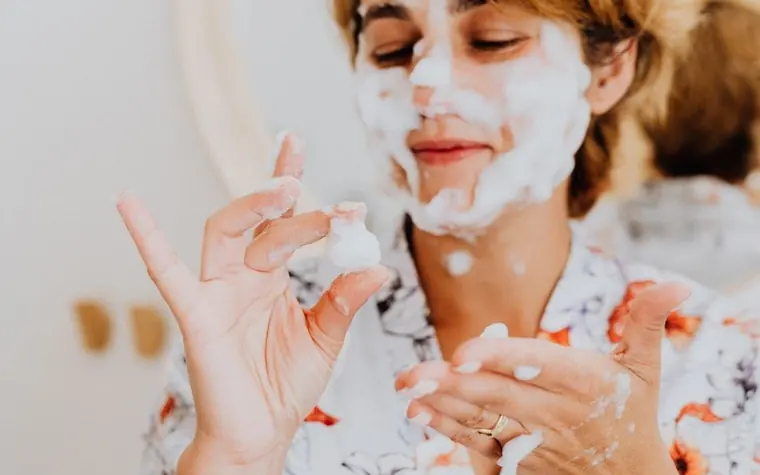
Cocamidopropyl betaine is a surfactant, a cleansing ingredient that helps oil and water mix so dirt can rinse away. It is amphoteric, meaning the molecule carries both a positive and a negative charge, and its fatty part comes from coconut oil.
Formulators add it to build foam and to soften the harshness of stronger cleansing agents. It is a different substance from plain betaine, the small moisturizing molecule sold as an ingredient on its own, even though the names look alike.
What the CIR concluded in 2018
The CIR Expert Panel reviewed 11 alkyl betaines, the group that includes this ingredient, and published the report in the International Journal of Toxicology in 2018. Its conclusion was that they are safe as cosmetic ingredients in the present practices of use and concentration, when formulated to be nonirritating.
The condition matters. The panel did not say every product containing the ingredient is non-irritating; it said formulators must make it so.
How much of it is in products
A 2024 review in Toxicological Research, by Kim and colleagues, collects the use levels: up to 30 percent in rinse-off products and up to 6 percent in leave-on products. At those maximums the review reports a margin of safety above 100.
The gap between the two limits is consistent with exposure time: a cleanser stays on the skin for seconds before it is rinsed, while a leave-on product stays for hours.
What the eye and skin data show
The same review notes mild to moderate eye irritation that depends on concentration. At 30 percent active strength left unrinsed it was corrosive, while at 3 to 6 percent the irritation was mild and cleared within days.
Human repeated-insult patch tests from 1988 to 2009 used 0.018 to 6 percent active ingredient and found no sensitization in the volunteers. Concentrated raw material and a finished cleanser are very different exposures, which is why the figures are reported per use level.
Why patch-test results are mixed
Clinic studies summarized in the review report positive reactions at very different rates. One group found 56 of 781 people with suspected occupational dermatitis, or 7.2 percent, reacted to a 1 percent aqueous solution. Another found 29 of 10,798 patients, or 0.27 percent. A third found 12 of 210 people with suspected cosmetic reactions, or 5.7 percent.
Those groups were selected differently, so the rates are not comparable to each other or to the general population. People who were already being tested for skin problems tend to show far more positives than an unselected group.
Impurities may explain much of it
The review says contamination with amidoamine and dimethylaminopropylamine (DMAPA), substances left over from manufacture, may be responsible for the skin-sensitizing potential. It also reports that higher-purity material was linked to fewer reactions, and the authors suggest that some positive patch-test results reflect irritation rather than true allergy.
A label cannot show purity. Two cleansers listing the same name may behave differently, and that is why the CIR conclusion depends on how the product is formulated.
How to read it on a label
If a cleanser stings or leaves your skin tight, the surfactant mix and the product's pH may matter more than this one name; see our guides to sulfates in cleansers and cleanser pH. For the difference between a reaction caused by irritation and one caused by allergy, read irritant vs. allergic contact dermatitis.
A reaction that keeps returning with products that share an ingredient is worth showing to a dermatologist, who can run a proper patch test.

Short version
Cocamidopropyl betaine is a coconut-derived foaming surfactant, was judged safe as used by the CIR in 2018 when products are formulated to be nonirritating, and appears at up to 30 percent in rinse-off and 6 percent in leave-on products. Mixed patch-test results are linked to impurities in many reports. This article is educational, not medical advice: use our patch-test guide before trying a new product, and ask a dermatologist about any persistent skin reaction.
All content is fact-checked under our editorial standards.