
Overnight Sleeping Masks, Explained: What 24-Hour Barrier Studies Measured About Evening Water Loss and Repair, and What No Study Tested About Products at Night
Sleeping packs and overnight masks are a staple of K-beauty routines, sold on the idea that skin does its best work while you sleep. Part of that idea has real measurements behind it: skin's barrier behaves differently across a 24-hour day. Part of it does not, because no study in this area tested whether a product performs better at night. This guide separates the two, using three published studies of skin physiology and what they mean for how you choose a leave-on product.
What the 24-hour studies measured
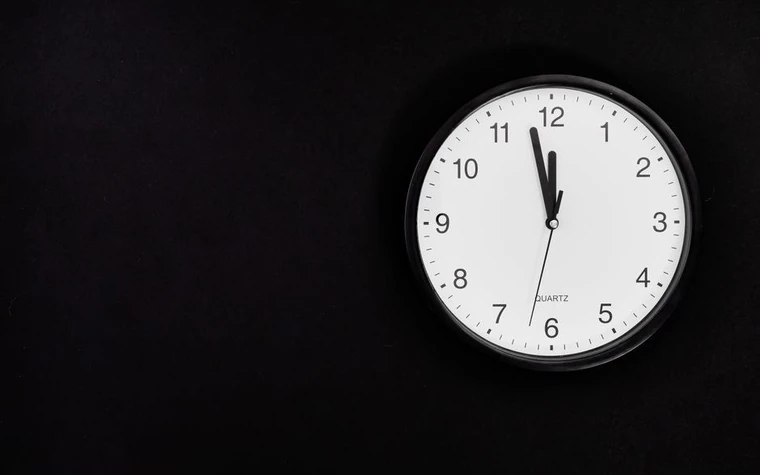
The most cited study is Yosipovitch and colleagues (Journal of Investigative Dermatology, 1998). They recruited 16 healthy volunteers (nine men and seven women, aged 23 to 53) and measured skin every 2 hours in two sessions over a 24-hour span, with 12 samples per variable at four sites: forehead, forearm, upper back and shin. The variables were transepidermal water loss (TEWL, the rate at which water evaporates through the skin), stratum corneum hydration, surface pH and skin temperature.
Using cosinor analysis, the team found a significant daily rhythm in TEWL, surface pH and skin temperature on the forearm, forehead and shin, but not in stratum corneum hydration. Their reading was that skin permeability is higher in the evening and night than in the morning.
When the barrier repairs slowest
A separate experiment looked at repair instead of baseline. Denda and colleagues (British Journal of Dermatology, 2000) removed the surface layer of volar forearm skin with tape stripping, then measured how much TEWL had recovered one hour later, repeating this at different times across the day. Recovery was significantly lower between 20:00 and 23:00 than at other times. Baseline TEWL and skin surface temperature peaked at about 03:00 (33.6 °C and 0.30 mg per cm² per hour), while saliva cortisol peaked at 09:00. The authors concluded the variation in repair was independent of both temperature and cortisol.
A 2001 study of eight healthy women measured face and forearm for 48 hours and found daily rhythms in facial and forearm TEWL, facial sebum excretion and facial pH, plus shorter 8- and 12-hour components in some of them. The takeaway is that "skin at night" is not a single state, and different sites follow different curves.
What these studies do not show
All three measured bare skin in volunteers on ordinary schedules. None applied a mask, serum or cream and compared morning with night, so none shows that an ingredient absorbs better, or works better, after dark. The Yosipovitch authors themselves only suggested the findings might matter for topical application. Treat "skin repairs at night" as a description of baseline physiology, not as a performance claim for any jar.
What an overnight product can reasonably do
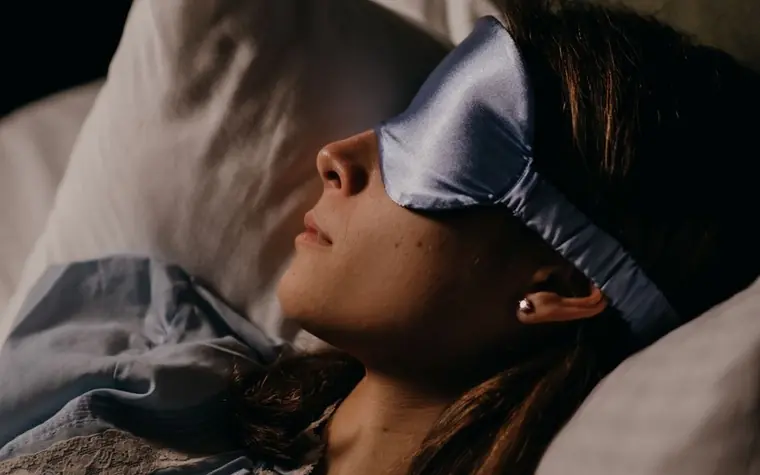
Higher TEWL at night makes a modest, mechanical argument: a leave-on layer that holds water in is doing its job during the hours when more water is leaving. That job is the occlusive function in our humectant, occlusive and emollient comparison. The strongest published example of occlusion is petrolatum, covered in our slugging explainer. A sleeping pack is usually a gel-cream that you leave on instead of rinsing, so the useful question is what is in it. Look on the label for humectants (such as glycerin) paired with an emollient or occlusive.
Sleep timing is a separate question
A 2022 study of 219 women aged 18 to 38 in Shanghai compared those who reported going to bed before 11 pm with those who went later. The late group had lower skin hydration, firmness and elasticity, and higher TEWL, sebum and wrinkle measures, along with a less diverse facial microbiome. This was a questionnaire-based comparison at one point in time, so it shows association, not that bedtime caused the differences. Our sleep and skin article covers a barrier-recovery study in poor sleepers.

Practical points for an overnight routine
Because a sleeping pack stays on for hours, the first use is the one to be careful with: apply it to a small area on the jaw or behind the ear for a few days before the full face, following our patch-test method. Avoid stacking a new overnight mask on the same night as a new acid or retinoid, since you will not know which product caused any stinging. Keep the pack off the eye area unless the label says it is made for it, and wash your pillowcase on your usual schedule.
Short version
Three studies show that TEWL, pH and temperature follow a daily rhythm and that barrier repair after stripping was slowest between 20:00 and 23:00. None shows that products work better at night. An overnight mask is best judged by its ingredient list. This article is educational, not medical advice: patch-test any new product on a small area first, and consult a dermatologist about persistent dryness, itching or rashes.
All content is fact-checked under our editorial standards.