
Propylene Glycol, Explained: What the CIR Re-Review Says About Use Levels Up to 73% and Where Irritation Showed Up
Propylene glycol is one of the most common names on a toner, serum or moisturizer label, and also one of the most debated. It is a clear, colorless liquid that holds water and helps other ingredients dissolve. This guide follows what the Cosmetic Ingredient Review (CIR) Expert Panel wrote in its re-review of propylene glycol, using the panel's own report pages, and what the clinical tests in it did and did not show.
What propylene glycol is and what it does in a formula
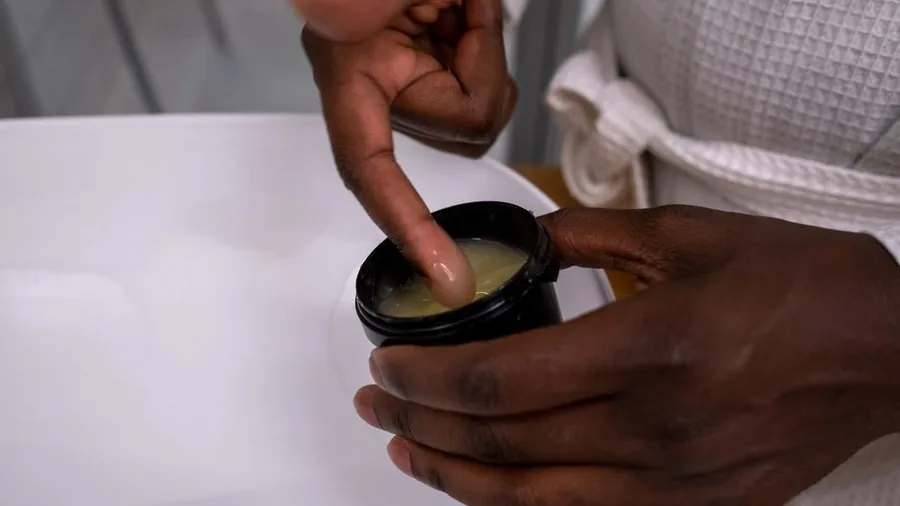
Propylene glycol (PG) is an aliphatic alcohol made from propylene oxide and water. It is not the same thing as ethanol, and it does not behave like the drying alcohols discussed in our guide to alcohol denat.
In a formula it has three jobs: it is a humectant that attracts water, a solvent that keeps other ingredients dissolved, and a carrier that helps a formula spread. It sits in the same family as the glycols covered in our guide to glycols on a toner or essence label, and it works alongside the better-known humectant glycerin.
Why the CIR reopened its review
The CIR first judged propylene glycol and polypropylene glycols (PPGs) safe at concentrations up to 50 percent. The panel then reopened the file for two reasons: use levels had climbed past that limit, and many PPGs on the ingredient dictionary had never been reviewed.
The panel book for the June 2010 meeting reports that propylene glycol was in 5,676 formulations reported to the FDA in 1984 and 9,747 in 2009. It also lists leave-on products, including deodorants, containing up to 73 percent, and bath oils, tablets and salts containing up to 99 percent.
What the amended conclusion says
The panel's conclusion was that propylene glycol, the listed PPGs and tripropylene glycol are safe as cosmetic ingredients in the present practices of use and concentration, when formulated to be non-irritating. The published 2012 report in the International Journal of Toxicology carries the same wording.
Notice what the sentence does not say. It sets no single percentage. It puts the responsibility on the formula, because irritation depends on the product as a whole, not only on one ingredient.
What the skin tests actually showed
The report says propylene glycol caused skin irritation in some normal subjects and patients, with reactions seen at concentrations as low as 10 percent in predictive tests and 2 percent in provocative tests. Those tests are designed to provoke reactions and often use sealed patches, which is stricter than a normal routine.
Use studies of deodorant sticks containing 35, 65.2 and 73 percent propylene glycol, applied daily for 30 days, recorded no irritation or sensitization in the 90 subjects combined. A stick containing 86 percent produced one faint reaction among 99 subjects in a repeated-insult patch test.
Not every result was clean. In a repeated-insult test of a 73 percent deodorant with 101 subjects, four people stopped dosing after a second moderate reaction, and the panel questioned the authors' "no clinically significant potential" conclusion.
Allergy-clinic data point the same direction
People sent for patch testing are a different group from the general public, so their rates are not everyday risk. Pooled data in the report show that up to 6 percent of tested patients reacted to 30 percent aqueous propylene glycol. Another clinic series of 308 patients tested 5 percent in petrolatum and found no positive reactions.
Taken together, the numbers describe an ingredient that is well tolerated by most people but can bother some, especially at high strength, under occlusion or on already-reactive skin. Our guide to irritant vs. allergic contact dermatitis explains how those two kinds of reaction differ.
The penetration-enhancer caveat
The panel noted that propylene glycol can act as a penetration enhancer, helping some substances move into the skin's outer layer. In one test with 15 volunteers, adding propylene glycol to an isopropanol vehicle strengthened the irritant reaction to benzoic acid at the higher benzoic acid levels. The effect started at 1 percent propylene glycol and peaked at 5 percent.
The panel's guidance follows from this: ingredients regarded as safe because they stay on the surface should not be combined with a penetration enhancer in the same formula. For a shopper this is a reason to judge the whole formula, not a single name.
Short version
Propylene glycol is a humectant and solvent that the CIR judged safe as used when a product is formulated to be non-irritating, after replacing its original 50 percent cap with a condition on the whole formula, at a time when reported leave-on use reached 73 percent. Skin reactions are possible, mainly at higher strengths and on reactive skin. This article is educational, not medical advice: try the patch-test method before using a new product, and see a dermatologist about any reaction that keeps coming back.
All content is fact-checked under our editorial standards.