
Probiotic Skincare, Explained: What ISAPP's Postbiotic Definition Requires, What a 2024 Review of 14 Studies Found, and Why Live Bacteria Rarely Survive a Jar
"Probiotic" on a cream or serum sounds like live bacteria for your skin, but the label rarely means that. Most of these products contain heat-killed cells, lysates or ferment filtrates, and the evidence for them is thinner than the marketing suggests. This guide covers what the terms mean, what a 2024 review of the clinical studies counted, and why live bacteria are hard to keep in a jar.
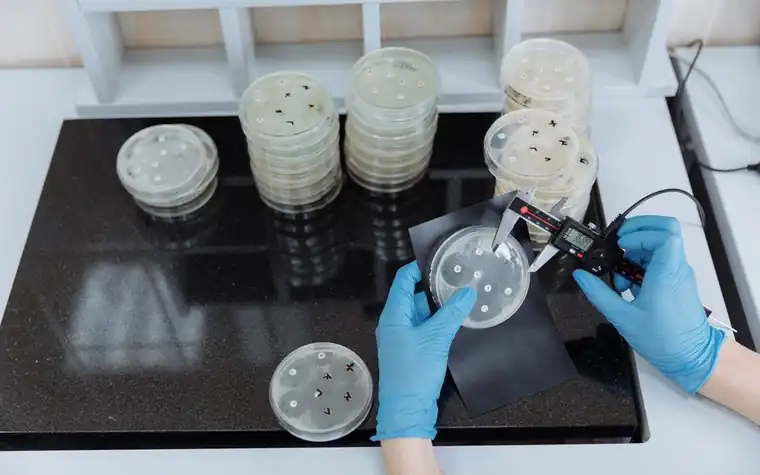
Probiotic, prebiotic and postbiotic: three different words
A probiotic is a live microorganism. A prebiotic is a substrate that feeds microbes. In 2021 the International Scientific Association of Probiotics and Prebiotics (ISAPP) published a consensus statement in Nature Reviews Gastroenterology & Hepatology that defined a postbiotic as "a preparation of inanimate microorganisms and/or their components that confers a health benefit on the host." It names the skin as one place where a postbiotic can act.
What the postbiotic definition leaves out
The ISAPP panel set conditions that most skincare labels do not meet. The microbes must be deliberately inactivated, the source organism must be characterized, and a health benefit must be shown in a controlled, high-quality trial. Substantially purified metabolites with no cell material do not count, and neither do vaccines. A product that says "ferment" on the front is not automatically a postbiotic under this definition.
What the label usually contains
Ingredient lists tend to use names such as Lactobacillus Ferment or Bifida Ferment Lysate. A ferment filtrate is the liquid left after microbes have grown in a medium and been removed, and a lysate is broken-up cells. Neither is a living culture. Our guides to fermented ingredients and galactomyces ferment filtrate show why such names rarely come with a percentage.
What an FDA official said about the category
In an interview reported by Dermatology Times, Linda Katz, then director of the FDA's Office of Cosmetics and Color, said the agency did not have a position on probiotics or postbiotics in cosmetics. She also said there is no legal definition of probiotics in the United States and put the share of "probiotic" products that actually contain postbiotics at 90 percent. That interview is not recent, so check current FDA pages.

Why live bacteria are hard to put in a jar
- Preservation: a cosmetic must pass a preservative challenge test, which is designed to stop microbes growing, and that works against a live culture too
- Limits: industry guidance cites ISO 17516 limits of 1,000 CFU/g for most products and 100 CFU/g for eye-area or children's products
- Evidence: a pharmaceutical-formulation review noted that vehicle-controlled trial results for semisolids with live microorganisms are not generally available
Our expiry guide and phenoxyethanol guide explain the preservative side of this.
What the clinical studies add up to
A 2024 review in Nutrients, "Cosmeceuticals: A Review of Clinical Studies Claiming to Contain Specific, Well-Characterized Strains of Probiotics or Postbiotics," found only 14 studies that met its criteria. Five used live probiotics and nine used postbiotics. Just three had a placebo group; the rest used baseline or split-body comparisons. The authors still reported hydrated skin and less wrinkle depth, but the design gap limits how far that goes.
A lysate trial, read carefully
One often-cited example is a randomized, double-blind trial of a Bifidobacterium longum lysate in 66 women with reactive skin. Half used a cream with the extract at 10 percent and half used a control cream. A single trial of this size shows what one formula did in one group. It does not say that any lysate product works, so it is worth checking who funded it.
How to read a probiotic label
- Look for the INCI wording: "ferment", "lysate" or "filtrate" usually means no live culture
- Look for a named strain; "probiotic complex" alone does not identify one
- Treat a missing concentration as missing information, as with other label claims
- Patch test, since any product with a fermentation medium can contain allergens
This article is general information, not medical advice. Cosmetic products do not treat or prevent disease. Patch test any new product and consult a dermatologist about skin concerns.
All content is fact-checked under our editorial standards.