At-Home LED Light Therapy Masks, Explained: What the Photobiomodulation Research Actually Shows
LED face masks have gone from med-spa equipment to a bedside-table routine step, and the marketing keeps borrowing the same word: photobiomodulation. That term has real clinical trials behind parts of it -- red and near-infrared light have measurable effects on collagen-producing cells -- but the research is wavelength-specific and dose-specific in ways that most product pages skip over. Here is what has actually been measured, what an FDA clearance on the box does and doesn't mean, and where the evidence runs out.
What "photobiomodulation" actually means
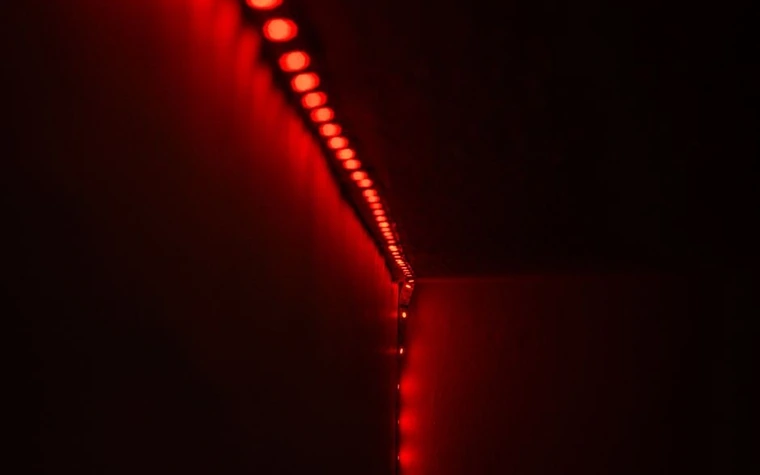
Photobiomodulation describes light at specific wavelengths triggering a biological response inside cells rather than heating or damaging tissue, the way a laser or IPL device does. The accepted mechanism runs through cytochrome c oxidase, an enzyme in the mitochondrial membrane that absorbs red and near-infrared light and responds by increasing ATP production. More cellular energy available to a fibroblast translates, in tissue studies, into more collagen and elastin synthesis -- which is the chain of evidence LED mask marketing is standing on when it says "boosts collagen."
The wavelengths that keep showing up in trials
Two bands dominate the published research: red and near-infrared light between roughly 600-660 nm and 800-860 nm for collagen-related effects, and blue light between 405-470 nm studied for its effect on cutaneous bacteria. A 2023 systematic review in Photodermatology, Photoimmunology & Photomedicine screened 554 studies down to 31 that met inclusion criteria, and found the red/near-infrared band was the most consistently studied combination for skin-rejuvenation outcomes. Yellow light shows up in a smaller number of trials aimed at reducing redness, with less consistent results across them.
What the clinical trial data on wrinkles actually found
The most-cited red/NIR study is a 2007 split-face, placebo-controlled trial in which participants received alternating 633 nm and 830 nm light over several weeks; the treated side showed up to a 36% reduction in wrinkle depth and a 19% increase in skin elasticity, with biopsy-confirmed increases in collagen fiber density. A more recent 2025 multi-center, double-blind, sham-controlled trial in Medicine tested a combined 630 nm LED / 850 nm infrared home mask on 60 participants over 16 weeks and found significantly greater improvement in crow's-feet wrinkle scores than the sham-device group, along with an increase in measured dermal density. That kind of collagen shortfall is also why LED marketing leans hardest on aging skin -- the same supply problem covered in skin sagging and loss of firmness and in why skin type changes after 45.
What an FDA clearance on the box does -- and doesn't -- certify
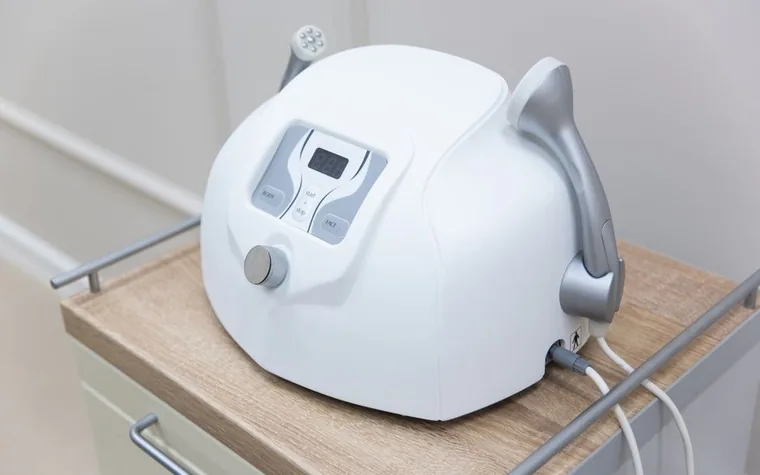
Most LED face masks sold in the US carry an FDA 510(k) clearance, which classifies them as Class II devices and requires proof the product is substantially equivalent to one already on the market -- not proof it produces a specific cosmetic result on your skin. Clearance means the device met a safety and equivalence bar for eye and skin exposure limits. It is not independent verification that a given mask will reproduce the outcomes measured in the clinical literature, since output power and treatment protocol both vary by product, and the FDA itself has noted that clearance is not a guarantee of cosmetic results.
Blue light, and why this stops short of a treatment recommendation
Blue light in the 415-470 nm range has been studied for its effect on Cutibacterium acnes, the bacteria implicated in some acne, including a controlled seven-week trial combining 415 nm and 633 nm light in adolescents and adults with mild-to-moderate acne. Acne has several different underlying drivers, and whether a light-based device is appropriate for a given case is a question for a dermatologist, not a product label -- this article covers the trend and the mechanism behind it, not a way to self-treat a skin condition at home.
Why the dose matters more than the number printed on the box
Two masks can both list "630 nm" and still deliver meaningfully different results, because the variable the trials actually track is irradiance -- measured in mW/cm² -- multiplied by exposure time. The 2025 sham-controlled study used a device outputting up to 10 mW/cm² per wavelength across a 16-week, multiple-session-per-week protocol: a specific, sustained dose that one occasional session won't reproduce. A wavelength number alone doesn't tell you whether a mask is delivering anywhere near a studied dose, which is also why two products with identical marketing claims can perform very differently on the same face.
What not to stack an LED session with, at least at first
There's limited published data on combining LED sessions with retinoids or exfoliating acids on the same night. Red and near-infrared light haven't been shown to cause the photosensitivity that UV exposure does, but a freshly exfoliated or retinized barrier is more reactive to any added stimulus, light included. The more cautious approach is to keep a new device on a separate night from a new active ingredient, the same way a patch test isolates one variable before adding the next, and to let a retinol routine settle in before layering in a device you haven't tried before.
Quick Recap
- Photobiomodulation works through cytochrome c oxidase absorbing red/NIR light and raising cellular ATP, which in tissue studies increases fibroblast collagen and elastin output.
- Red/NIR light (roughly 600-660 nm and 800-860 nm) has the most consistent trial support for wrinkle and elasticity outcomes; a 2007 split-face trial found up to 36% wrinkle reduction, and a 2025 sham-controlled trial found significant crow's-feet improvement over 16 weeks.
- FDA 510(k) clearance confirms safety and device equivalence, not that a specific mask will match published clinical outcomes.
- Blue light acne research exists, but acne treatment decisions belong to a dermatologist, not a device label.
- Irradiance (mW/cm²) times exposure time is the real dose variable -- matching wavelengths doesn't mean matching results.
- Keep a new LED device on a separate night from a new retinoid or acid until you know how your skin responds to each on its own.
Sources: 2007 split-face placebo-controlled LED trial (Lee et al., 633 nm/830 nm); 2025 multi-center, double-blind, sham-controlled home LED/IRED mask trial published in Medicine (Park et al.); 2023 systematic review and meta-analysis in Photodermatology, Photoimmunology & Photomedicine (Ngoc et al.); FDA 510(k) device clearance framework for light-therapy devices; controlled trial on 415 nm/633 nm phototherapy for mild-to-moderate acne. This article explains the current research on a skincare device trend and is not a treatment recommendation. Patch-test any new device or active ingredient before regular use, and consult a board-certified dermatologist before using a light-therapy device for an active skin condition.
All content is fact-checked under our editorial standards.