
Jojoba Oil, Explained: A Liquid Wax Rather Than a Fat, and What a 1998 Study of 25 Volunteers Found About Pore Clogging, Allergy Patch Tests and Sun Reactions
Jojoba oil is sold as an oil, but chemically it is not one. The seed of the jojoba plant (Simmondsia chinensis) yields a liquid wax ester, not the triglyceride fat found in most plant oils. That single fact explains why it keeps for so long on a shelf and why it feels different on skin. This guide covers what jojoba is made of, what a 1998 safety study of three jojoba materials actually measured, what the study cannot tell you, and how to use the ingredient without over-reading the marketing.
A wax ester, not a triglyceride
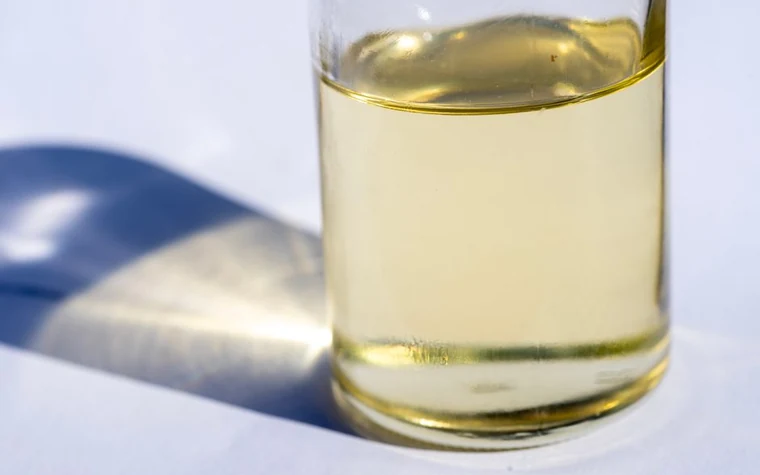
The paper we rely on here, Arquette and colleagues in the Journal of Cosmetic Science (1998, volume 49, pages 377-383), describes jojoba oil as a pure liquid wax ester, not a triacylglyceride. The esters are built from monounsaturated acids and alcohols that are 18 to 24 carbons long. Because of that structure, the authors note high stability and resistance to oxidation and degradation, so the oil can be stored for years in closed containers, unlike oils that turn rancid. On an ingredient list it appears as Simmondsia chinensis (jojoba) seed oil.
Refined, pure and hydrogenated are different materials
The study tested three. Refined jojoba oil is filtered, treated to remove free fatty acids, bleached with clay and deodorized, so it is nearly colorless and odorless. Pure jojoba oil is only filtered and pasteurized, which leaves its golden color and nutty smell. Hydrogenated jojoba oil has had its double bonds removed and becomes a hard white solid that melts at 69 to 70 degrees C, so it behaves as a wax, not an oil. A product that says "jojoba" may contain any of these, and they feel very different.
What the study measured
- Allergy potential: a repeat-insult patch test on healthy adults aged 18 to 65 found no clinical evidence of contact sensitization. In the paper's table, one subject (1.01 percent) reacted mildly to one refined lot and two subjects (2.04 percent) to the pure oil and to the hydrogenated oil, and every mild reaction cleared by the 96-hour check
- Phototoxicity: 17 volunteers aged 23 to 60 completed a UV exposure test, and none of the three materials showed significant phototoxic potential compared with the water control
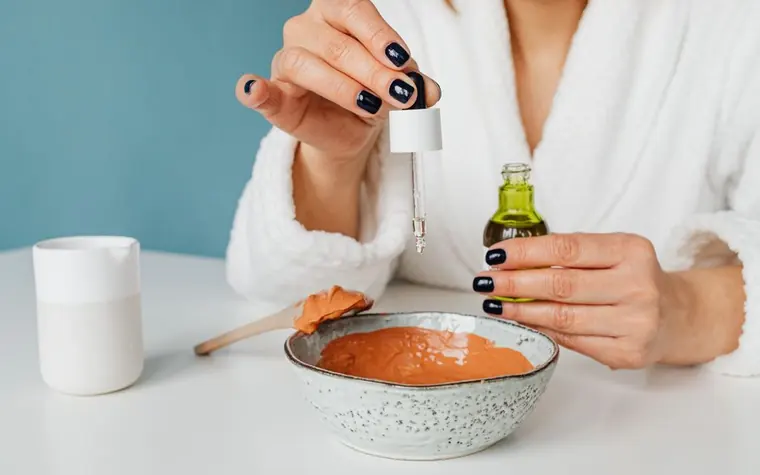
- Pore clogging: 25 volunteers wore occluded patches for 28 days, and microcomedones were counted from skin samples
The pore-clogging numbers
The average microcomedone counts per 2 square centimeters were 2.40 for refined jojoba, 1.84 for pure, 2.08 for hydrogenated, 5.32 for the positive-control ingredient (Acetulan) and 2.72 for the patch-only negative control. All three jojoba materials produced significantly fewer microcomedones than the positive control (p below 0.05) and did not differ significantly from the negative control. In plain terms, in this test jojoba did not behave like a pore-clogging ingredient.
What the study cannot tell you
It was small, it is more than 25 years old, and the lead author is listed with the American Jojoba Association, so the industry interest is plain. The samples came from the upper back, not the face, and the oils were tested as raw materials, not inside finished products where waxes, emulsifiers and fragrance also matter. The test counts microcomedones; it does not show that an oil prevents or treats breakouts. If acne is your concern, a dermatologist is the right person to ask, not a label.
"Just like your sebum" is only half true
Marketing often says jojoba matches skin's own oil. Human sebum does contain wax esters, but it also contains triglycerides and free fatty acids, so jojoba resembles one part of it, not the whole. The more useful comparison is with other emollients we have covered: squalane is a saturated hydrocarbon, petrolatum seals the surface, and lanolin is a wool-derived wax mixture with its own allergy history.
Using it well
- Check which form the product uses: liquid oil, hydrogenated wax or a blend
- Pure oil is not fragrance-free; the golden grade keeps its natural scent
- Its stability helps, but the opened product still ages; see our guide to expiry dates and the PAO symbol
- Patch-test a new product first, following our patch test guide
Concentration limits are not set for jojoba in the sources we used, so this guide does not quote one.
This article is educational and is not medical advice. Patch-test new products on the inner forearm, and see a dermatologist for acne, persistent irritation or any skin condition.
All content is fact-checked under our editorial standards.