
Chapped Lips, Explained: What the AAD Says to Avoid in Lip Balm, Why Licking Backfires, and the Two-to-Three-Week Checkpoint
Chapped lips are one of the few skin complaints where the product meant to fix the problem can be part of it. A lip balm that tingles feels like it is working, and a quick lick feels like relief, yet the American Academy of Dermatology (AAD) names both habits as things to reconsider. This article goes through the AAD's published self-care advice for dry, chapped lips, explains the reasoning it gives, and flags the limits of that advice. It describes what a professional body says about a product category, not a treatment plan for your lips.
Tingling is irritation, not proof of effect
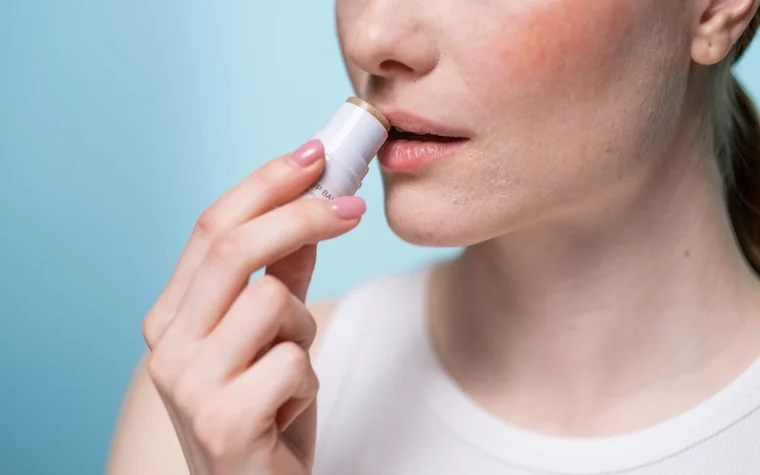
The AAD's page "7 dermatologists' tips for healing dry, chapped lips" begins with product choice. Its advice is to use non-irritating lip products, and it says that discomfort such as burning, stinging or tingling points to irritation rather than effectiveness. That matters because many lip balms are formulated to produce a cooling or warming sensation, and the sensation is easy to read as a sign that something is happening. According to the AAD, it is a warning sign. If a balm stings on already cracked lips, the page's logic is that you should stop and switch, not keep applying it.
The ingredients the AAD tells you to avoid
The AAD lists ingredients to avoid in lip products: camphor, eucalyptus, cinnamon, citrus, mint and peppermint flavors, fragrance, lanolin, menthol, octinoxate, oxybenzone, phenol, propyl gallate and salicylic acid. The list mixes several kinds of ingredient. Some are cooling or flavoring agents, some are fragrance-type materials, one is an exfoliating acid, and two are sunscreen filters. The AAD page does not explain each entry individually, so treat this as a screening list for reading labels, not as a ranking of which is worst. Fragrance is a good example of why labels matter, and our piece on the EU's 82-substance fragrance labeling rule shows how allergen disclosure works in one regulatory system.
What the AAD suggests looking for instead
On the other side of the list, the AAD points to petrolatum, ceramides, dimethicone, shea butter, castor seed oil, hemp seed oil and mineral oil, plus sun-protective ingredients such as titanium oxide or zinc oxide. It also mentions white petroleum jelly and products that are fragrance free and hypoallergenic. These are categories rather than brands, which is useful: you can check an ingredient list against them without caring about the front label. Ceramides appear here as a barrier lipid, and our ceramides explainer covers why the ratio of lipids matters more than a percentage on a bottle.
Why the AAD prefers ointment for very dry lips
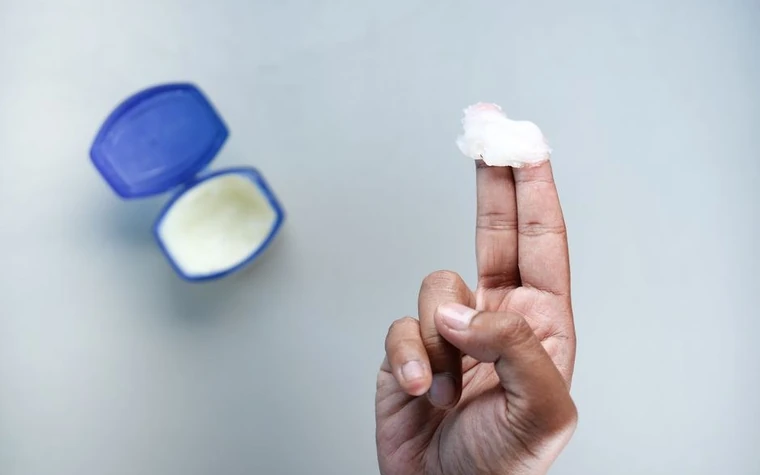
The AAD says to apply a non-irritating lip balm or lip moisturizer several times a day and before bed. For lips that are very dry and cracked, it suggests a thick ointment such as white petroleum jelly, with a stated reason: ointment seals in water longer than waxes or oils. This is a statement about how long a layer holds moisture in, so it is a practical argument for a plain, thick product when lips are cracked. It is not a claim that any particular ingredient repairs tissue. The same logic is why a plain ointment can beat a scented, flavored stick on a bad day.
Licking, picking and other habits
The AAD advises people to stop licking, biting and picking at their lips. The reason it gives for licking is physical: as saliva evaporates, the lips become drier, so the short relief is followed by more dryness. Picking is described as irritating the lips and preventing healing. The page also lists metal objects, such as paper clips, as something that can irritate sensitive lips. None of these are product questions, but they decide whether a good balm gets a fair chance. A balm applied to lips that are licked every few minutes is being asked to do a job against the habit.
Sun protection for lips
The AAD recommends a lip balm with SPF 30 or higher before going outside, and it says to reapply it every two hours while outdoors. It names titanium oxide and zinc oxide among the sun-protective ingredients to look for. Note that octinoxate and oxybenzone sit on the same page's avoid list for lips, so the practical route is to read the active ingredients on the SPF balm you choose. The reapplication logic is the same one that applies to face products, which our article on midday sunscreen reapplication discusses.
Water, humidity and the two-to-three-week mark
The AAD adds two environmental tips: drink plenty of water, since chapped lips are dry lips, and run a humidifier at home, particularly in the bedroom. Neither of these is presented as a stand-alone fix. The page sets a clear checkpoint for the whole routine: by following its tips, you should see noticeable improvement within two to three weeks. If you do not, the AAD says to see a dermatologist, because conditions such as actinic cheilitis, an allergic reaction or a yeast infection can look like ordinary chapped lips and need a professional diagnosis. For a general explanation of how a reaction to a product differs from an allergy, see our guide to irritant versus allergic contact dermatitis.
Checking a new lip product before you commit
Because lip products are often scented or flavored, a small test is worth the trouble. Our guide on how to patch test a new skincare product explains where to apply it and how long to wait. Keep the packaging so the full ingredient list is available if you need to show it to a clinician. This article summarizes one organization's published advice and is not medical advice. Patch test any new product first, and see a dermatologist if your lips stay cracked beyond two to three weeks, swell, or react repeatedly.
All content is fact-checked under our editorial standards.