Parabens, Explained: What the EU's 0.4% and 0.14% Limits Cover, the Five Banned Esters, and What the FDA Says
"Paraben-free" is one of the most common claims on a skincare label, and it is often read as a safety certificate for the whole product. Parabens are a family of preservatives, and regulators treat the members very differently: some are capped at a stated percentage, two are capped more tightly, and five are banned outright in the EU. Here is what the primary documents say, so the label can be read for what it names. This article is about ingredient rules, not about whether any product is right for your skin.
What parabens are, and why they are in the bottle
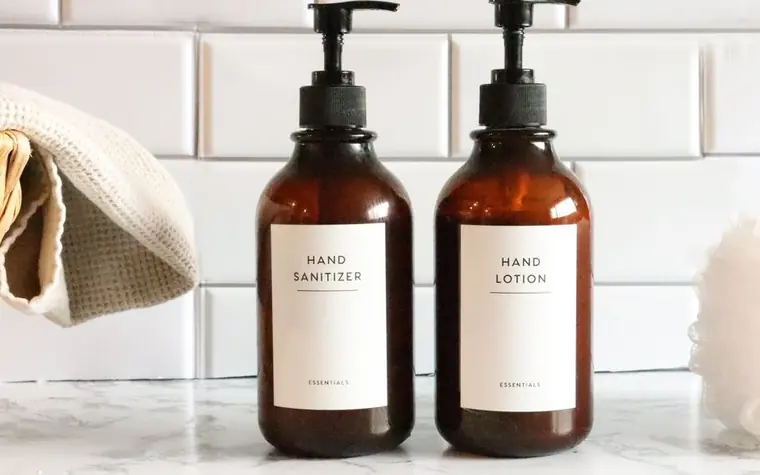
Parabens are esters of 4-hydroxybenzoic acid used as preservatives. Water-based creams, lotions and serums give bacteria and mould something to grow in, and a preservative is what keeps an opened product usable. The FDA lists the four parabens most commonly used in cosmetics as methylparaben, propylparaben, butylparaben and ethylparaben. On an ingredient list they appear under those names, sometimes with a "Paraben" suffix, sometimes as the sodium salt. The point of the family is not skin benefit; it is keeping the formula from spoiling.
The EU's baseline: 0.4% for one ester, 0.8% for a mixture
In the European Union, preservatives are listed in Annex V of Regulation (EC) No 1223/2009. Entry 12 sets the paraben limits as 0.4% (as acid) for a single ester and 0.8% (as acid) for mixtures of esters. "As acid" means the percentage is calculated as the parent acid, not as the weight of the ester, which is a detail that matters when comparing a label figure against a limit. Commission Regulation (EU) No 358/2014 left methylparaben and ethylparaben at these limits.
Five esters the EU removed
The same regulation added five parabens to Annex II, the list of prohibited substances: isopropylparaben, isobutylparaben, phenylparaben, benzylparaben and pentylparaben. The stated reason was a lack of data, not a finding of harm: the text says that for these compounds the human risk cannot be evaluated. Products that did not comply could no longer be placed on the EU market after 30 October 2014, and could no longer be made available after 30 July 2015. If a brand says its formula is "free of banned parabens," that is simply the legal baseline for any product sold in the EU.
Propylparaben and butylparaben: a tighter 0.14% cap
Two parabens were treated separately. Commission Regulation (EU) No 1004/2014 added a new entry (12a) to Annex V: propylparaben and butylparaben, including their isoforms and salts, may total no more than 0.14% (as acid) when you add their individual concentrations together. The same entry bars them from leave-on products designed for the nappy area of children under three years old, and products for that age group that contain them must carry the warning "Do not use on the nappy area." Compliance deadlines were 16 April 2015 for placing on the market and 16 October 2015 for availability. The regulation relied on a series of opinions from the EU's Scientific Committee on Consumer Safety (SCCS) dated December 2010, October 2011 and May 2013.
What the FDA says
The US picture is a different kind of document. The FDA's parabens page, last updated 18 November 2025, states that the agency does not have information showing that parabens, as they are used in cosmetics, have an effect on human health, and that FDA scientists continue to review published studies. The page also notes a structural point that applies to every cosmetic ingredient: apart from color additives, cosmetic products and ingredients do not need FDA approval before they go on the market, and the agency acts against products that are adulterated or misbranded. In other words, the US page describes the current state of the evidence it has reviewed, while the EU documents set numerical limits. The two are not the same type of statement and should not be read as a contradiction.
What the numbers do and do not tell you
A limit is a ceiling for use in a product category, set after a regulator reviews exposure and toxicity data. It is not a measurement of what is in the jar in front of you, and it does not say that a product below the ceiling suits every skin. It also does not rank parabens against other preservatives. For a comparison of how another preservative's limit is built, our phenoxyethanol explainer follows the same kind of reasoning from a different starting point. Tea tree oil is a useful contrast, because there the concern is oxidation, not preservation; see our tea tree oil article.
Reading "paraben-free" on a label
"Paraben-free" tells you one thing: that the ingredient list does not include those esters. It does not tell you what was used instead, whether the replacement preservative is better studied, or whether the formula is gentler. Replacement systems are other preservatives with their own limits and their own reaction patterns. Phrases like this sit in the same family as the front-of-pack wording covered in our label claims guide: the ingredient panel on the back is the part that carries the information. Preservative choice also affects how long a product lasts once opened, which our expiry and PAO guide covers.
If a product has bothered your skin
Any preservative, paraben or not, can be the trigger when skin reacts to a product, and the ingredient list alone cannot tell you which one. Test a new product on a small area first, as described in our patch testing guide, and keep the packaging so the full ingredient list is available if you need to show it to a clinician.
This article summarizes regulations and a regulator's published statements and is not medical advice. Patch test any new product first, and see a dermatologist if you have a rash, a reaction that keeps returning, or any health concern about an ingredient.
All content is fact-checked under our editorial standards.