
Hard Water and Your Skin Type, Explained: What an 80-Person Cleanser-Residue Study Found, and What Two Water-Softener Trials Showed
Skin types are usually sorted by what is on the bottle: oily, dry, sensitive. One input rarely makes the list, the water you rinse with. Tap water carries dissolved calcium and magnesium, and a study of 80 people tested what happens when those minerals meet a cleanser.
What "hard" water means
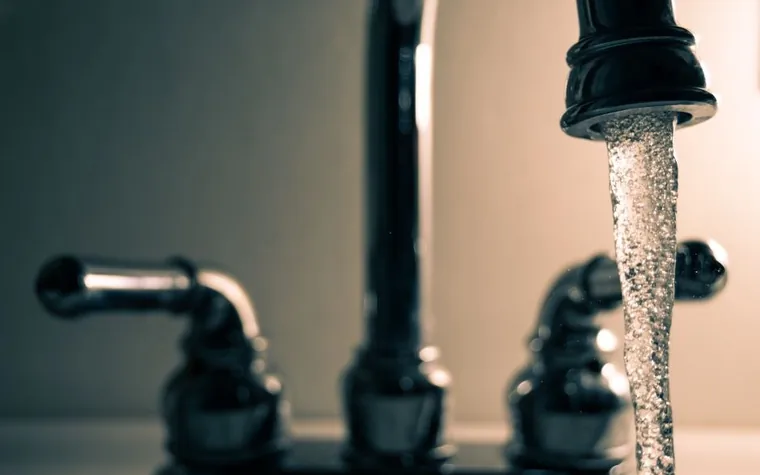
Hardness is mostly dissolved calcium and magnesium. The US Geological Survey groups it by milligrams per liter as calcium carbonate: 0 to 60 is soft, 61 to 120 moderately hard, 121 to 180 hard, and above 180 very hard. Your local water utility publishes its own figure, so you do not have to guess.
The study: soap residue, not just water
Danby and colleagues (Journal of Investigative Dermatology, 2018) recruited 80 participants: healthy volunteers, plus people with atopic dermatitis with and without FLG gene mutations. Each person's skin was washed with sodium lauryl sulfate (SLS) in water of varying hardness and chlorine levels, rinsed, then covered with chambers to measure what stayed behind.
What the sites washed in hard water showed
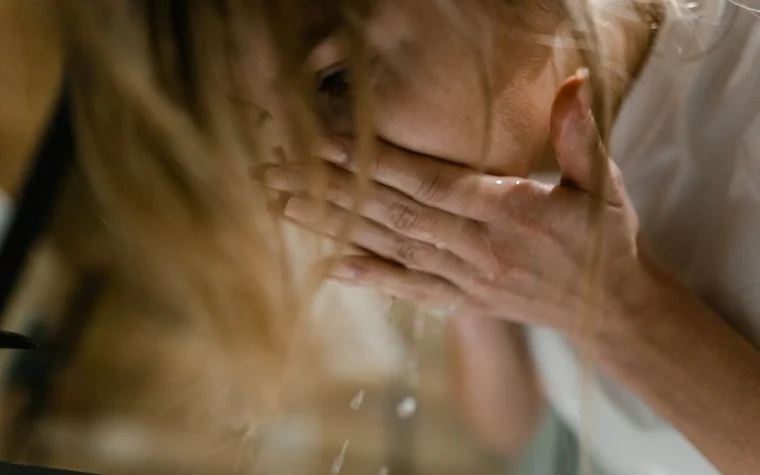
Sites washed with hard water had significantly more SLS deposits. Those deposits raised transepidermal water loss and caused irritation, most of all in people with atopic dermatitis carrying FLG mutations. No clear effect of chlorine was seen, and ion-exchange softening reduced the harm. The proposed mechanism is chemical: calcium and magnesium bind to anionic surfactants, and the complex is less soluble, so more of it stays on skin.
What this does not tell you
It was a short, controlled wash test, not a trial of anyone's daily routine, and the abstract reports no change in anyone's skin type. The strongest effect appeared in a group with a genetic barrier difference. For healthy skin, it supports a cautious reading: hard water plus a harsh surfactant is a worse combination than either alone.
Do water softeners change skin?
Two trials looked at this, with limited answers. The SWET trial gave water softeners or usual care to 336 children with moderate or severe eczema. At 12 weeks, scores improved about 20% with a softener and about 22% without, a difference that was not significant, so softeners added nothing to usual care there. The SOFTER pilot installed softeners before birth in homes of infants with a family history of atopy. It was a feasibility study: 12 of 36 infants (33%) in the softener group and 15 of 31 (48%) in the control group had visible eczema at 6 months, with a confidence interval (-38 to +8 points) that includes no difference.
Why skin type labels can mislead
If skin feels tight after washing, it is tempting to call it dry. A wash that leaves a mineral-soap film, or strips lipids with a strong surfactant, can produce that tightness on any skin. The dry versus dehydrated guide separates a lipid shortage from a water shortage, and a cleansing problem is a third explanation worth ruling out first.
What this means for your routine
These steps follow from the chemistry, not from a trial of any of them. Rinse thoroughly. Choose a cleanser with a milder surfactant system, since the study tested SLS, the harsh end. Read cleanser pH and the acid mantle and the double cleansing guide before adding a second wash, because each extra surfactant pass is another chance for residue. A shower filter or softener is a household choice, and the evidence above does not show it changes how skin looks.
This article summarizes published research and is not medical advice. Patch test any new product first, and ask a dermatologist about persistent dryness, irritation, or eczema.
All content is fact-checked under our editorial standards.