
Tea Tree Oil, Explained: The EU's 0.1% Face Cream Limit, and Why Oxidized Oil Is the Allergen
Tea tree oil is the ingredient behind a long list of "natural" blemish products, and it is also one of the better-documented cases of a botanical that is gentle when fresh and a recognized allergen when it ages. Two separate sources now point the same way: a 2025 EU safety opinion that sets very low use levels for it in cosmetics, and decades of patch-test research on what happens when the oil oxidizes. Here is what that evidence says, without any claim that it treats a skin condition.

What is actually on the label
On an ingredient list, tea tree oil appears under its INCI name, Melaleuca Alternifolia Leaf Oil. It is a steam-distilled essential oil, not a single molecule. It is a mixture of terpenes, and the international standard ISO 4730 ("Oil of Melaleuca, terpinen-4-ol type") defines which compounds a product sold as tea tree oil should contain. The main constituents named in the literature are terpinen-4-ol, gamma-terpinene and alpha-terpinene, with smaller amounts of p-cymene, terpinolene, alpha-terpineol and 1,8-cineole. Because the standard defines a profile rather than a purity number, two bottles that both say "100% tea tree oil" can differ in composition and in age.
The EU's 2025 opinion: 2%, 1%, 1% and 0.1%
The European Commission's Scientific Committee on Consumer Safety (SCCS) adopted a final opinion on tea tree oil on 30 October 2025. It considered the oil safe, when used as an anti-seborrheic and antimicrobial agent, at up to 2.0% in shampoo, 1.0% in shower gel, 1.0% in face wash and 0.1% in face cream. Three conditions come with those numbers: the oil must conform to ISO 4730:2017, the products are for adults only, and the opinion does not cover sprays or aerosols that could be inhaled. The committee also described tea tree oil as a moderate skin sensitiser.
The face wash figure is 1.0% and the face cream figure is 0.1%. The gap reflects contact time: a cleanser is rinsed off within a minute or so, while a cream stays on the skin for hours and is reapplied daily. The same pattern appears for other sensitizing ingredients, such as the fragrance allergens we cover in our guide to the EU's 82-substance fragrance rule. A cosmetic that contains tea tree oil at a few percent in a leave-on formula is therefore well above the level the committee assessed. The opinion covers cosmetics, so it does not say anything about oils sold for other purposes.
Oxidation is the real issue
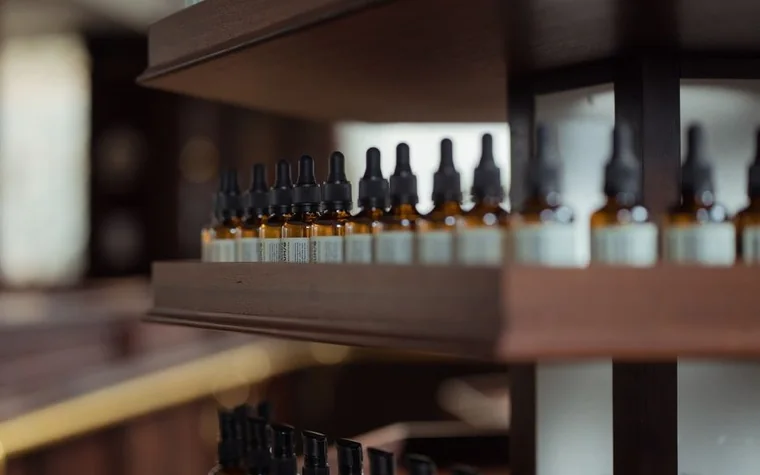
The SCCS noted that tea tree oil oxidizes readily when exposed to heat, light, air or moisture, forming peroxides and other degradation products that can raise the risk of sensitisation. It also pointed out that stability data was missing from the submissions, so it was not certain that the oil stays within specification through a product's shelf life. This is why the opinion is conditional: the number is safe only if the oil stays chemically close to the profile that was assessed.
What the 1999 degradation study measured
A 1999 paper in the American Journal of Contact Dermatitis by Hausen, Reichling and Harkenthal stored tea tree oil on a window sill and then tested it. In guinea pigs, fresh oil was a very weak sensitizer, while oxidized oil was about three times stronger. Gas chromatography showed peroxides rising from under 50 ppm to more than 500 ppm within four days. The p-cymene content rose from 2% to 11.5%, and alpha-terpinene, gamma-terpinene and terpinolene each fell to roughly half their original levels. New compounds appeared, including ascaridol and isoascaridol. When 11 tea tree oil-sensitive patients were patch tested with 15 constituents, they reacted mostly to alpha-terpinene, terpinolene and ascaridol. These are animal and small-patient data, so they show a mechanism, not how common the problem is.
How common is a positive patch test?
A retrospective review from the Skin and Cancer Foundation Victoria in Australia, published in 2007, looked at 4.5 years of patch-test records. Of 2,320 people tested, 41 reacted to oxidized tea tree oil, a prevalence of 1.8%. The reaction was judged relevant to the presenting dermatitis in 17 of the 41 (41%). Of those 41, 27 (66%) recalled previous tea tree oil use and 8 (20%) specifically named neat, undiluted oil. The authors suggested adding tea tree oil at 10% in petrolatum to standard patch-test series, and noted that oil from freshly opened products gave no or weak reactions. The people in this sample were already being tested for dermatitis, so 1.8% is not the rate for the general public.
The Cosmetic Ingredient Review Expert Panel published a 2026 assessment of eight Melaleuca alternifolia-derived ingredients. It concluded that they are safe in current cosmetic practice when formulated to be non-sensitizing, noted that oxidized tea tree oil could be a sensitizer, and said manufacturers should limit oxidation in the finished product. Both regulators therefore frame the question the same way, as one of formulation and stability rather than of the oil being toxic by nature.
Reading a product with tea tree oil in it
Ingredient lists are ordered by concentration down to 1%, so a position near the end suggests a small amount, while a spot-treatment oil sold as pure tea tree oil is the other extreme. The evidence above supports a few observations rather than a recommendation: the 20% of positive patients who named undiluted use are a reminder that concentration matters, oil that has sat open for months has had time to oxidize, and a product's opening date is worth tracking, as explained in our skincare expiry guide. If the area gets red, itchy or scaly after use, the cause could be irritation or true allergy, which are different mechanisms, as covered in our irritant versus allergic contact dermatitis explainer. Another resin-based botanical with a similar label problem is covered in our propolis extract explainer.
Before you try it
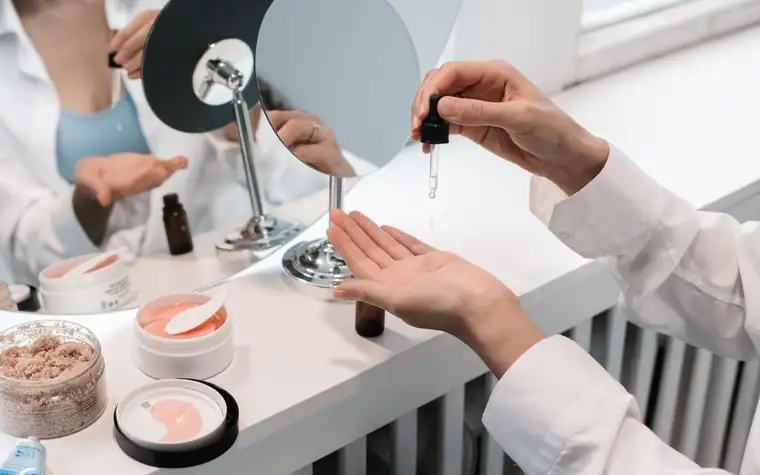
We did not find a regulatory source that supports putting neat tea tree oil on skin, and the SCCS figures apply to finished, stable products rather than to oil from a bottle. Test any new product on a small area first, following our patch testing guide, and stop using it if a reaction appears.
This article summarizes published research and regulatory documents and is not medical advice. Patch test any new product first, and see a dermatologist if you have a rash, persistent breakouts or a known allergy to essential oils or fragrance.
All content is fact-checked under our editorial standards.