
Dimethicone and Silicone Elastomers, Explained: What the FDA's 1-30% Range Covers and What the CIR Found in Its 2012 Review of 62 Crosspolymers
Few ingredients split skincare shoppers like silicones. One camp loves the silky slip of a primer or a gel moisturizer. The other has decided that anything ending in "-cone" must be a filler that "suffocates" skin, and shops for "silicone-free" labels. This article stays with documents you can check: what the US FDA's skin protectant rule says about dimethicone, what the Cosmetic Ingredient Review (CIR) concluded in its 2012 report on 62 dimethicone crosspolymers, and what a dermatologist's comparison with petrolatum says about how occlusive dimethicone really is. It does not rank products or tell you what to buy.
What dimethicone and a silicone elastomer actually are
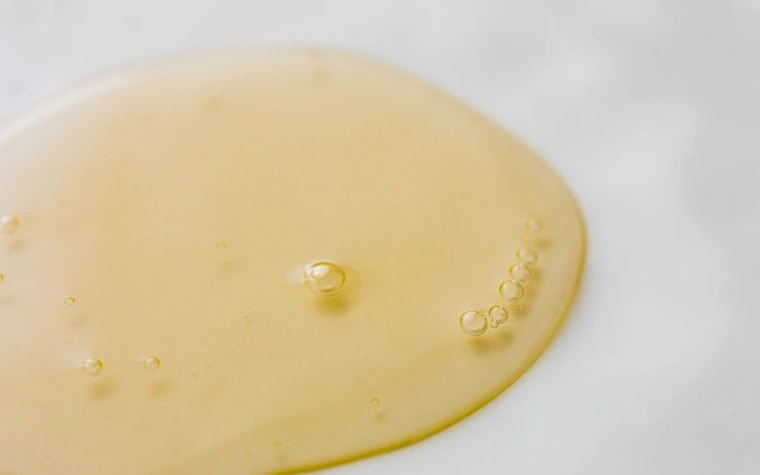
Dimethicone is a silicone polymer: a long chain with a silicon-oxygen backbone and methyl groups on the sides. Chain length sets its feel, from a thin, runny fluid to a thick gum. A dimethicone crosspolymer, the other name you will see on labels, is a silicone elastomer made of dimethicone copolymers linked together by a bifunctional agent, which gives a soft, powdery, rubbery texture. That texture is why crosspolymers show up in primers, mattifying gels and some sunscreens. The CIR report describes them as functioning mainly as absorbents, bulking agents, film formers, skin-conditioning emollients and slip modifiers.
The FDA lists dimethicone at 1 to 30 percent as a skin protectant
In the US, the skin protectant rule in 21 CFR 347.10 names dimethicone as an active ingredient at 1 to 30 percent. That range matters only if a product makes a drug claim, such as protecting chafed or cracked skin. A cosmetic that merely lists dimethicone does not become a drug, and it does not have to stay within that range. We covered the same rule for another ingredient in our guide to petrolatum and mineral oil. The takeaway is narrow: regulators have long treated dimethicone as safe enough to be sold as an over-the-counter protectant, which is a different statement from saying it suits every skin.
The CIR reviewed 62 crosspolymers and called them safe as used
The CIR Expert Panel's final report, released on September 28, 2012, reviewed 62 dimethicone crosspolymer ingredients and concluded they are safe in the present practices of use and concentration described in the assessment. Its reasoning rests on size. The panel wrote that these ingredients are large polymers that will not penetrate the skin, that the silicone backbone is stable under expected use, and that they are chemically inert. It also noted the absence of published data on toxicokinetics, repeated-dose toxicity, reproductive effects and carcinogenicity, and said the gaps did not worry it for that reason.

What the irritation and patch-test data show
The report summarizes animal and human tests. Several crosspolymers did not irritate rabbit skin at up to 100 percent, though two products at about 16 and 24 percent were mild irritants in rabbits. In human repeated insult patch tests, a facial lotion containing dimethicone/vinyl dimethicone crosspolymer at 1 percent (two studies, 107 people) did not cause sensitization, and a crosspolymer at 30 percent in corn oil (55 people) produced no adverse reactions. These are safety screens, not evidence that a product will suit your skin. Anyone can still react to a finished formula, so the patch-test habit in our layering guide still applies.
What the CIR flagged: residual monomers and inhalation
The panel was not uncritical. It expressed concern over the absence of information on residual monomers and catalysts left over from manufacturing, then concluded that current methods keep them low and urged suppliers to keep them below levels of toxicological concern. It also looked at inhalation. These ingredients are reported at up to 20 percent in sprays and up to 46 percent in powders, but the panel judged that 95 to 99 percent of particles would not be respirable. For a face cream, those aerosol points are largely beside the point, but they explain why spray and powder products draw more scrutiny.
Does dimethicone "suffocate" skin? Compare it with petrolatum
The word "occlusive" hides a big spread. Dermatologist Zoe Draelos writes that no cosmetic ingredient comes close to petrolatum's ability to cut transepidermal water loss, which she puts at 99 percent, and that dimethicone is much less occlusive. She calls dimethicone an "astringent emollient" because it reduces the stickiness of petrolatum-based formulas, and describes it as hypoallergenic and noncomedogenic. Our own guide to humectants, occlusives and emollients explains where each sits in a moisturizer. The practical point is that a thin silicone film is a much lighter barrier than a petrolatum layer, which is the opposite of a sealed, suffocating coat. A label that says "non-comedogenic" is a manufacturer claim, and the term has no legal definition behind it that we could find.
Where the real debate is: cyclic silicones, not dimethicone
Most of the genuine regulatory action concerns the small, volatile cyclic silicones rather than dimethicone itself. We cover the EU restrictions in our cyclopentasiloxane (D5) guide. On an ingredient list, those appear as cyclopentasiloxane or cyclohexasiloxane, while dimethicone, dimethiconol and dimethicone crosspolymers are different chemicals. Lumping every "-cone" together makes the "silicone-free" label seem more meaningful than it is. It is a legitimate preference, for example if a formula feels heavy on your skin, but it is not a safety rating.
How to read a label with this in mind
Check where the silicone sits in the list: ingredients appear in descending order above 1 percent, so a crosspolymer near the end is a minor component. Notice whether the product is a spray or powder, where the CIR's inhalation discussion applies. Treat "silicone-free" and "non-comedogenic" as marketing choices, not certifications. And remember that a primer is a texture product, not a treatment.
This article is general education, not medical advice. Patch-test any new product on a small area first, and see a dermatologist for persistent skin concerns.
All content is fact-checked under our editorial standards.