
Teen Skin and Puberty, Explained: Why Sebum Starts Before the Breakouts, and What a 1,609-Person Cohort Found About When Acne Appears
Many people hit puberty and suddenly find that the skin they had at ten no longer exists. Shine appears across the forehead and nose, pores look bigger, and breakouts start, often before anyone has bought a cleanser meant for it. A common assumption is that this is caused by dirt or by washing too little. The research points somewhere else: the oil glands switch on in a pattern that begins earlier than most people expect, and the timing differs between children. This article summarizes published studies and a dermatology society's advice. It does not predict how any one teenager's skin will behave.

Why a changing skin type is normal at this age
Skin type is not fixed at birth. Sebum, the oil made by sebaceous glands, is produced under hormonal control, and in childhood the output is low. As androgen hormones rise, the glands enlarge and secrete more. That is why a child can have what looks like dry or balanced skin, then a few years later describe the same face as oily. If you want the general picture of how oil output and hydration are measured separately, our explainer on oily skin and the sebum reservoir effect covers the measurement side.
What a longitudinal study of 5.5 to 12 year olds measured
A study in the British Journal of Dermatology (Mourelatos and colleagues, 2007) followed children aged between 5.5 and 12 years, examining them every six months. The team recorded age, Tanner pubertal stage, weight and height, facial lesion counts, bacterial colonization on the skin and in the nostrils, and sebum secretion. The paper notes that sebum secretion is generally accepted to begin before puberty, driven by rising androgen output during adrenarche.
Three findings stand out. First, the start of sebum production was asynchronous: only a small number of follicles began secreting onto the surface at first, rather than the whole face switching on at once. Second, the number of secreting follicles and the area covered by sebum increased with age and with pubertal stage. Third, the skin surface counts of propionibacteria, a normal skin bacterium, tended to rise after age 9, but not significantly. This is a measurement of a gradual build-up, not a sudden event.
Children who later developed acne started earlier
The same study compared children who went on to develop acne with those who did not. Those who developed acne had higher sebum output and bacterial density as they got older, while sebum activity and surface bacterial numbers stayed essentially unchanged with age in the children who stayed clear. The authors concluded that sebum secretion and the expansion of the skin bacteria begin earlier in children who develop acne than in children of the same age and pubertal status who do not. In other words, the skin type that later shows up as oily is not simply a reaction to habits, and it is visible in measurements before blemishes appear.
When acne appears, and why it differs by sex
A 2025 paper in Endocrine Connections (Jakobsen and colleagues) analyzed 1,609 Danish children and adolescents aged 5.6 to 23.4 years, 222 of whom were examined every six months for eight years. In a nested group of 1,009 people, testosterone and dihydrotestosterone (DHT) were measured. In boys, acne was recorded at a mean age of 15.0 years (95% confidence interval 14.7 to 15.3). It was seen in 44% of boys at Tanner stage G4 and 83% at G5, versus 15% of girls at breast stage B4 and 12% at B5. The authors reported acne prevalence of 85% in late pubertal boys and 15% in late pubertal girls, with DHT significantly higher in adolescents of both sexes who currently had acne.
Read that carefully. It describes a population of children examined in a study, not a forecast for any individual, and acne criteria and populations differ between studies. Girls in that cohort were recorded with acne less often, which is not the same as having clear skin or no oil changes. For a related look at how sex differences in sebum, collagen and pH have been measured, see our article on men's and women's skin.
What the American Academy of Dermatology advises for acne-prone skin
The AAD lists habits it says can worsen acne. Among them: trying a new treatment every week or so, which can irritate the skin; washing the face several times a day; sleeping in makeup; sharing makeup brushes and applicators; and using products that can cause acne. Its alternatives are specific. Wash twice a day, once on waking and once before bed, plus after activity that makes you sweat. Use makeup, sunscreen, skin-care and hair-care products labeled "non-comedogenic" or "won't clog pores." Give an acne treatment 6 to 8 weeks before judging it, with complete clearing generally taking 3 to 4 months. The AAD also advises spreading a thin layer of medication over the whole acne-prone area, not only on visible blemishes.
Gentle washing in practice
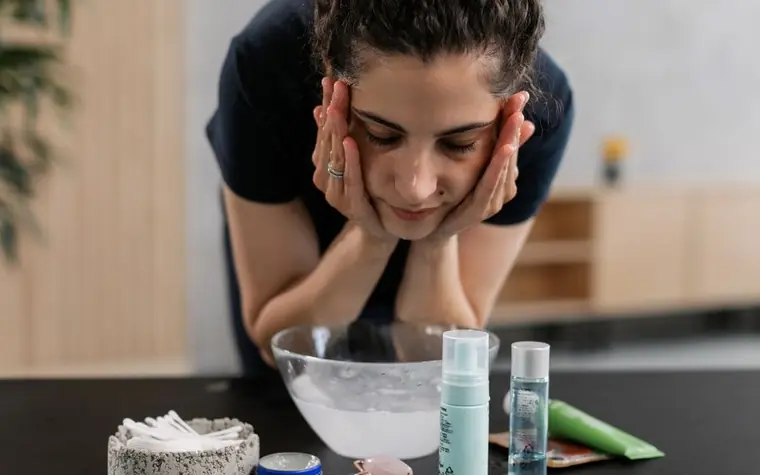
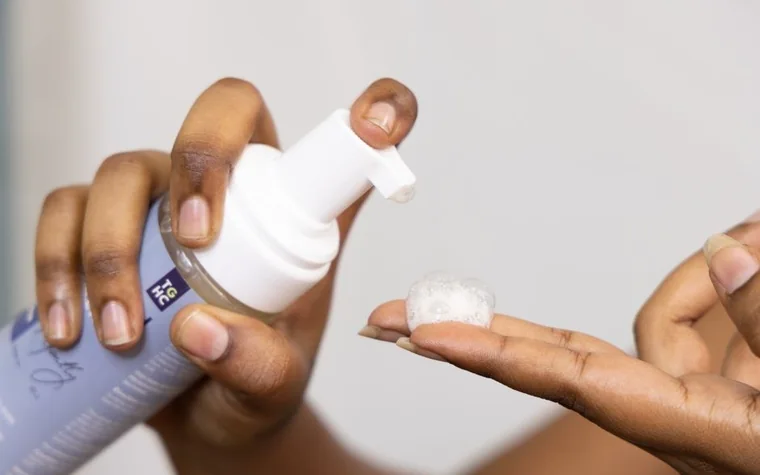
The same AAD guidance describes how to wash: use a mild, non-comedogenic cleanser, apply it lightly with fingertips in a circular motion, rinse with warm water, and pat dry with a clean towel. Roughly rubbing sweat away with a towel can irritate skin, so pat instead. The AAD pairs this with a warning that washing more often than that can irritate the skin and lead to more breakouts. If you want to see what a trial of one, two and four daily washes actually measured, our article on how often to wash your face goes through it.
What these studies cannot tell you
None of this tells you what your own skin type will be next year. The longitudinal study followed children up to age 12, so it cannot describe later adolescence, and the cohort study counted acne, not every other skin concern. Neither tested any specific product. Tanner stage, hormones and genetics vary, and so does the way people describe their own skin; our look at self-assessed skin type versus sebumeter readings shows that what people call oily or normal often does not match the instrument.
A cautious reading is that rising oil and early breakouts in the teen years are a normal developmental pattern for many people, that they are not a hygiene failure, and that gentle, consistent habits are what the AAD supports. A persistent, painful or scarring problem is a reason to see a clinician, not to keep switching products.
This article summarizes published research and is not medical advice. Patch test any new product on a small area first, and consult a dermatologist if your skin reacts, if acne is severe or scarring, or if the problem persists.
All content is fact-checked under our editorial standards.