
Humectant vs Occlusive vs Emollient: Which of the Three Your Moisturizer Is Missing
"My moisturizer feels rich but my skin is still tight an hour later" is usually not a sign the product is bad — it's a sign it's doing only one of three jobs a moisturizer can do, and not the one that skin actually needed that day. Humectant, occlusive, and emollient aren't marketing categories; they describe three different physical mechanisms, and most bottles lean heavily on one while barely touching the other two.
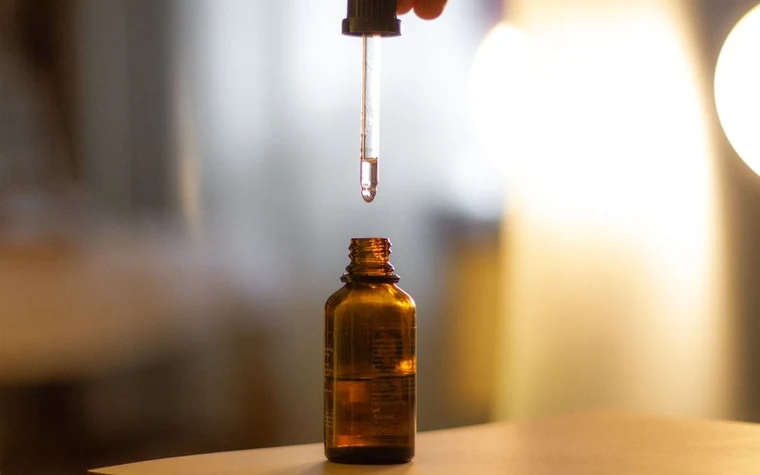
Three different jobs, not three marketing terms
Moisturizing ingredients are grouped by mechanism, not by how they feel on skin. A humectant pulls water toward the skin. An occlusive physically blocks water from leaving the skin. An emollient fills gaps between skin cells to smooth the surface, without doing much to move or trap water at all. A formula that only contains one of the three can leave a real gap in what it's protecting against, no matter how expensive the ingredient is.
Humectants: the pull, and the catch nobody mentions
Glycerin, hyaluronic acid, and propanediol are humectants — they attract water molecules toward the stratum corneum. Glycerin remains the most widely used humectant precisely because it's cheap, gentle, and effective at drawing moisture. The catch: a humectant doesn't create water, it redirects it. In humid conditions it pulls moisture from the air. In a dry room or a low-humidity climate, with nothing sealing the surface, it can end up pulling water from the deeper layers of skin instead — the same mechanism that helps in summer can work against skin in winter if it's applied alone.
Occlusives: the physical seal that does the least glamorous job best
Occlusives don't attract anything — they sit on top of skin and physically block transepidermal water loss (TEWL), the water that naturally evaporates off skin all day. Petrolatum, at a minimum concentration around 5%, is the most studied and effective occlusive available, reducing TEWL by roughly 98–99% in published testing. Lanolin, mineral oil, and silicones like dimethicone follow behind it. Petrolatum's reputation as an old-fashioned, unglamorous ingredient has little to do with how well it performs — by the TEWL numbers, few modern alternatives beat it.
Emollients: filling the gaps, not sealing or pulling
Emollients — shea butter, plant oils, and lipid ingredients like squalane — work differently from both of the above. Instead of trapping or attracting water, they fill in the microscopic gaps between corneocytes, the flattened dead skin cells at the surface, which smooths roughness and reduces the flaky look that comes from an uneven surface. An emollient-heavy formula can make skin feel instantly smoother without meaningfully changing how much water the skin actually retains over the following hours — the softness and the hydration are two separate effects.
Why most moisturizers blend all three — and in that order
A well-formulated moisturizer typically applies the logic of all three mechanisms in one product: a humectant draws water in, an emollient smooths the surface, and an occlusive locks the result in place. That's also the reasoning behind layering a humectant-heavy essence or serum before a heavier, occlusive-leaning cream — the humectant needs something on top of it to stop the moisture it just pulled in from evaporating straight back out. A product with only humectants and no occlusive can leave skin feeling temporarily plumped, then tighter than before once the water evaporates.
Reading an ingredient list for what's missing
The INCI list on the back of a bottle tells you which of the three jobs a product is actually built around. Glycerin, sodium hyaluronate, and butylene glycol near the top of the list signal a humectant-forward formula. Petrolatum, dimethicone, and mineral oil signal an occlusive. Shea butter, squalane, and plant oils signal an emollient. A moisturizer with only the first category and nothing occlusive further down the list is the one most likely to leave skin feeling temporarily hydrated, then tight — pairing it with a separate humectant serum underneath a heavier cream on top is a more reliable way to cover all three jobs than switching products entirely.
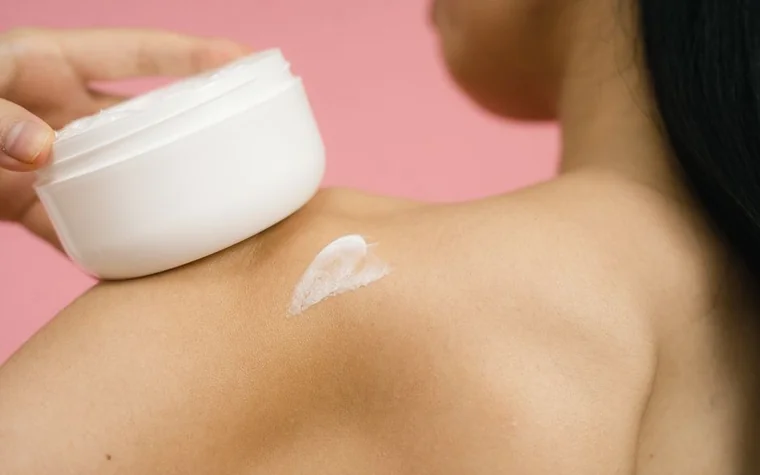
Matching the mechanism to what your skin is actually missing
Skin that feels dehydrated but not flaky is usually short on water — a humectant under an occlusive layer addresses that directly. Skin that feels rough and tight but not necessarily thirsty is often missing lipids, which points toward an emollient-heavy formula rather than more humectant. Dry and dehydrated are not the same problem, and reaching for the wrong category of moisturizer is a common reason a routine that "should" work doesn't seem to.
The short version
Humectants pull water toward skin (glycerin, hyaluronic acid), occlusives physically block water from leaving (petrolatum, dimethicone), and emollients smooth the surface by filling gaps between cells (shea butter, squalane). Petrolatum remains the best-tested occlusive, reducing water loss by roughly 98–99% at effective concentrations. A humectant used without any occlusive on top can pull water from skin itself in dry conditions rather than the air. Checking which categories are missing from an ingredient list is a faster fix than switching to a more expensive product in the same category.
Patch-test any new moisturizer on a small area before full-face use, and see a board-certified dermatologist for persistent dryness, irritation, or a suspected barrier condition — this article describes ingredient mechanisms and is not medical advice. Sources: peer-reviewed dermatology literature on moisturizer mechanisms and transepidermal water loss (TEWL); published occlusive efficacy data for petrolatum and related agents. Verified August 2026.
All content is fact-checked under our editorial standards.