
Cocoa Butter, Explained: What the FDA's 50 to 100 Percent Skin Protectant Range Means, and What Two Randomized Trials Found About Stretch Marks
Cocoa butter shows up on body-butter jars as if it were a treatment for stretch marks, and it also appears in the FDA's list of recognized skin protectant ingredients with a very specific concentration. Those are two different claims with two different kinds of evidence. This guide separates them: what the federal monograph actually sets, what the fat is made of, and what two randomized, placebo-controlled trials in pregnant women found when they tested it on stretch marks.
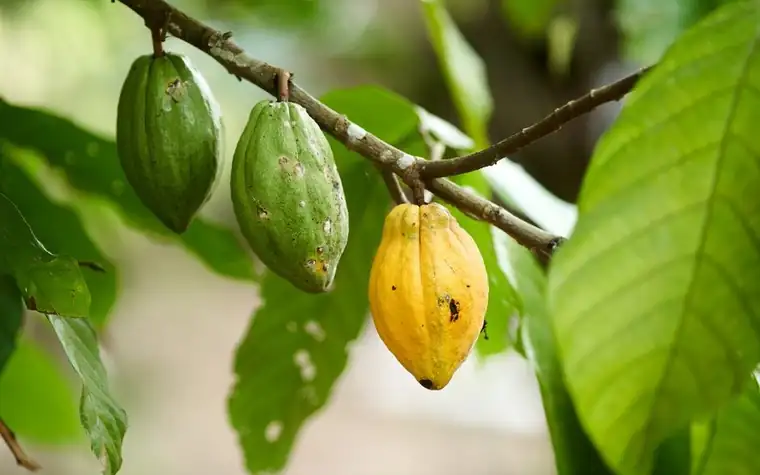
What cocoa butter is
Cocoa butter is the fat pressed from cacao beans, the same fat that gives chocolate its snap. It is solid at room temperature and melts close to body temperature. In a 2018 Scientific Reports study of a cocoa butter equivalent, the authors measured tempered cocoa butter in its stable crystal form (form V) melting at 33.6 °C, and they note that cocoa butter melts mainly between 32 and 34 °C in that form. That narrow window is why it feels firm in the jar and softens on contact with skin.
The fat is built from a short list of fatty acids. In the sample that paper analyzed, three triglycerides made up most of the fat: POP (15.2 percent), POS (38.2 percent) and SOS (27.8 percent), where P is palmitic acid, S is stearic acid and O is oleic acid. The same paper notes that composition shifts with origin: cocoa butter from Malaysia and Indonesia carries less palmitic and more stearic acid than Brazilian cocoa butter, which is higher in oleic acid. Those are food-science measurements of the raw fat, not skin data.
What the FDA monograph sets: 50 to 100 percent
Under 21 CFR 347.10, the active ingredients of an over-the-counter skin protectant drug product may consist of cocoa butter at 50 to 100 percent. That sits in a list with other occlusive and emollient fats: hard fat at 50 to 100 percent, mineral oil at 50 to 100 percent, and petrolatum and white petrolatum at 30 to 100 percent, which our petrolatum and mineral oil explainer covers. Lanolin is listed at 12.5 to 50 percent (see the lanolin guide), dimethicone at 1 to 30 percent (see the dimethicone guide) and glycerin at 20 to 45 percent.
The high floor matters. A cream that lists cocoa butter as one of many ingredients is not a 50 percent product, and the label of a body lotion does not tell you the percentage. The monograph range describes what an OTC skin protectant drug must contain to meet its conditions, not what a cosmetic jar typically holds.
What the monograph lets a label say
The labeling rules in 21 CFR 347.50 are just as specific. For products containing cocoa butter, the Uses statement is "temporarily protects minor cuts, scrapes, burns," and the monograph also provides wording for "temporarily protects chafed, chapped or cracked skin" and, for lip products, "chapped or cracked lips." The same section allows an optional statement about protecting from the drying effects of wind and cold weather. Nothing in the approved uses mentions stretch marks, scars or skin elasticity. In regulatory terms, cocoa butter is a barrier fat for dry, chapped or minor-injured skin.
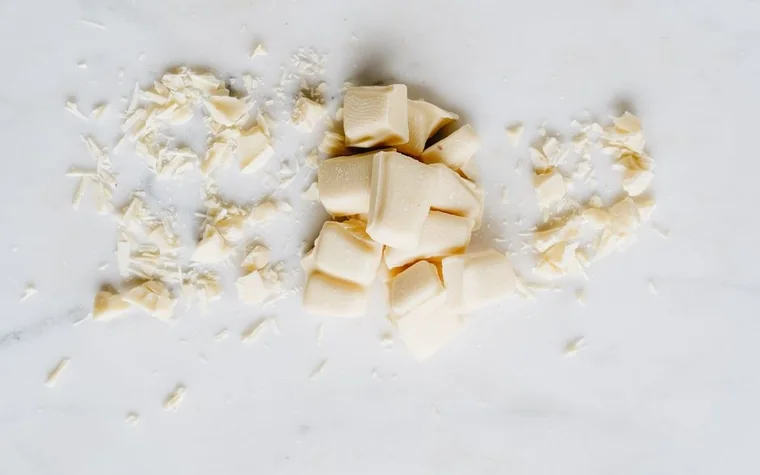
A skin protectant works by forming a layer that slows water loss from the surface. That is the occlusive function described in our humectant, occlusive and emollient comparison, and it is why a solid fat that softens at skin temperature fits the job. It is a physical property of the layer, not a signal sent into deeper tissue. Whether a fat can protect a surface is a separate question from whether it can change how skin stretches over months of body growth, and that second question needs a trial.
Trial 1: 210 women in Lebanon
Osman and colleagues (BJOG, 2008) ran a multicenter, double-blind, randomized, placebo-controlled trial in Beirut and Tripoli. They enrolled 210 first-time pregnant women in the first trimester and assigned them to a cocoa butter lotion or a placebo lotion, to be applied daily until delivery. After delivery, the team checked the abdomen, breasts and thighs for new stretch marks. Of the 210 enrolled, 175 finished (91 in the lotion group and 84 in the placebo group).
Stretch marks developed in 45.1 percent of the lotion group and 48.8 percent of the placebo group (P = 0.730), with no difference in severity either. The authors reported that the result did not change when they accounted for stretch marks already present at enrollment or for how well women followed the routine. Their conclusion: a lotion containing cocoa butter does not appear to reduce the likelihood of developing stretch marks.
Trial 2: 300 women in Jamaica
Buchanan and colleagues (International Journal of Gynecology & Obstetrics, 2010) randomized 300 pregnant women, 150 to a cocoa butter cream and 150 to a placebo cream, and followed them from 16 weeks of pregnancy to delivery. Stretch marks developed in 44 percent of the cocoa butter group and 55 percent of the placebo group. The authors judged that difference not significant (P = 0.09) and concluded that cocoa butter cream does not prevent stretch marks.
The trial also found something unrelated to the cream: in this group of Afro-Caribbean women, stretch marks were more common among younger mothers and among those with larger newborns, while body mass index showed no relationship. In other words, the participants' own characteristics predicted stretch marks better than the product did.
How to read two negative trials
An 11-point gap in the Jamaican trial (44 versus 55 percent) can look like a hint of benefit, so it deserves a careful reading. A P value of 0.09 means that if the cream did nothing, a gap this large or larger would still turn up in roughly nine of every hundred such trials. That misses the usual 0.05 cutoff, so it is not evidence of an effect. The Lebanese trial, run separately, found almost no gap at all. Neither abstract reports the cocoa butter percentage in the product, so the trials say nothing about how a higher or lower concentration would perform, and both enrolled women in specific populations. What they do establish is narrow and useful: in two randomized, placebo-controlled trials, a cocoa butter lotion or cream did not significantly reduce stretch marks compared with a placebo.
What it is still reasonable to use it for
None of this makes cocoa butter a bad ingredient. A rich, fat-based moisturizer is a sound choice for dry hands, elbows or chapped lips, and it does its protectant job as the monograph describes, much like the occlusive layer discussed in our slugging explainer. Two practical cautions apply. A product that also contains fragrance or botanical extracts can irritate sensitive skin on its own, so run our patch-test method before using a new jar widely. And if you are pregnant and have questions about skin changes, stretch marks, itching or rashes, those belong with your obstetric clinician, not with a cosmetic label.
Short version
Cocoa butter has a defined place in US drug regulation as a skin protectant at 50 to 100 percent, labeled for minor cuts, scrapes, burns and chapped skin, and it melts around 33 °C. For stretch marks, two randomized trials with 175 and 300 participants found no significant difference from placebo. This article is educational, not medical advice: patch-test any new product on a small area first, and consult a dermatologist or your clinician about persistent or pregnancy-related skin concerns.
All content is fact-checked under our editorial standards.