
Slugging, Explained: What Petrolatum Actually Does to a Disrupted Barrier
Slugging is the one internet skincare trend that arrived with an actual paper behind it, and almost nobody cites the paper. The practice — a thin film of petrolatum as the last step before bed — gets explained as "sealing everything in", which is close enough to be useless. The interesting part is that petrolatum does not behave like the impermeable film that description implies, and the reason it works is the reason full occlusion does not. That distinction is what decides whether slugging helps your skin or does nothing at all.
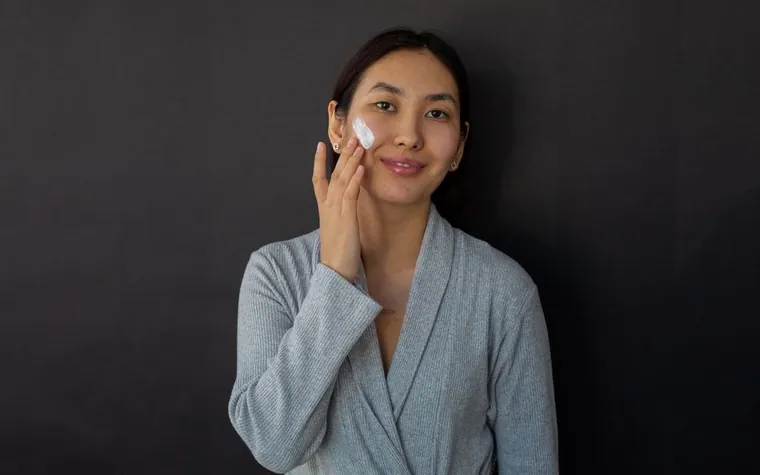
The 1992 study that tested the assumption
Ghadially, Halkier-Sørensen and Elias published Effects of petrolatum on stratum corneum structure and function in the Journal of the American Academy of Dermatology in March 1992. The premise was that petrolatum was assumed to be a simple occlusive, and the assumption had not been examined.
They disrupted the barrier with acetone and compared recovery on petrolatum-treated and untreated sites. Two findings matter here. First, petrolatum did not sit on the surface as a membrane — it permeated throughout the interstices of the stratum corneum, distributing itself between the corneocytes rather than only above them. Second, barrier recovery under petrolatum proceeded normally, and was accelerated relative to untreated skin, rather than being held back.
Why "sealing it completely" would be the wrong goal
The reason the second finding was worth publishing is that artificial occlusion behaves differently. When skin is covered with a genuinely vapour-impermeable membrane, barrier repair stalls. The working explanation in the barrier literature is that water loss across the disrupted barrier is itself part of the repair signal; abolish the gradient completely and the lipid synthesis response that rebuilds the barrier loses its cue.
Petrolatum does not abolish that gradient. It reduces water loss dramatically without eliminating it, and it does so from inside the stratum corneum as well as on top of it. That is the mechanistic difference between putting petrolatum on your face and putting cling film on it — and it is why "more occlusive is always better" is not a rule that generalises.
How much water loss it actually stops
The figure repeated across the dermatology literature is that petrolatum reduces transepidermal water loss by roughly 98%, against about 20–30% for other oil-based moisturisers. Treat the exact number as an order-of-magnitude statement rather than a precision measurement — TEWL readings depend heavily on room humidity, temperature and instrument — but the ranking is consistent and large. Nothing else in a routine is close.
The practical consequence is that petrolatum is the wrong tool for anything except the last step. It contains no water. It is not a moisturiser in the sense of adding hydration; it is a lid. What is under the lid is what you are keeping.
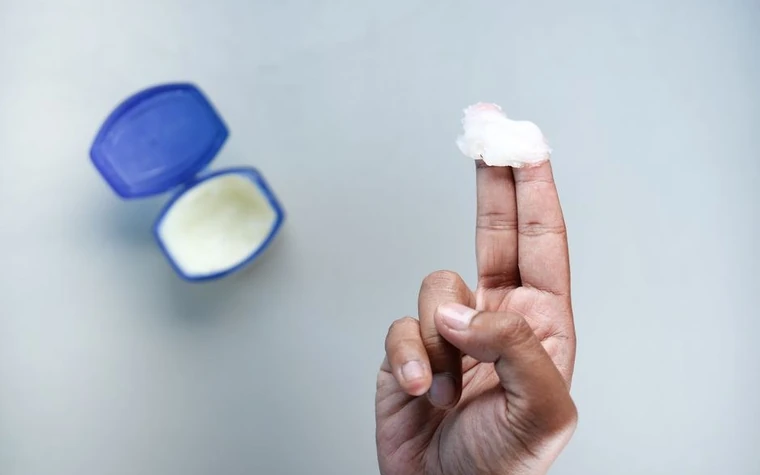
Occlusive, humectant, emollient — three jobs, not three synonyms
Slugging only makes sense inside the three-part framework moisturisers are built on. Humectants (glycerin, hyaluronic acid, urea at low percentages) bind water. Emollients (esters, fatty alcohols, plant oils) fill between the corneocytes and change how skin feels. Occlusives (petrolatum, mineral oil, waxes, silicones) slow water leaving.
A humectant with nothing over it in dry air can pull water from where you would rather it stayed. An occlusive over dry skin holds dryness in place. The pairing is the point, which is the same logic that separates the two conditions people confuse constantly — see dry skin versus dehydrated skin, and, for the humectant side, what molecular weight changes about hyaluronic acid.
Where slugging goes wrong
- Applied to a dry surface. If nothing hydrating went on first, there is little water to keep. The lid is doing its job on an empty jar.
- Applied over actives. Occlusion increases penetration. Petrolatum over a retinoid or an exfoliating acid is not a neutral final step — it changes the exposure. Keep slugging nights separate from active nights until you know how your skin responds.
- Applied too thickly, too often. A visible film across the whole face every night is not the only way to do this. Targeted use on the areas that actually lose water fastest is usually enough.
- Applied over a barrier that needs lipids, not a lid. Occlusion slows loss; it does not supply the ceramide, cholesterol and fatty acid mixture the barrier rebuilds itself from. Those are different interventions — see what the 1996 lipid study found.
Cosmetic-grade petrolatum is not crude residue
The recurring objection to petrolatum is its origin. Worth knowing: in the EU, petrolatum is restricted under the Cosmetics Regulation unless the full refining history is known and it can be shown that the substance it is produced from is not a carcinogen. Cosmetic and pharmacopoeial grades — the white petrolatum on an ingredient list — are refined to that standard. It is one of the most studied and least reactive ingredients in the category, which is precisely why it turns up in post-procedure aftercare.
Being low-reactivity is not the same as being right for every face. Petrolatum is comedogenic in some testing contexts and people vary; if a routine consistently produces congestion, that is information about your skin, not about the ingredient in the abstract.
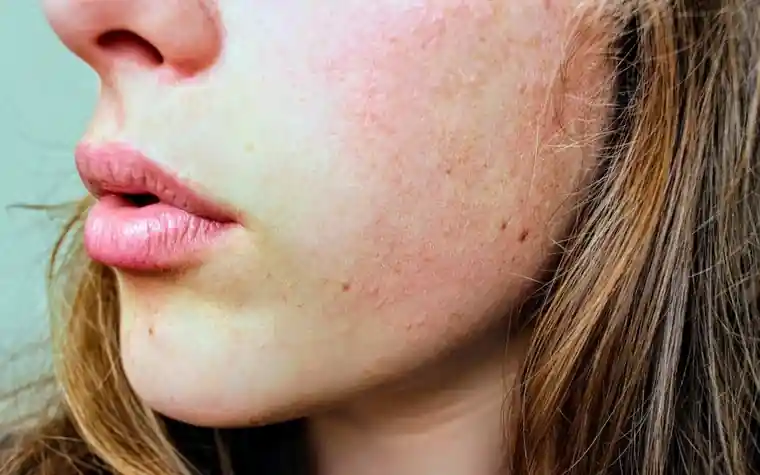
What the order actually is, and why
- Cleanse, and do not let the skin dry down completely afterwards.
- Humectant on damp skin — this is the water you are going to keep.
- Emollient or lipid-containing cream — the layer that supplies what the surface is short of.
- A thin film of petrolatum last — nothing goes over it, because nothing meaningfully gets through it.
The sequence is not arbitrary and it is not about "molecular size", which is the explanation usually given and mostly wrong. It follows from what each layer does: bind, supply, then slow the loss. The general version of that reasoning is in the parts of layering order that have evidence behind them.
Who this is a poor fit for
Slugging is a humidity-and-water-loss intervention. It has the most to offer in dry air, on skin that already loses water fast, and after something that disrupted the surface. It has the least to offer on skin that is oily and comfortable, in a humid summer, where the lid is holding in sebum and heat rather than water. And if the underlying problem is a persistent inflammatory condition rather than dryness, an occlusive is not the answer to it.
Sources and date: Ghadially R, Halkier-Sørensen L, Elias PM, "Effects of petrolatum on stratum corneum structure and function," Journal of the American Academy of Dermatology, March 1992, for the finding that petrolatum permeates the stratum corneum interstices rather than acting purely as a surface membrane and that barrier recovery proceeds normally under it; the commonly cited TEWL reduction figures for petrolatum (~98%) against other oil-based moisturisers (20–30%); and Regulation (EC) No 1223/2009 on cosmetic products, which restricts petrolatum unless the full refining history is known. Verified August 2026. Percentages, application amounts and outcomes reported in controlled studies do not transfer directly to any individual routine. Patch test any new occlusive on a small area first, and take persistent irritation, congestion or an inflammatory skin condition to a dermatologist rather than to a routine change — this article is general information and not medical advice.
All content is fact-checked under our editorial standards.