
Centella Asiatica, Explained: Why 'Cica' Tells You Nothing About the Dose
Walk down a K-beauty aisle and "cica" is on everything — creams, sheet masks, sunscreens, cleansers. It reads like an ingredient. It isn't. Cica is a marketing shorthand for products built around Centella asiatica, and it tells you nothing about what is actually in the jar. Underneath that label sit at least six different things: a whole-plant extract, four individual triterpenes, and a standardized pharmaceutical fraction. They are not interchangeable, and the label usually does not tell you which one you bought.
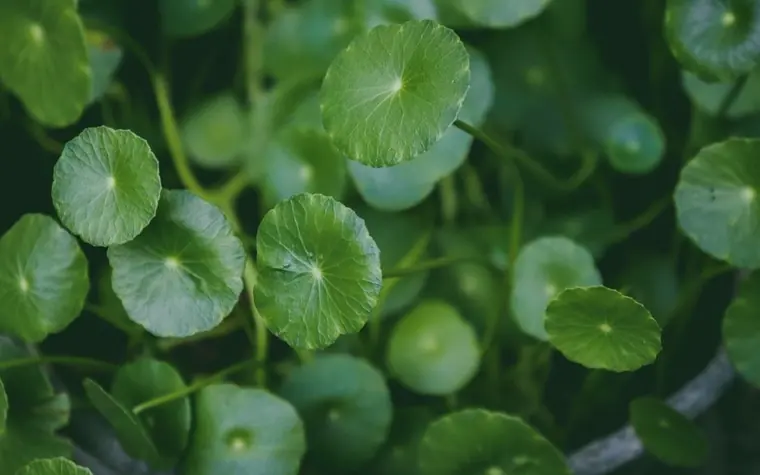
One plant, four molecules
Centella asiatica is a wetland herb long used in South and Southeast Asian traditional practice. What modern formulators care about is a family of pentacyclic triterpenes it produces. Four dominate:
- Madecassoside — a glycoside, the most abundant in most extracts
- Asiaticoside — the other major glycoside
- Madecassic acid — the aglycone (sugar-free) counterpart of madecassoside
- Asiatic acid — the aglycone counterpart of asiaticoside
The glycosides carry sugar groups; the acids do not. That difference governs how water-soluble each one is and how it behaves in a formula, which is why a product built around madecassoside is not the same product as one built around asiatic acid even though both are "centella."
The ratios are not fixed, and that is the problem
Hashim and colleagues, publishing in Molecules in 2011 (16(2):1310–1322), measured the four triterpenes in Centella extract and found the glycosides dominate: madecassoside at 3.10 mg/mL and asiaticoside at 1.97 mg/mL, against roughly 0.55 mg/mL each for madecassic and asiatic acid. In their material the glycosides made up the large majority of total triterpene content.
Across growing conditions the spread is much wider. Work comparing accessions grown under identical conditions reported ranges of roughly 0.15–5.27% madecassoside and 0.04–2.41% asiaticoside by dry weight, with an industrial benchmark for elite lines quoted at a combined 4% or above. A thirty-five-fold spread in the headline actives, from the same species, before anyone extracts anything.
This is the single most useful thing to know about centella: "Centella Asiatica Extract" on an INCI list is a botanical name, not a dose. Two products can both list it second and contain wildly different amounts of the molecules the research is about.
TECA is the exception — a standardized fraction
The pharmaceutical world solved this by standardizing. TECA (titrated extract of Centella asiatica, also written TTFCA) is not a plant extract in the cosmetic sense; it is a defined fraction containing the same three triterpenes — asiaticoside, asiatic acid and madecassic acid — at a declared ratio. When you see TECA or "madecassoside 0.1%" on a label rather than a plain extract name, you are being told a quantity. When you see "Centella Asiatica Leaf Water," you are being told a botanical origin.
Both can be perfectly good ingredients. Only one lets you compare products.
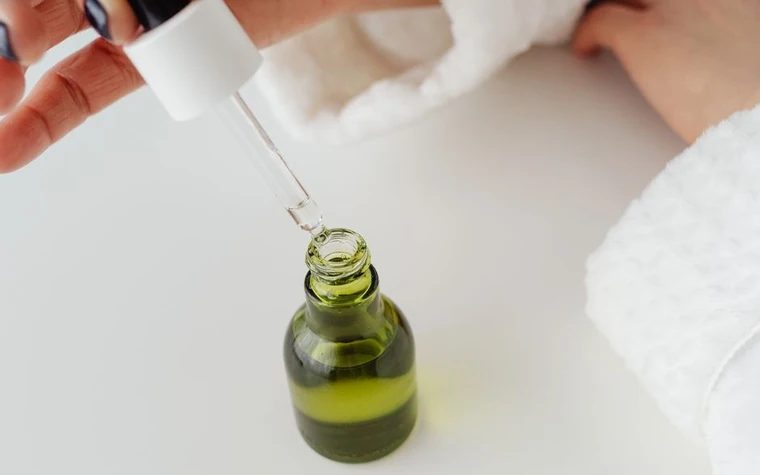
What was actually measured on human skin
The most cited human trial on a centella triterpene is Haftek et al., Experimental Dermatology, 2008, 17(11):946–952. It was a six-month randomized double-blind study in 20 female subjects with photoaged skin, using a topical formulation of 5% ascorbic acid and 0.1% madecassoside. Clinical scoring and biophysical measures improved for wrinkles, suppleness, firmness, roughness and hydration.
Read the design before the conclusion. That trial tested a combination. Vitamin C at 5% is an active concentration in its own right, and the study was not built to separate the contribution of the 0.1% madecassoside from it. The honest summary is that madecassoside at 0.1% was part of a formula that performed — not that 0.1% madecassoside on its own produces those results. Anyone quoting this study as proof of what cica does alone is over-reading it. What our vitamin C explainer says about L-ascorbic acid concentrations is directly relevant here, because it is the other half of that formula.
The in-vitro numbers, and why they don't transfer
Much of the enthusiasm for centella comes from cell-culture work on collagen. In the Molecules paper, Centella extract raised collagen production 1.4-fold at 10 mg/mL, 2-fold at 30 mg/mL and 3-fold at 50 mg/mL relative to untreated controls. A separate line of work on titrated extract reported fibronectin and collagen synthesis increases in the range of 20–35%.
Two cautions. First, milligrams per millilitre applied directly to fibroblasts in a dish is not the same exposure as a cream on intact stratum corneum — the barrier is exactly the thing standing between the two. Second, these are dose-response curves; the biggest effects sit at the highest concentrations tested, which are not the concentrations in a moisturizer. Treat in-vitro results as a reason to study an ingredient, not as a claim about a finished product. The same logic applies to how we read the barrier lipid literature.
Where centella sits in a routine
Practically, centella products behave like supporting players rather than headline actives, and that is where they are useful.
- Water-phase, early. Most centella formulas are essences, serums or gel creams. They go after cleansing and any toner step, before heavier occlusives.
- No known conflicts. Unlike acids or retinoids, centella triterpenes do not have a pH window or a documented incompatibility that forces them into a separate night. That is the practical reason they turn up alongside almost everything.
- They do not replace the barrier ingredients. If your issue is a compromised barrier, cholesterol, ceramides and fatty acids do that job; centella sits alongside them, not instead of them.
- Layering order still applies. The reasoning is in our layering order piece — thin to thick, and let the active have contact time.
What it cannot be sold as
Some of the published literature on centella triterpenes concerns inflammatory skin disease. That research exists, but it does not travel with the product. A cosmetic cannot be marketed as treating, preventing or curing any condition — and centella marketing crosses that line often, using "repairing," "healing" and disease names to describe a moisturizer.
If you are dealing with eczema, rosacea, persistent redness or anything that is being managed as a medical condition, that belongs with a dermatologist, not with an ingredient list. A cica cream is not a substitute for a diagnosis or a prescription, and choosing one instead of a consultation delays the thing that would actually help.
One more practical note: botanical does not mean non-reactive. Contact allergy to Centella asiatica is documented, and "for sensitive skin" on the front of a jar is a marketing position, not a test result. Our sensitive skin explainer covers why that phrase carries so little information.

How to read a cica label
- Find the real INCI name. "Cica" will not appear on the ingredient list. Look for Centella Asiatica Extract, Centella Asiatica Leaf Extract, Madecassoside, Asiaticoside, Asiatic Acid or Madecassic Acid.
- Prefer a number to a plant. A stated percentage of a named triterpene tells you something. A plant extract name, at any position on the list, does not.
- Check what else is doing the work. Many cica products are carried by glycerin, panthenol and a decent emollient base. If the formula would be good without the centella, that is fine — just know what you are paying for.
- Discount trial claims that used combinations. If the cited evidence is the 2008 madecassoside study, remember it also contained 5% vitamin C.
- Ignore the packaging cues. Green tubes and leaf graphics are not a concentration.
Centella is a genuinely interesting ingredient family with a real research base and no meaningful compatibility problems. The reason it disappoints people is not the plant. It is that the word on the front of the box is a category, not a dose.
Patch-test any new product on a small area before applying it broadly, and see a dermatologist for any skin condition that is persistent, painful or changing.
All content is fact-checked under our editorial standards.