
Maskne, Explained: What Skin Measurements on 20 Volunteers and a 1,025-Person Survey Show About Wearing Face Masks
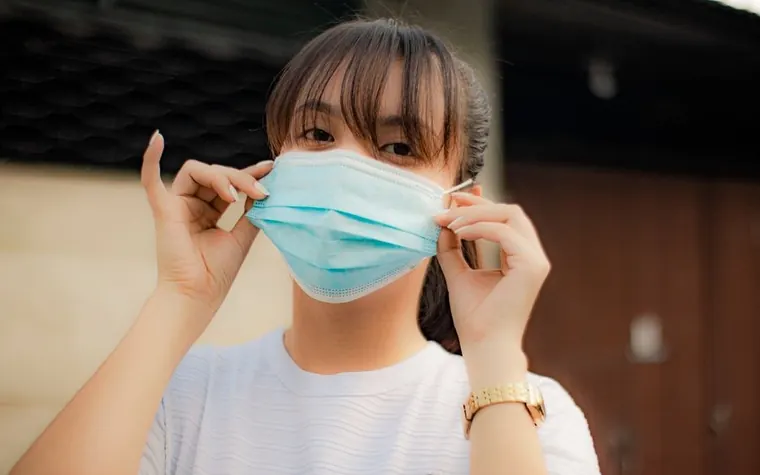
"Maskne" is the informal name for breakouts and irritation along the areas a face mask covers. It sounds like a problem that belongs to 2020, but masks are still worn daily in clinics, on public transport, and during pollen or smoke seasons, and the research on what happens to skin underneath is more specific than the nickname suggests. Here is what the measurements and surveys actually found, and what that does and does not tell you about your routine.

What a 20-person crossover study measured under the mask
A 2020 study in Contact Dermatitis recruited 20 healthy volunteers in China and used a randomized crossover design. Each person wore an N95 respirator and a medical mask on separate occasions, and the researchers measured skin on the covered area and on uncovered skin after 2 hours and 4 hours of wear, then again 0.5 and 1 hour after removal. They tracked hydration, transepidermal water loss (TEWL), erythema (redness), pH, and sebum. Hydration, TEWL, and pH all increased significantly with wear, erythema rose from baseline, and sebum increased on both covered and uncovered skin. There was no significant difference in these readings between the two mask types.
Why those numbers matter
Higher hydration under a mask is not a sign of healthier skin. It reflects trapped breath and sweat. A higher TEWL and a higher pH are the same markers we discuss in our cleanser pH explainer, where a rise in surface pH is linked to a skin surface that is less comfortable and easier to irritate. The study measured 20 people over a few hours, so it shows direction, not how long the changes last or whether any given person will break out.
What healthcare staff reported during SARS
An earlier descriptive study in Contact Dermatitis, published in 2006, surveyed staff at two Singapore sites during the 2003 SARS outbreak. Of 322 respondents, 307 used masks regularly, and 109 of them (35.5%) reported a problem from N95 use. Among those, acne was reported by 59.6%, facial itch by 51.4%, and rash by 35.8%. These are self-reports from people wearing tight-fitting respirators for long shifts, so they are an upper bound for ordinary mask wearing.
What an online survey of 1,025 people found
A 2023 online questionnaire covered 1,025 participants. Overall, 48.6% reported skin symptoms after using masks, most commonly red papules (33.8%) and itching (27.2%). People who wore masks for more than 4 hours a day reported more symptoms, and healthcare workers had a higher risk than other occupations. The authors also reported that masks worsened the severity of rosacea, contact dermatitis, and seborrheic dermatitis in people who already had them. Because the data came from a self-selected online survey, the percentages describe who answered, not the general population.
Where it shows up, and what drives it
A 2025 systematic review pooled 15 studies of facial skin problems from protective equipment. The most common problems were pressure injury, rash, irritation, sweating and moisture accumulation, and acne, and the usual locations were the nose bridge, cheeks, ears, chin, and forehead. The most prominent risk factors were how long the equipment was worn, the type of equipment, and sweat and moisture. The authors noted that the studies differ in method and called for better prospective trials. Not every bump under a mask is acne, either. Friction and trapped moisture can produce clogged pores, as in our closed comedones guide, and also plain irritation, which is a different mechanism covered in our irritant versus allergic dermatitis explainer.
What the evidence does not tell us
We did not find a controlled trial showing that any particular cleanser, moisturizer, or active ingredient prevents mask-related breakouts. Advice that a given serum or clay "fixes maskne" rests on brand claims rather than on the studies above. What the data does support is limited to factors you can observe: longer wear time, tighter fit, heat, and moisture are associated with more reactions.
Practical points drawn from the research
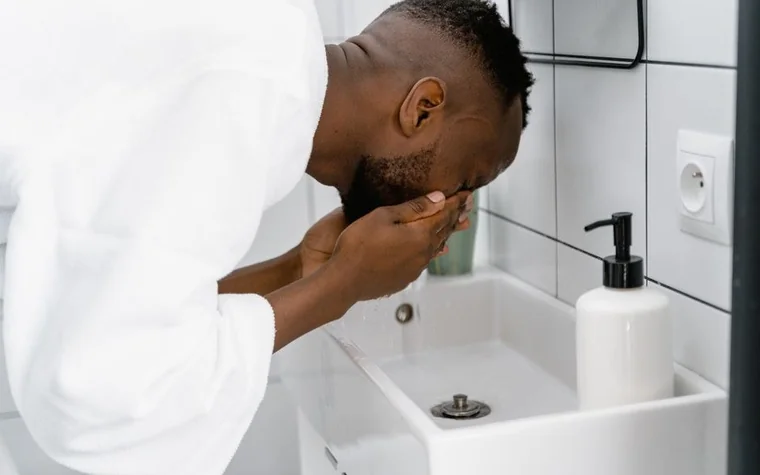
Because friction, humidity, and wear time are the recurring factors, the low-risk options are mechanical: take breaks from a mask where that is safe and permitted, replace a mask that is damp, and choose a fit that is secure without cutting into the skin. On the skincare side, a gentle cleanser at the end of the day and a plain moisturizer are the usual baseline. If you are starting a strong active such as a retinoid or an exfoliating acid, note that skin already showing higher TEWL and redness under a mask may tolerate it less well, so introduce one change at a time and patch test, as described in our patch testing guide.
Check before you change anything
Before blaming the mask, look at what else changed: a new product, a new detergent on a cloth mask, or a different workload. Cloth masks that are not washed regularly are a separate variable that the studies above did not isolate. Keep a short note of what you applied and when the bumps appeared, which makes any reaction easier to trace.
This article summarizes published research and is not medical advice. Patch test any new product first, and see a dermatologist if breakouts are painful, spreading, or do not settle, or if you have rosacea, eczema, or a known allergy.
All content is fact-checked under our editorial standards.