
Freckles vs. Sun Spots, Explained: Why Ephelides Fade in Winter and Solar Lentigines Don't
Freckles and "sun spots" both look like small brown marks, but dermatology treats them as two different things.
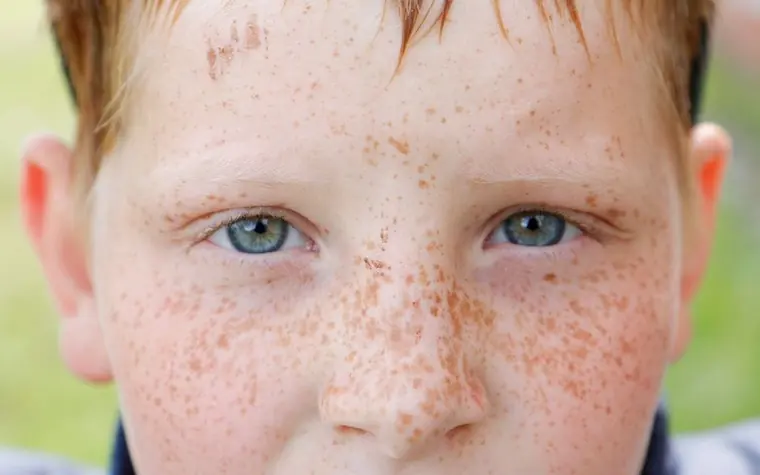
Two names, two kinds of spot
Ephelides are what most people call freckles. Solar lentigines are the flat brown patches called sun spots or age spots. A 2014 review in Pigment Cell & Melanoma Research describes ephelides as largely genetically determined but triggered by sunlight, while lentigines come from accumulated sun exposure and photodamage.
Ephelides: inherited, seasonal, small
DermNet NZ describes ephelides as very common in fair-skinned people, especially red-haired children, where the MC1R gene is thought to be the main one involved. They usually appear on the mid face from early childhood and are typically under 3 mm. The number of melanocytes does not increase. Melanin production rises in sunlight and falls in winter, so freckles are more prominent in summer and fade considerably, or vanish, in winter.
Solar lentigines: years of UV, not one summer
DermNet NZ calls a solar lentigo a benign, flat, pigmented lesion on sun-exposed skin after chronic UV exposure. They are most common in middle-aged and older adults and uncommon under age 12, and appear on hands, forearms, upper body and shins. Unlike a freckle, a lentigo does not fade when the sun leaves, and it can range from millimeters to centimeters.

Why the mechanisms differ
The 2014 review concludes that an ephelis is the direct response of melanocytes to acute UV damage in childhood. A solar lentigo instead reflects signals from fibroblasts and mast cells in the deeper skin layer acting on the cells above.
Where this leaves a routine
Sunlight drives both, so daily sunscreen is the shared first step, and DermNet notes that clothing and shade work better than sunscreen alone. For the dose behind the label, see how much sunscreen is 2 mg/cm².
What skincare cannot promise
DermNet says rigorous protection may lighten existing lentigines only modestly, and clinic options such as cryotherapy, laser and peels are a dermatologist's decision. For how pigment ingredients differ in mechanism, read alpha arbutin, tranexamic acid and vitamin C.
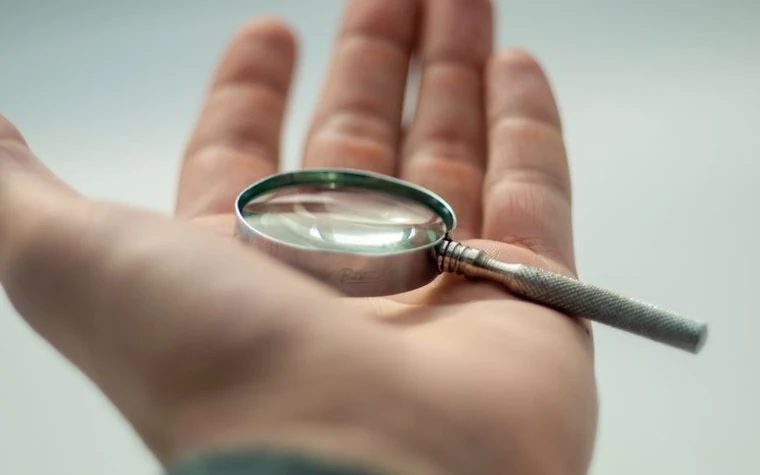
When a brown mark needs a professional
Solar lentigines can resemble a melanoma in situ called lentigo maligna, and DermNet says a biopsy is appropriate when there is diagnostic uncertainty, especially if color varies within the mark. A new or changing mark is not something to judge from photos or treat with a serum. Other pigment, such as melasma, also looks different under examination.
This article describes research and promises no result. Patch test any new product first (see this method), and ask a dermatologist about any spot that is new, changing or uncertain.
All content is fact-checked under our editorial standards.