
Carbomer, Explained: What the CIR's 2018 Re-Review Says About This Gel Thickener, 6,434 Uses and the Benzene Question
Carbomer is the ingredient that makes a clear gel hold its shape, and it appears on far more labels than most shoppers notice. It is not an active ingredient, so it rarely gets attention, yet it raises real questions: is it safe, why does a benzene warning sometimes come up, and does it matter for sensitive skin? This guide follows the Cosmetic Ingredient Review (CIR) Expert Panel's amended report on acrylates copolymers, released on January 23, 2019, and what its data do and do not show.
What carbomer is and what it does
The CIR describes carbomer as a homopolymer of acrylic acid crosslinked with an allyl ether of pentaerythritol, an allyl ether of sucrose, or an allyl ether of propylene. In plain terms, it is a very large synthetic molecule built from repeating acrylic acid units.
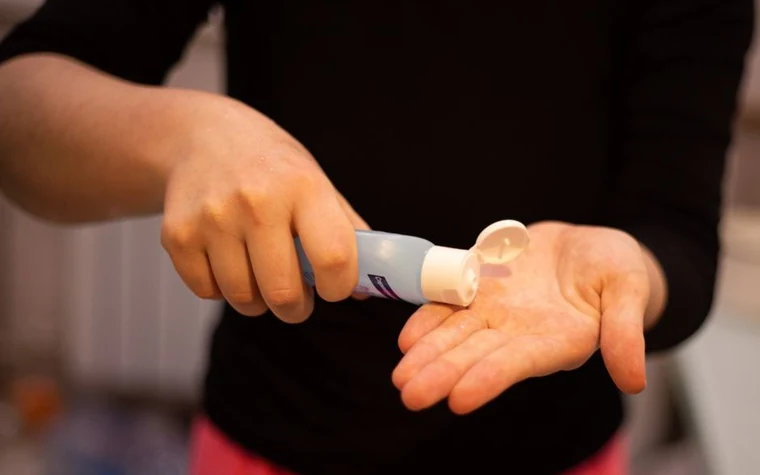
In cosmetics it works as an emulsion stabilizer and as a viscosity-increasing agent in water-based formulas. That is why it shows up in gel moisturizers, serums, sunscreens and hand sanitizers: it thickens the water phase and keeps oil and water from separating.
Why "carbomer-934" and "carbomer-940" are no longer on labels
The CIR first reviewed the family in 1982 as Carbomers-934, -910, -934P, -940, -941 and -962. Those numbers are now technical names for one ingredient, listed in the dictionary simply as Carbomer. The panel reaffirmed that Carbomer is safe as used in 2003 and folded it into the 2018 re-review of 126 acrylates copolymers.
The 2018 conclusion: the ingredients are safe in cosmetics in the present practices of use and concentration, when formulated to be non-irritating.
How common it is
Carbomer has the highest frequency of use in the whole family. According to 2018 FDA reporting, it appeared in 6,434 formulations, up from 1,504 in 2001. Of the 2018 total, 5,336 were leave-on products and 1,093 were rinse-off. So when you read a gel or lotion label, you are far more likely to meet carbomer on a product that stays on your skin than one you wash away.
What concentrations were reported
An industry survey in 2018 reported carbomer at 0.00001 to 15 percent across product types. The 15 percent figure sits in a powder category, so it is not what a typical gel contains. Eye-area products ranged from 0.2 to 1.5 percent, rinse-off products went up to 2.5 percent, and hair products ranged from 0.0084 to 2.5 percent. The 2001 survey had topped out at 2 percent.
The takeaway is that most formulas use a small amount, because a little carbomer already thickens water.
What the skin and eye tests showed
Rabbits showed minimal skin irritation when tested with 100 percent carbomer. In clinical studies, carbomer and its salts showed low potential for irritation and sensitization at 0.5, 5, 10 and 100 percent, and also at 1.0 percent on human skin. Formulations containing up to 0.25 percent carbomer showed low potential for irritation, sensitization, phototoxicity and photo-contact allergy.
Eye tests in rabbits found zero to moderate irritation at 0.20 to 100 percent. A thickener is not designed for the eye, so keep any gel out of it, as you would with any product.
The benzene question
The report lists benzene among reported impurities of carbomer resins, alongside water, acrylic acid and trace metals. The panel asked that every effort be made to reduce benzene to the lowest possible value, and in 2003 it acknowledged the industry practice of removing benzene from carbomer.
A separate 2017 CIR report on crosslinked alkyl acrylates found them safe except when polymerized in benzene. For Acrylates/C10-30 Alkyl Acrylate Crosspolymer, the data were insufficient to judge carcinogenicity if made that way, so the 2018 report covers it only when made in other solvents. Carbomer on a label does not tell you the solvent, so brand transparency matters here.
How to use this on a label
Seeing carbomer high on an ingredient list mostly tells you the product is a water-based gel. It will not hydrate by itself, so look to humectants such as glycerin for that, and to fatty alcohols such as cetyl and cetearyl alcohol for cream body. Silicones play yet another texture role, covered in our dimethicone guide.
Short version
Carbomer is a crosslinked acrylic acid polymer used to thicken and stabilize water-based products. The CIR judged it safe as used when formulated to be non-irritating, with low irritation and sensitization in the tests summarized, and it asks makers to keep benzene residue as low as possible. This article is educational and is not medical advice: run the patch-test method before trying a new product, and see a dermatologist about any reaction that keeps coming back.
All content is fact-checked under our editorial standards.