
Double Cleansing, Explained: What the Oil Step Actually Dissolves — and When the Second Cleanse Is Just Stripping
Double cleansing arrived in Western routines as a rule — oil first, foam second, every night, everyone. That framing is what makes it go wrong. The two steps are not a ritual with an inherent virtue; they are two different removal mechanisms, and each one only earns its place when there is something on the face it is actually suited to removing. Understood that way, the question stops being "should I double cleanse" and becomes "what am I trying to take off tonight, and which chemistry does that."
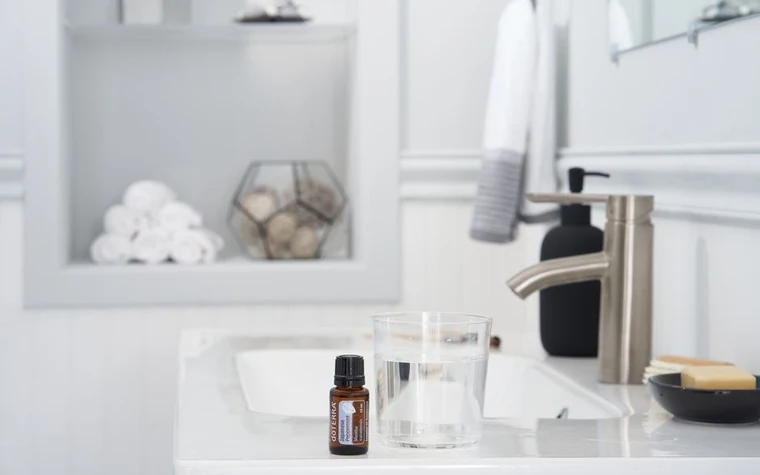
Step one is solvency, not cleansing
The first step is a solvent problem. Modern UV filters, silicone-based primers, long-wear pigments and sebum are all lipophilic — they dissolve in oil, and they do not dissolve in water. A water-based cleanser cannot break them down; it can only rely on its surfactants to lift them, which is a slower and more aggressive route for the same job.
An oil or balm cleanser works on the principle that like dissolves like. The lipid phase — plant oils, esters, sometimes mineral oil — mixes with the film on the skin and loosens it from the surface. That is the whole of step one. It is not disinfecting anything and it is not deep-cleaning a pore.
The emulsifier is the part that matters
Here is the component almost nobody reads for. A cleansing oil is not just oil; it contains an emulsifier, typically something like PEG-hydrogenated castor oil or a polysorbate, whose job is to let the whole mixture rinse away in water rather than smear.
This is why straight facial oils and cleansing oils behave differently at the sink. Without an emulsifier, you are moving the film around and leaving a residue — the residue that later gets blamed on "oil cleansing breaks me out." It is also why the technique matters: you massage on dry skin, then add water and keep massaging until the product turns milky. That colour change is the emulsification. Rinsing before it happens is the single most common execution error, and it leaves behind exactly what you were trying to remove.
Step two is surfactants, and their class decides how harsh it is
The second cleanser removes what is water-soluble — sweat, the emulsified residue of step one, general grime. It works by surfactant action: molecules with a water-loving head and an oil-loving tail that surround residue and carry it off in the rinse.
Surfactant class is the practical variable:
- Anionic — sodium lauryl sulfate (SLS) is the strong end of this group. It is used in dermatology research specifically as a standard irritant to induce barrier disruption, which tells you how efficiently it penetrates.
- Milder anionics — sodium laureth sulfate, sulfosuccinates and acyl glutamates clean effectively with less barrier disturbance.
- Amphoteric — cocamidopropyl betaine, common as a secondary surfactant that softens a harsher primary one.
- Nonionic — the gentlest group, generally the lowest-foaming.
Foam volume, worth saying plainly, tells you nothing about cleaning power. It correlates with surfactant type, not efficacy.

pH is the second cleanser's other variable
Skin surface pH sits in an acidic range, broadly reported around 4.5-5.5. True soap is saponified fat and cannot exist below roughly pH 9; traditional bars sit around 9-10. Alkaline cleansing shifts surface pH upward, and that shift is associated with barrier disturbance, reduced water content and increased sensitivity to irritants — which is why synthetic detergent (syndet) formulations, built at or near skin pH, became the standard recommendation for compromised or reactive skin.
So the tighter, squeaky feeling after washing is not the feeling of clean. It is the feeling of a barrier that has had lipids removed and a surface pH pushed out of its usual range. It resolves on its own, but doing it twice a day, every day, is what turns an occasional insult into a persistent one.
When the second cleanse is just stripping
The logic runs in one direction: if there was nothing oil-soluble on the face, step one had no job — and if step one did its job, step two often has very little left to do.
Cases where two steps genuinely earn their place: after sunscreen worn all day, after long-wear or water-resistant makeup, and on skin producing enough sebum that a single wash leaves a film. Cases where they do not: a bare face in the morning, and evenings with nothing on the skin. Morning is the clearest example — overnight the face has accumulated sebum and the residue of night products, and a single gentle cleanser handles that completely.
On dry, reactive or already-compromised skin, a second cleanse over nothing removes intercellular lipids you need. If your skin feels tight ten minutes after washing, that is the signal to drop a step, not to add a richer moisturiser on top.
Why the order is what it is
Oil first is not arbitrary. Applying the water-based cleanser first means its surfactants have to fight through the lipophilic film to reach anything, so you compensate with more product, more friction and longer contact time — all of which increase barrier disturbance. Removing the oil-soluble layer first means the second cleanser meets only what it is chemically suited to.
Contact time is the underrated lever throughout. Longer exposure to surfactants means more barrier disruption, so a thorough massage in step one and a short, efficient step two is gentler than a rushed first pass and a prolonged scrub. The same sequencing logic — each step meeting what it is formulated for — runs through the rest of a routine, which we set out in layering order, explained.
What this means for your routine
- Evening, sunscreen or makeup worn: oil or balm on dry skin, emulsify fully, rinse, then a low-foaming second cleanser
- Evening, bare skin: one gentle cleanser is enough
- Morning: one gentle cleanser, or water only if your skin runs dry
- Choosing step two: look for milder surfactant classes and a formulation at or near skin pH rather than a traditional soap base
- The test: skin should feel comfortable, not tight, within a few minutes of drying
Cleansing also sets up what follows. A stripped surface is a poor starting point for actives — the tolerance issues people attribute to a serum frequently trace back to the wash before it. If dryness is the recurring complaint, it is worth working out whether the problem is lipids or water, which we separated in dry versus dehydrated skin. And two of the most commonly layered actives after cleansing are covered in niacinamide and vitamin C.
Sources and scope. Reference points cited: skin surface pH commonly reported in the region of 4.5-5.5 and traditional soap at approximately pH 9-10; the association between alkaline cleansing and barrier disturbance that underpins the syndet recommendation for sensitive and compromised skin; the use of sodium lauryl sulfate as a standard irritant in dermatological barrier-disruption models; dermatology guidance that double cleansing is warranted primarily where sunscreen, long-wear makeup or heavy sebum are present rather than as a universal step. Verified August 2026. Ranges reported in the literature vary by measurement site and method. Patch-test any new cleanser before regular use, and if you have persistent irritation, a diagnosed skin condition or are unsure what your skin needs, consult a dermatologist. Cosmetic products are not intended to treat or prevent any condition, and nothing here is a substitute for medical advice.
All content is fact-checked under our editorial standards.