
Micellar Water, Explained: What 111 UK Products Contain, and the Preservative Patch-Test Data Behind the Rinse Question
Micellar water is sold as a "no-rinse" cleanser: soak a cotton pad, wipe, and you are done. That convenience raises two fair questions. What is actually in the bottle, and does leaving it on your face matter? The published answers are thinner than the marketing, but there are two useful data points: an ingredient survey of 111 products and a patch-test study of one preservative that shows up in some of them.
How micellar water cleans
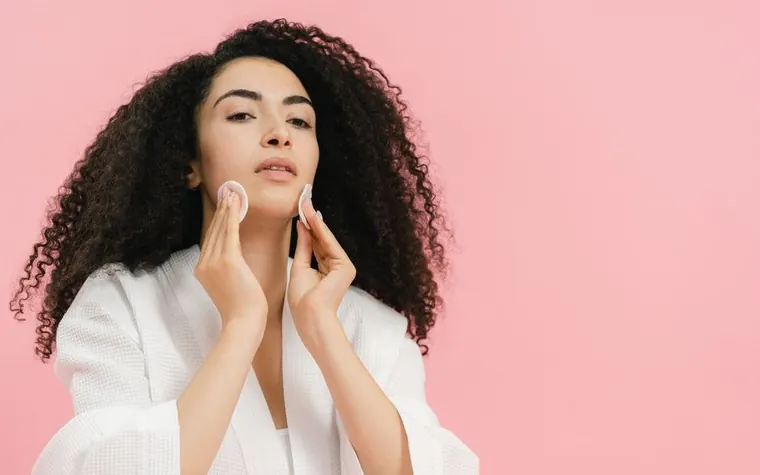
The base is mostly water plus a low level of mild, non-ionic surfactants. Above a certain concentration, surfactant molecules cluster into tiny spheres called micelles, with water-loving heads outside and oil-loving tails inside. Those tails pull sebum and light makeup into the sphere, so the cotton pad can lift it away. A conference abstract in the Journal of the American Academy of Dermatology described the cleansing efficacy of micellar water as coming from a low level of non-ionic surfactant, which is why it is gentler in design than a foaming wash built on stronger ionic surfactants.
What 111 UK micellar waters contain
In August 2025, two dermatology researchers listed the ingredients of 111 micellar waters from 64 brands across 18 UK retailers, presented as a conference abstract in the British Journal of Dermatology. They found 587 unique ingredients, averaging 20 per product, with a range from 7 to 50. A few results stand out. Glycerin appeared in 78% of the products, citric acid in 67%, and botanical ingredients in 68%. Fragrance ingredients appeared in 49%, including "fragrance/parfum" in 42%, limonene in 14%, and linalool in 9%. Essential oils appeared in 11%.
The sensitive-skin label does not mean fragrance-free
Among 30 of those products marketed for sensitive skin, 40% still contained fragrance and 60% contained botanicals. That is a reminder that the front of the bottle is a marketing claim, while the ingredient list is the record. Denmark's consumer council reached a similar picture in September 2025 when it reviewed the ingredient lists of 30 micellar waters: 13 had nothing it flagged, 12 contained perfume or plant extracts that may trigger allergies, and 5 contained substances it considered problematic. The survey judged lists only; it did not test irritation on skin.
The preservative question
A water-based product needs a preservative. In the UK survey, phenoxyethanol was most common at 41%, then sodium benzoate at 32% and potassium sorbate at 22%. Polyaminopropyl biguanide, also called PHMB, appeared in 6%. Our phenoxyethanol guide covers the most common one. PHMB is the one with more allergy data. In the EU it is listed in Annex V of the cosmetics regulation as a permitted preservative capped at 0.1%, and it may not be used in products that could expose the lungs by inhalation, such as sprays.
What patch-test data says about PHMB
A Swedish study published in 2021 reviewed 1,760 patients who were patch tested for suspected allergic contact dermatitis between July 2016 and December 2018. PHMB at 2.0% in water was part of the extended series. Positive reactions occurred in 19 patients, or 1.1%, and the face, head, and neck were the most common sites at 52.6%. Reactions to PHMB also often occurred together with reactions to other cosmetic-related allergens. The authors called the rate higher than previously reported. These were people already referred for dermatitis, so the 1.1% is not a rate for the general public.
So, do you need to rinse?
We did not find a published trial that settles this. What exists is mostly manufacturer-linked testing of formulas, or brand advice. The reasoning is simple: a leave-on film of surfactant, preservative, and any fragrance stays in contact with skin for hours rather than seconds, which matters most if you have already reacted to something. If your skin is calm and the list is short, wiping and moving on is a common choice. If your face stings, itches, or looks red after a pad, rinsing with water is a low-cost change worth trying. Our cleanser pH explainer covers how cleansers interact with the skin surface.
Where it fits in a routine
Micellar water removes light makeup and sunscreen only partly. Heavier or waterproof products usually call for an oil or balm first, as in our double cleansing guide. Check the label for a PAO symbol, as our expiry date guide explains, since a water-based product is more exposed to contamination once opened.
How to check yours
Read the full ingredient list for fragrance, parfum, limonene, linalool, essential oils, and "polyaminopropyl biguanide." If you have had facial or eyelid reactions before, those are the names to look up. Then patch test as described in our patch testing guide, and tell a dermatologist about any reaction. Our irritant versus allergic dermatitis explainer covers how clinicians tell them apart.
This article summarizes published research and regulatory listings and is not medical advice. Patch test any new product first, and see a dermatologist about a skin reaction or a known allergy to preservatives or fragrance.
All content is fact-checked under our editorial standards.