
Ampoule vs. Serum vs. Essence: What K-Beauty Product Labels Actually Promise
Walk down a K-beauty aisle and you'll see the same active ingredient sold three ways -- as an essence, a serum, and an ampoule -- often at three different prices. The marketing implies the ampoule is simply "the strong one," but the real difference is a specific, measurable one: concentration, formulation weight, and how long the product is meant to sit in your routine.
The concentration ladder
Across cosmetic chemistry sources and brand formulation documentation, the rough concentration bands are consistent: essence sits around 3-8% active concentration, serum runs 5-15%, and ampoule runs 15-30%. These are not hard regulatory categories -- there's no legal definition that stops a brand from formulating a "serum" at 20% -- but the pattern holds closely enough across the market that the labels are a reasonably reliable signal of what you're buying, not just marketing language.
Texture reflects the formulation, not just marketing
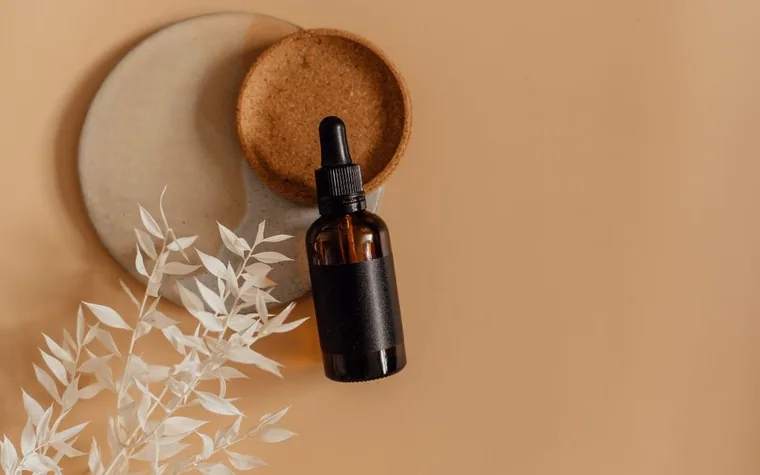
Essence is deliberately watery, built to feel almost like a hydrating toner and to absorb fast without leaving residue. Serum and ampoule are both thicker and more viscous, but ampoule pushes further: a well-formulated ampoule contains fewer filler and buffering ingredients than a serum, because more of the formula's weight is given over to the active ingredient itself. That's also why ampoules typically come in small dropper bottles -- the format signals "measure this out carefully," not "apply liberally across your whole face and neck every day."
What each one is actually for
Essence functions primarily as a hydration layer that also carries secondary actives like niacinamide or plant extracts -- it's the product doing double duty as a humectant boost and a mild treatment step, meant for daily, indefinite use. Serum is a targeted mid-weight treatment aimed at a specific concern (brightening, fine lines, barrier support) at a concentration meant to be sustainable long-term. Ampoule is intended for short-term, intensive use -- a skin reset before an event, a response to a flare-up, or a seasonal boost -- rather than a product you keep in daily rotation for months on end.
Why "more concentrated" isn't automatically "better for you"
A higher percentage of an active ingredient doesn't mean a better result for every skin type. Actives like retinoids and AHAs have a well-documented irritation ceiling where going past a certain concentration adds side effects without adding proportional benefit -- a pattern already covered in how retinol concentration affects efficacy and irritation. Reaching for the 25% ampoule version of an ingredient your skin has never tried at 5% is a common way to trigger irritation that a slower introduction would have avoided entirely.
Layering order: thinnest to thickest
The standard application order follows viscosity, not marketing hierarchy: essence, then serum, then ampoule, followed by moisturizer to seal everything in. This is the same logic behind why toner goes before essence in a K-beauty routine -- each step is formulated to be absorbed before the next, thicker layer goes on top and traps it in. Applying a thick ampoule before a watery essence would coat the skin and block the essence from penetrating at all.
You don't need all three at once
A common misconception is that a "complete" Korean routine requires an essence, a serum, and an ampoule stacked every single day. In practice, most routines function well with an essence for daily hydration and a serum for a targeted concern, with an ampoule reserved for specific situations -- a week of extra support during a season change, or a short course when skin needs a more concentrated push. Running all three, every day, at overlapping concentrations of the same active ingredient is more likely to over-load and irritate skin than to compound the benefit.
Reading the label instead of trusting the category name
Because none of these three terms are regulated categories, the only reliable way to know what you're actually applying is to check the ingredient list and, where the brand discloses it, the percentage. A product labeled "essence" with an active ingredient near the top of the ingredient list may functionally behave more like a light serum, and a "serum" from a brand that dilutes heavily may sit closer to an essence in real concentration. The category name is a starting assumption, not a substitute for reading what's actually in the bottle -- the same discipline that matters when picking any single active, such as checking the concentration range covered in niacinamide, explained before assuming a higher number on the label always means a better result.
Bottom line
1. Concentration rises from essence (3-8%) to serum (5-15%) to ampoule (15-30%) as a general pattern, not a strict rule.
2. Ampoules are built for short-term, intensive use, not indefinite daily application.
3. Layer thinnest to thickest -- essence, then serum, then ampoule, then moisturizer.
4. Check the ingredient list rather than assuming the category name tells you the real concentration.
Patch-test any new concentrated product before full-face use, and consult a dermatologist for any persistent irritation or skin concern -- this describes cosmetic product formulation, not medical treatment.
All content is fact-checked under our editorial standards.