
Squalane, Explained: What Hydrogenation Removed, and Why That Is the Whole Point
Squalane is the ingredient people reach for when everything else has gone wrong. It shows up in single-ingredient bottles, in the last step of a stripped-back routine, and in the "just oil" advice given to skin that has stopped tolerating actives. What almost nobody explains is why it exists at all — because there is a nearly identical molecule, squalene, that your own skin already makes in quantity, and the cosmetics industry deliberately does not use it. The letter that changes is the whole story: one e becomes an a, and a molecule that oxidises faster than almost anything on your face becomes one that essentially does not.
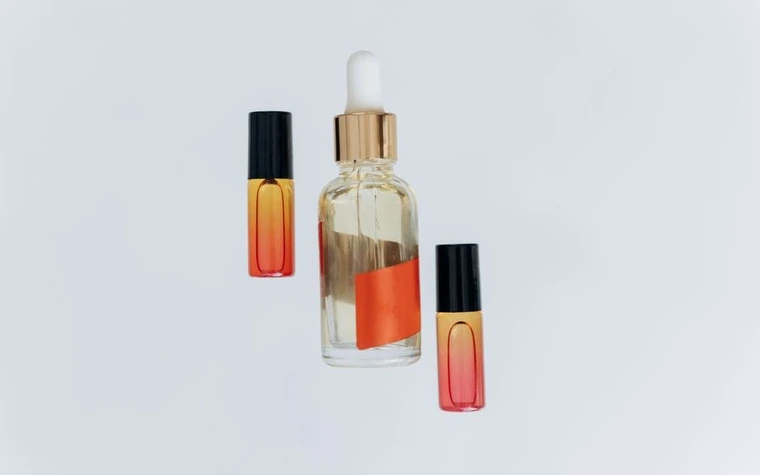
Your skin makes the unstable one
Squalene is a triterpene — a polyunsaturated aliphatic hydrocarbon, in the CIR's description — and it is a signature component of human sebum. The Cosmetic Ingredient Review's report describes it as the principal hydrocarbon of human surface lipids, constituting up to 11% of total surface fat and approximately 5% of adult skin surface sebum. In the body it is a precursor of cholesterol, which is why moderate amounts turn up in the liver and small intestine.
Squalane, the saturated version, also occurs naturally on skin — the same report notes it exists as a normal constituent of human sebum in amounts up to 2.6%, making it the second most common hydrocarbon in those lipids after squalene. Humans are capable of saturating squalene themselves, so squalane can be a biogenic product rather than only a manufactured one.
Two things follow from this. First, neither molecule is foreign to skin. Second — and more usefully — the fact that squalene is abundant on your face is not an argument for putting more of it there.
The double bonds are the problem
Squalene has six carbon-carbon double bonds. That is what "polyunsaturated" means, and it is what makes the molecule reactive. The CIR report is blunt about the consequence: squalene "has the propensity towards instability, ready oxidation, and darkening, and towards becoming viscous and taking on an odor," and when exposed to air it takes up oxygen, permitting the formation of peroxides.
On skin this is not theoretical. Squalene is believed to be the first target lipid and main source of skin lipid peroxides when skin is exposed to sunlight. In one measurement the rate constant of squalene peroxidation by singlet oxygen was ten-fold higher than that of the other skin surface lipids examined, and the reaction was driven more efficiently by UVA than by UVB. The most oxidisable thing on your face is something your own sebaceous glands produce, and long-wavelength UV is what sets it off.
Squalane has none of those double bonds. It is fully saturated. The CIR notes simply that "since Squalane is a saturated compound, it is not as easily oxidized as Squalene." That single structural difference is the entire commercial case for the ingredient.
What the oxidised form was shown to do
Here the evidence gets specific, and it is worth reading carefully because it is routinely misquoted in both directions.
Researchers irradiated squalene with UVA for one to three hours to produce squalene monohydroperoxide, then applied it to rabbit ear skin three times a week for two weeks. It produced comedogenic reactions in an irradiation-time-dependent manner, with comedo formation induced at roughly 2 mM squalene monohydroperoxide — about 39 µg per cm² of skin. Crucially, the comedogenicity of reduced squalene-hydroxide, and of squalene itself, was lower than that of the monohydroperoxide.
Read that precisely. The peroxide was comedogenic in that model; the parent molecule was less so. This is a rabbit-ear assay, not a human trial, and it does not establish that squalene causes breakouts on human faces. What it does establish is that the interesting variable is oxidation state, not the lipid itself — which is exactly the variable squalane removes by design.
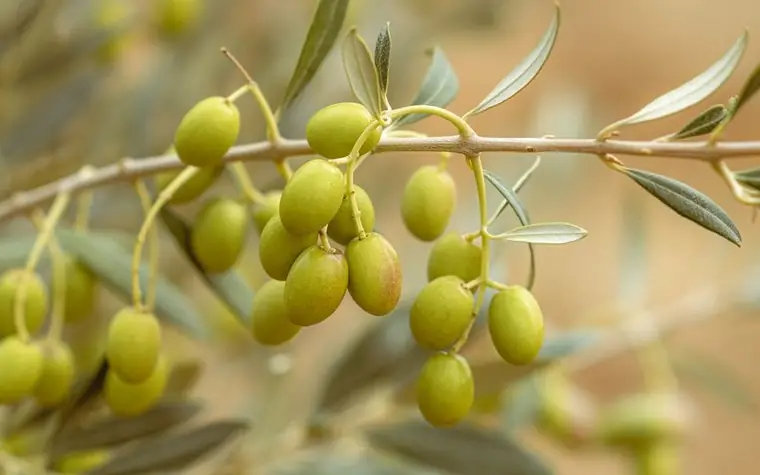
Where it comes from, and why "olive" is on the box
Historically squalane was made from shark liver oil: molecular distillation, hydrogenation of the distillate, then redistillation, yielding a material at least 96% squalane, with roughly 1% neutral fat and about 3% pristane as impurities. Squalene itself is found in large quantities in shark liver oil and other fish oils, and in smaller amounts in olive oil, wheat germ oil, rice bran oil and yeast.
Plant routes exist and now dominate the K-beauty aisle. Olive-derived squalane starts from the squalene fraction of olive oil and hydrogenates it. Sugarcane-derived squalane takes a different path entirely: the CIR's 2019 re-review notes squalane can be derived from fermentable sugars through linear dimerization, hydrogenation, and purification.
The practical point for a shopper: the finished molecule is the same molecule. Olive squalane and sugarcane squalane are not different actives, and no source performs better on skin than another. What the source legitimately tells you about is supply chain and residual purity, which is a real reason to prefer one supplier over another — but it is not a potency claim, and any brand presenting it as one is selling provenance as efficacy.
Concentration: the number that is unlike every other ingredient
Most ingredient articles here end up discussing a use range of a few percent. Squalane does not work that way. In the concentration-of-use data submitted to CIR, squalane's maximum reported concentration is 96.8% — essentially neat. Leave-on products span 0.0001% to 96.8%; rinse-off products run to 34.9%; eye-area products reach 38%.
Frequency of use moved sharply too. Between the 2001 review and the 2019 data, reported squalane formulations rose from 595 to 2,785. Squalene went the other way in concentration even as its use count rose from 29 to 527: its maximum use concentration fell from 10% in 2001 to 1.2% in 2018. The industry increased the saturated one and diluted the unsaturated one. That is a formulating consensus, visible in the numbers.
This is why "percentage of squalane" is a meaningless spec. At 2% it is a light emollient inside a moisturiser; at 100% it is the product. Neither is better — they are different jobs, in the same way that hyaluronic acid at different molecular weights does different things rather than more of one thing.
What CIR concluded, and what it did not
The CIR Expert Panel first assessed both ingredients in 1982, concluding that "both Squalane and Squalene are safe as cosmetic ingredients in the present practices of use and concentration." The panel declined to reopen the assessment in 2001, and in April 2019, after reviewing new literature and updated use data, unanimously concluded again that the original assessment did not need to be reopened.
The supporting data behind that: both compounds were nonirritants to rabbit skin and eye at 100% concentration; acute animal toxicity by all routes was low; formulations containing squalene indicated it was not a significant human skin irritant or sensitizer; and limited contact sensitization testing indicated squalene is not a significant contact allergen. On penetration, tritiated squalane showed only slight percutaneous absorption in mouse skin, and orally administered squalane was essentially not absorbed from the rat gastrointestinal tract — 96 to 100% was recovered in faeces over four days.
What the conclusion is not: a claim of benefit. "Safe as used" is a safety finding. It says nothing about whether squalane improves anything, and the honest answer is that squalane is an emollient — it improves the feel and cohesion of the surface and slows water loss as an occlusive-adjacent lipid. It is not an active. Nothing in the CIR record positions it as one.
How to actually use it
- Put it near the end. As a lipid it goes after water-based layers. Applied under a humectant serum it will slow that serum's delivery for no gain. This is the ordering logic covered in layering order.
- Use it as a buffer, not a treatment. Its most defensible role is reducing the friction of a routine that includes something demanding — a lipid layer over a barrier that is being asked to tolerate a lot. What it cannot do is repair anything; see what barrier lipids were actually measured to do for the distinction.
- Ignore source marketing. Olive, sugarcane, amaranth — same molecule. Judge the supplier, not the plant.
- Check the INCI, not the front label. "Squalane" and "Squalene" differ by one letter and are genuinely different ingredients. If a product lists squalene high on the list, that is the oxidisable one.
- Do not treat it as oil-control. Adding a lipid to skin that already produces plenty is a texture decision, not a sebum decision. What actually governs oil output is not something a topical emollient touches.
- Store it away from light and heat anyway. Squalane is stable, but the rest of the formula it sits in may not be.
The reason squalane earned its place in K-beauty is not that it does something dramatic. It is that it does one thing without side conversations: it sits on skin, it feels light, it does not oxidise, and it does not fight with anything else in the routine. In a category built on ingredients that all have a caveat attached, an ingredient with no caveat is genuinely useful — as long as you do not expect it to be an active.
Sources: Cosmetic Ingredient Review, "Final Report on the Safety Assessment of Squalane and Squalene" (1982) and "Re-Review of the Safety Assessment of Squalane and Squalene" (April 2019), including the 1982 and re-review conclusions, sebum composition figures (squalene up to 11% of total surface fat and approximately 5% of adult skin surface sebum; squalane up to 2.6%), manufacture and impurity data, photooxidation and comedogenicity findings, percutaneous and oral absorption data, and the 2018/2019 frequency and concentration-of-use tables. Verified August 2026. Patch-test any new product on a small area before applying it broadly, and see a dermatologist for any skin condition that is persistent, painful or changing.
All content is fact-checked under our editorial standards.