
Red Marks vs Brown Marks After a Breakout: PIE and PIH Are Not the Same Problem
A spot heals and something is left behind. The pimple is gone — no bump, nothing to feel — but a mark sits where it was, and it stays for weeks. Almost every product aimed at that mark treats it as one problem with one name. It is not. There are two entirely different things that get left behind after a breakout, they are made of different material, they respond to different ingredients, and the most commonly recommended fix for one of them makes the other worse. Telling them apart takes about five seconds and requires no equipment.
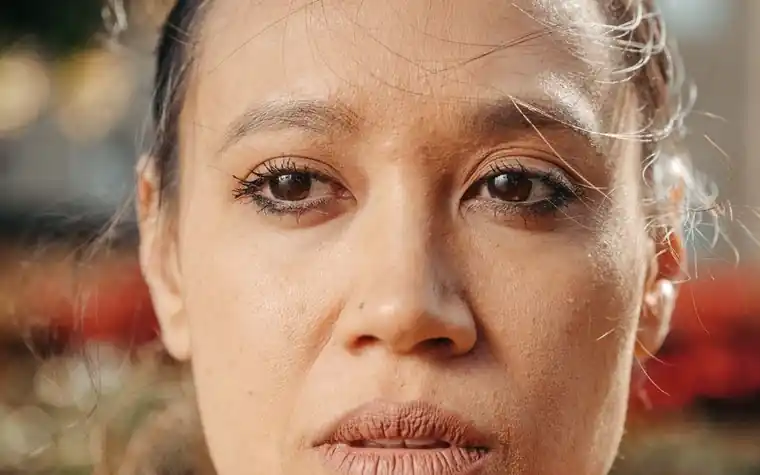
One is pigment, the other is a blood vessel
Post-inflammatory hyperpigmentation, or PIH, is melanin. Inflammation stimulates melanocytes, they produce more pigment than usual, and that pigment ends up deposited where the lesion was. The mark reads brown, tan, or grey-brown.
Post-inflammatory erythema, or PIE, is not pigment at all. It is the visible result of capillaries that were dilated or damaged during the inflammation and have not returned to baseline. The mark reads pink, red, or purplish. The term is comparatively recent in the dermatology literature — it was proposed by Bae-Harboe and Graber in the Journal of Clinical and Aesthetic Dermatology in 2013, precisely because the redness left after inflammatory acne was being lumped in with pigmentation and mistreated as a result.
So one is a pigment problem sitting in the epidermis or dermis, and the other is a vascular finding sitting underneath. They look superficially similar in a bathroom mirror because both are simply "a mark that will not go away."
The press test settles it
Press a fingertip firmly on the mark for a couple of seconds and watch what happens as you lift it, or press a clear glass slide against it and look through. This is diascopy, and it works on a simple principle: pressure pushes blood out of the vessels beneath.
- The mark blanches — briefly pales or disappears under pressure, then refills. That is PIE. You emptied the vessels that were producing the colour.
- The mark does not change — pressure makes no difference to it. That is PIH. Melanin is deposited in tissue and does not move when you compress it.
Colour alone is a reasonable first guess but is less reliable than it seems under bathroom lighting, particularly on deeper skin tones where PIE can read as dusky rather than pink. The blanch is the test that decides. We used the same principle for a different problem in the four types of dark circles, where whether the shadow is pigment, vessel or structure is likewise the whole question.
Skin tone shifts the odds
Which one you get is not random. PIH is markedly more common in deeper skin tones, where melanocytes respond more readily to inflammation — it is one of the most frequent reasons people with Fitzpatrick types IV to VI seek dermatological care at all. PIE is described more often in lighter skin tones, where vascular change is simply more visible against the background.
This is worth knowing before you buy anything, because most English-language skincare content about "acne scars" is written with one of these two audiences in mind and rarely says which.

Depth decides the timeline
PIH is not a single depth either, and this is the part that explains why two people with the same-looking mark have completely different experiences waiting it out. In epidermal PIH, melanin accumulates in the basal and suprabasal layers; the melanocytes are intact but overactive. In dermal PIH, which follows deeper or more prolonged inflammation, pigment granules drop into the dermis and are engulfed by macrophages, forming melanophages.
The reviews are consistent about what that means for time. Epidermal PIH generally lightens over roughly 6 to 12 months. Dermal PIH improves slowly and may never fully resolve. Under a Wood's lamp a dermatologist can distinguish them — epidermal pigment shows accentuated, well-defined borders, dermal pigment appears blue-grey and poorly circumscribed. You cannot make that call at home, which is a genuine reason to have persistent marks looked at rather than working through products for a year.
Why the standard advice backfires on PIE
Here is the practical consequence of the mix-up. Ingredients that address pigment — the ones with the most published work behind them for PIH — do nothing to a dilated capillary. They act on melanin synthesis or transfer, and there is no melanin involved in PIE.
Worse, several of them are irritants at the concentrations people reach for. Retinoids are the clearest case: they have real evidence in pigmentation, and they also cause the retinoid reaction — the flaking and flushing of the first weeks. On skin whose marks are already a redness problem, adding a source of irritation is working against the outcome you want. The regulatory ceilings on one of them are set out in the EU's 0.3% retinol cap. Aggressive acid exfoliation carries the same issue for the same reason.
So the first decision is not which product. It is which mark. If it blanches, a pigment-targeting routine is aimed at the wrong tissue.
What has evidence behind it for PIH
For pigment specifically, two things are worth separating. The first is the ingredient work: niacinamide has been studied for its effect on the transfer of melanosomes to keratinocytes, and L-ascorbic acid for its interference with melanin synthesis. Both are cosmetic-range ingredients with published measurements, and neither is dramatic on its own.
The second is less interesting and matters more: ultraviolet exposure darkens existing PIH. Pigment that is already there responds to UV like any other pigment, which means a mark can be actively worsened between applications while a serum works on it from the other direction. Daily broad-spectrum sunscreen is not an accessory step for PIH — it is the part of the routine doing the most reliable work, and the only one keeping the mark from resetting.
Where this stops being a skincare question
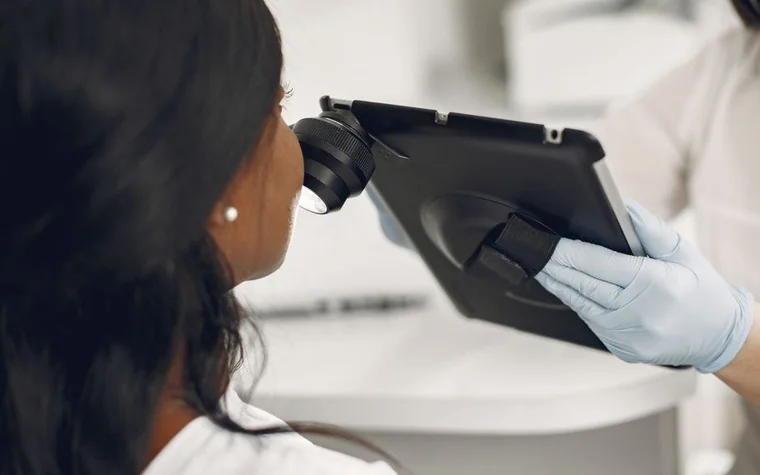
Two limits are worth stating plainly. First, if the marks keep arriving — if new ones appear as fast as old ones fade — then the marks are not the problem. Ongoing inflammatory acne is a medical condition, it is treated by a dermatologist, and no cosmetic routine addresses the thing generating the lesions. Buying more products for the aftermath while the cause continues is the single most common way people spend a year going nowhere.
Second, PIE and dermal PIH are the two that cosmetics reach least well. Both fall into the territory of in-clinic procedures — vascular lasers for the former, and a professional assessment for the latter — and those are conversations for a dermatologist, not a shelf. Neither is something to attempt at home.
The order, briefly
Press the mark and see whether it blanches. If it blanches, it is PIE, and pigment ingredients are the wrong target — protect the barrier, avoid stacking irritation, and take persistent redness to a clinician. If it does not blanch, it is PIH, and the routine is a pigment-targeting active plus genuinely daily sunscreen, with the understanding that epidermal marks measure their timeline in months and deeper ones may not clear. And if new lesions keep forming underneath either kind, that is the appointment to make first.
Patch-test any new product on a small area before applying it to the face, and introduce one active at a time. This article describes cosmetic ingredients and what has been measured about them; it is not medical advice and cosmetics do not treat, cure or prevent any condition. Persistent, painful or worsening skin concerns — including ongoing acne — should be assessed by a dermatologist. Sources: Bae-Harboe YC, Graber EM, J Clin Aesthet Dermatol 2013;6(9):46–47; dermatology reviews of post-inflammatory hyperpigmentation. Verified August 21, 2026.
All content is fact-checked under our editorial standards.