
Postpartum Skin, Explained: What the Hormonal Drop Actually Changes (and What Newer Studies Say It Doesn't)
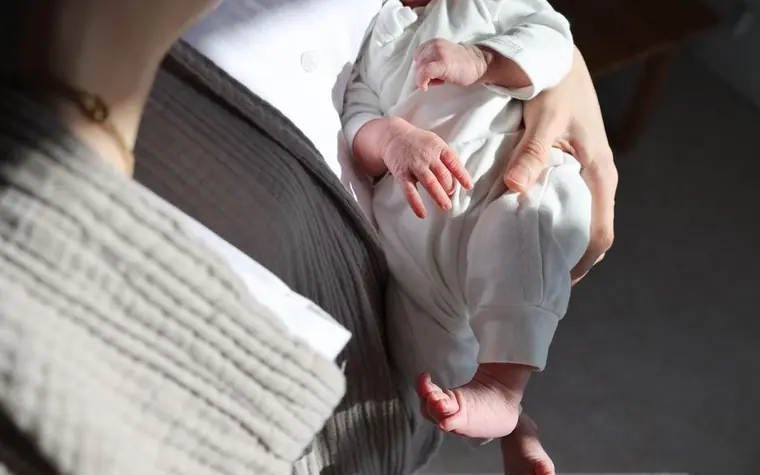
Estrogen and progesterone, both elevated throughout pregnancy, fall sharply within days of delivery -- one of the steepest hormone drops the body goes through at any life stage. Estrogen in particular is tied to several things your skin depends on: it supports sebaceous gland output, influences how much hyaluronic acid and collagen the skin produces, and helps regulate barrier lipids. When it drops that fast, the skin doesn't have a gradual adjustment period the way it does during, say, the slower, years-long estrogen decline of perimenopause. This is one of the few skin transitions that happens in days rather than years, which is part of why postpartum skin can feel unrecognizable compared to how it behaved during pregnancy itself.
What actually drops, and how fast
Why some people break out and others go dry
The drop isn't limited to estrogen and progesterone. Androgens -- testosterone and DHEA -- don't fall at the same rate, which creates a window of relative androgen dominance even though absolute androgen levels haven't risen. Androgens stimulate sebaceous glands, so this imbalance is the mechanism behind postpartum acne that tends to cluster along the jawline and chin -- the same distribution seen in other androgen-driven breakouts, not the T-zone pattern typical of adolescent acne. Meanwhile, the same estrogen drop that's feeding those breakouts in one person is reducing barrier lipids and hyaluronic acid production in another, which is why postpartum skin doesn't move in one direction. Both breakout-prone and dryness-prone postpartum skin trace back to the same hormonal event; they're just downstream of different receptor sensitivities.
What the older dermatology sources claim
Clinical commentary on postpartum skin has long described a fairly direct chain: estrogen falls, sebum and barrier lipids fall with it, transepidermal water loss (TEWL) rises, and the visible result is dryness, sensitivity, and a barrier that reacts to products it tolerated fine during pregnancy. That explanation is mechanistically reasonable -- estrogen receptors are present in sebaceous glands and keratinocytes -- but it's largely built from the general pharmacology of estrogen rather than postpartum-specific measurement. More recent cohort data adds some useful precision to that picture.
What a longitudinal measurement study actually found
A 2014 longitudinal study (Gallagher et al.) that tracked skin barrier function from pregnancy through the postnatal period measured a real rise in TEWL between visits, with readings climbing above the normal range by around two months postpartum -- direct instrumental support for the "barrier gets leakier" part of the standard explanation. A more recent prospective cohort study measuring skin structure and function in postpartum women found that TEWL, epidermal thickness, and skin roughness all increased over the study period -- but stratum corneum hydration, surface pH, skin stiffness, and elasticity were not significantly affected. That's a more specific picture than "postpartum skin gets dry": the barrier's water-loss function changes measurably, while some of the properties people associate with "dry skin" -- like hydration and elasticity -- didn't shift as much as the mechanism alone would predict.
Breastfeeding keeps the window open longer
For women who breastfeed, estrogen doesn't rebound on the same timeline it would otherwise. Prolactin, elevated during lactation, suppresses ovarian estrogen production, which means the low-estrogen state driving both the barrier changes and the androgen-dominance acne pattern can persist for the duration of breastfeeding rather than resolving within the first couple of postpartum months. This is the detail most generic postpartum skincare guidance skips: the timeline for when skin "goes back to normal" isn't fixed -- it tracks weaning, not a fixed number of weeks after delivery.
Melasma is a separate mechanism riding along
Pregnancy-related pigmentation -- melasma, linea nigra, areolar darkening -- is driven by a different pathway (estrogen and UV exposure acting on melanocytes) than the barrier and sebum changes described above, and it doesn't reliably fade just because estrogen has already dropped. Melasma's hormonal-UV trigger mechanism means existing patches can persist for months postpartum regardless of what's happening with barrier function, and sun exposure during the same window can reinforce them. Treating postpartum skin as a single event misses that the pigment and the barrier are running on separate clocks.
What this means for a routine, practically
Given a barrier that's losing more water without necessarily being under-hydrated at the surface, the more consistent approach across the postpartum literature is barrier support over aggressive treatment: a ceramide-containing moisturizer to address the TEWL increase directly, rather than assuming the skin needs more hydration input than it's actually short on. Ceramides specifically target the lipid matrix estrogen was helping maintain, which lines up with what the barrier-function studies are actually measuring. For the jawline breakouts, treatments that address androgen-driven sebum rather than dehydration-pattern acne are the more mechanistically matched choice, though picking specific actives during breastfeeding is a conversation for a dermatologist given what's safe to use while nursing.
Summary
- What drops: estrogen and progesterone fall within days of delivery; androgens don't fall proportionally, creating relative androgen dominance.
- Why reactions differ: the same hormonal event drives jawline breakouts in some people and barrier dryness in others, depending on receptor sensitivity.
- What's actually measured: TEWL, epidermal thickness, and roughness rise postpartum; hydration, pH, stiffness, and elasticity often don't change as much as the standard explanation predicts.
- Why timelines vary: breastfeeding suppresses estrogen rebound via prolactin, extending the postpartum skin window for as long as nursing continues.
- What doesn't fit the same clock: melasma runs on a separate hormonal-UV pathway and can outlast the barrier changes entirely.
Sources: Gallagher A, Hourihane JO'B, Kenny LC, Irvine AD, Khashan AS. "A longitudinal study of skin barrier function in pregnancy and the postnatal period," 2014. Prospective cohort study, "Relationships between Skin Structure and Skin Function of Pregnant Women and Their Infants" (PMC12240566). This article explains general postpartum skin physiology and is not a diagnosis. Patch-test any new skincare product on a small area before regular use, and consult a board-certified dermatologist before starting new topical treatments while pregnant or breastfeeding.
All content is fact-checked under our editorial standards.