
Keratosis Pilaris ('Chicken Skin'), Explained: What Causes the Bumps and Why Retinoids Aren't a Guaranteed Fix
Keratosis pilaris -- often shortened to "KP" or called "chicken skin" -- shows up as small, rough bumps, usually on the upper arms, thighs, or cheeks. It's extremely common: dermatology sources estimate it affects roughly 50 to 80 percent of teenagers and about 40 percent of adults at some point. Because it's this widespread and rarely causes any other health issue, many dermatologists describe it less as a condition to cure and more as a skin type some people are simply born with.
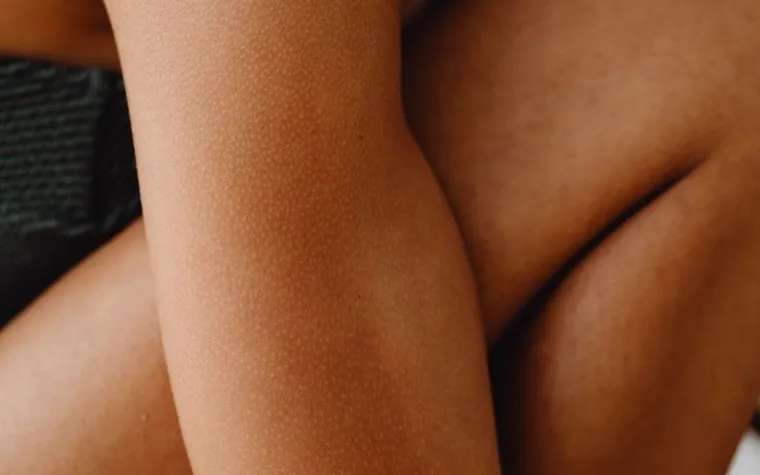
What keratosis pilaris actually is
The mechanism -- why keratin builds up in the follicle
The bumps form when keratin, the structural protein that normally sheds from the skin's surface, instead accumulates inside individual hair follicles. Instead of exfoliating away as it should, the keratin plugs the follicle opening, and that trapped plug is what you feel as a small, rough bump. This is a mechanical, structural issue rather than an infection or an allergic reaction, which is part of why standard acne treatments don't reliably clear it.
Who gets it, and why it's called a "skin type"
KP tends to run a predictable course: it often appears or worsens during the teenage years and gradually becomes less noticeable with age for many people, though not everyone sees it fade. It shows up across all skin tones and is not caused by poor hygiene -- a common misconception, since the bumps can look similar to clogged pores. The prevalence numbers above are a big part of why some dermatologists resist framing it as a "disorder" at all.
The genetic piece -- what the filaggrin link means
KP is thought to have a genetic component, with a pattern of inheritance suggesting it often runs in families. Research has found that mutations in the filaggrin gene -- a gene that encodes a protein critical to forming the skin's outer barrier -- show up in a meaningful subset of people with KP. Filaggrin mutations are also linked to conditions like eczema and general dry, barrier-compromised skin, which may explain why KP frequently overlaps with those tendencies in the same person or family.
Why it flares with hormones and in winter
Two triggers come up consistently in the research: hormones and humidity. KP often becomes more noticeable during puberty, when rising androgen levels increase sebum production and seem to affect how keratin builds up around the follicle. Separately, the bumps are typically more visible in winter months, when indoor heating and low humidity dry out the skin -- dry skin makes the rough texture of KP more apparent and can make it feel tighter or more irritated.
What ingredients are typically discussed -- and the exfoliation trap
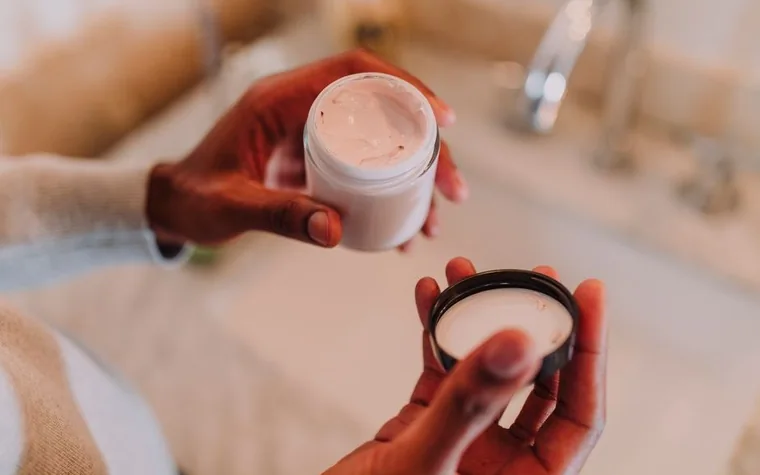
Because the core issue is a keratin plug, product discussions around KP usually center on gentle chemical exfoliation -- ingredients like lactic acid, glycolic acid, salicylic acid, or urea, which are formulated to help loosen the buildup at the follicle opening. The trap is over-exfoliating: physical scrubs or high-frequency use of strong acids can irritate the already-compromised skin barrier that many KP-prone people have, making redness and texture worse rather than better. Over-exfoliation is a real risk here, and pairing any exfoliating step with a barrier-supporting moisturizer matters more for KP-prone skin than for skin without a filaggrin-linked barrier issue.
What a dermatologist visit actually adds
Because KP looks similar to other bump-forming skin issues -- and because "chicken skin" is a description, not a diagnosis you can be fully certain of from a photo -- a dermatologist can confirm what you're actually looking at and rule out other causes if the bumps are unusually inflamed, painful, or spreading. They can also match a routine to your specific skin barrier status, which matters since barrier repair and KP management often overlap, especially when ceramide-support products are part of the plan.
Where this leaves you
Keratosis pilaris is a genuinely common, well-documented, and harmless buildup of keratin in the hair follicle, with a real genetic and hormonal basis behind it -- not a hygiene problem, and not something most people fully "cure." Gentle chemical exfoliation paired with barrier-supporting moisture is the ingredient category most consistently discussed, but there is no guaranteed fix, and aggressive scrubbing tends to backfire. Patch test any new exfoliating or keratolytic product on a small area first, and see a board-certified dermatologist for a proper diagnosis and personalized care plan rather than relying on any single ingredient to resolve it.
All content is fact-checked under our editorial standards.