
Not All Ceramides Are the Same: The Signs of Barrier Damage, and the Ratio That Matters
A toner that never used to sting, a moisturizer that sits on top instead of sinking in, a rough patch in the same spot every winter — usually blamed on "sensitive skin." Underneath is a thin lipid layer between skin cells that slows water loss. That layer isn't one ingredient, and that's what most labels skip.
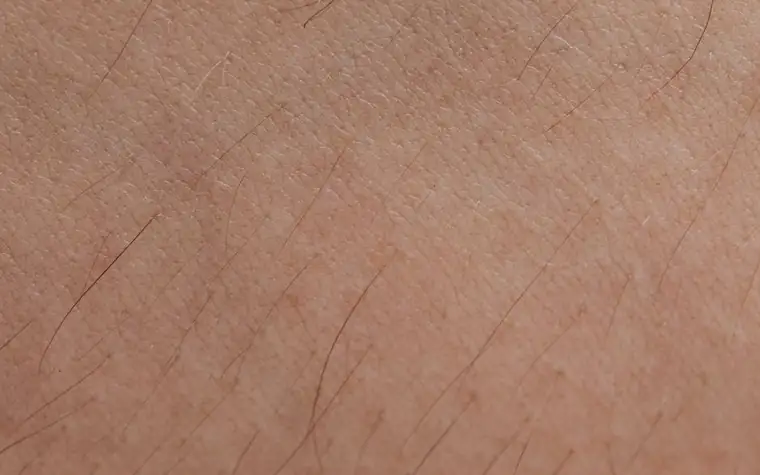
What barrier stress looks like
A product used for months suddenly stings. Tightness after cleansing lingers past a few minutes. Fine flaking shows up around the nose or mouth on skin that wasn't flaky before. None of that is a diagnosis — it's a signal water is leaving faster than it should.
TEWL: the number behind the signs
Dermatology calls this transepidermal water loss (TEWL) — the rate water evaporates through skin. Reference studies put normal TEWL at roughly 4 to 15 g/m²/h, lower meaning a more intact barrier. It rises within hours of lipid loss and stays elevated until skin's own structure is working again.
Ceramides are not one ingredient
Marketing shorthand treats "ceramides" as a single label item, but research has identified roughly a dozen distinct ceramide subclasses in human skin. They aren't interchangeable — studies find the ratio between subclasses tracks with how well skin holds water, not just total amount.
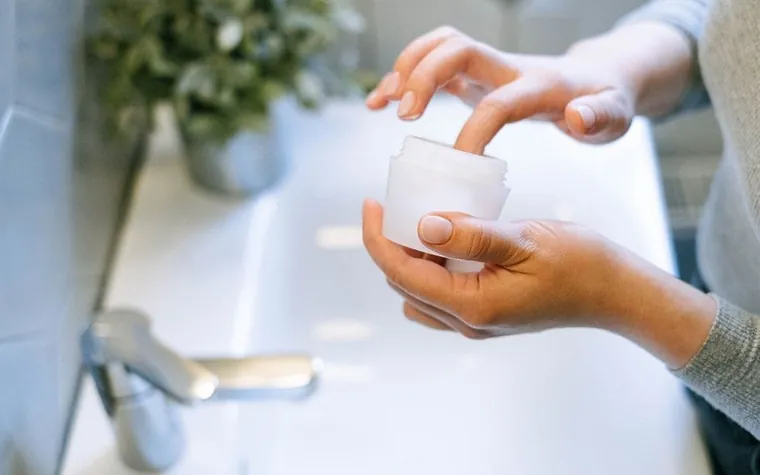
Why a single-ceramide label can leave gaps
A product built on one ceramide type, without cholesterol and free fatty acids in proportion, supplies a fraction of the structure. Formulators increasingly blend several ceramide subclasses with both — the ingredient list, not the word "ceramide," shows which.
The ratio shifts with season and age
Seasonal studies find ceramide and cholesterol content measurably lower in winter than summer, tracking with cold-season dry patches. Research on older skin reports reduced total lipid content plus a shift toward shorter-chain ceramides, linked to slower recovery after stress.
What cosmetically supports the barrier
Look for multiple ceramide types listed, plus cholesterol and a fatty acid — research links that mix to better water-loss performance than one lipid alone. Pair it with an occlusive, not just a humectant. Confirm it's barrier stress, not dehydration, and rule out over-exfoliation first. For the original ratio study, see the 1996 paper.
FAQ
Does a higher ceramide percentage mean a better product? Not reliably — the number of distinct types plus cholesterol and fatty acids matters more than one percentage.
Can a moisturizer restore lipids lost over winter or with age? It can supply similar lipid types and lower measured water loss, but isn't a substitute for skin's own production.
This explains cosmetic lipid science, not medical advice. Patch-test any new barrier-focused product before full-face use, and see a dermatologist for persistent redness, itching, or scaling.
All content is fact-checked under our editorial standards.