
Ginseng in K-Beauty, Explained: Why Most of the Skin Trials Were Swallowed, Not Applied
Ginseng appears on countless Korean ingredient lists as "Panax Ginseng Root Extract," yet most human trials behind it tested capsules, not creams. Here is what was measured, in what form.
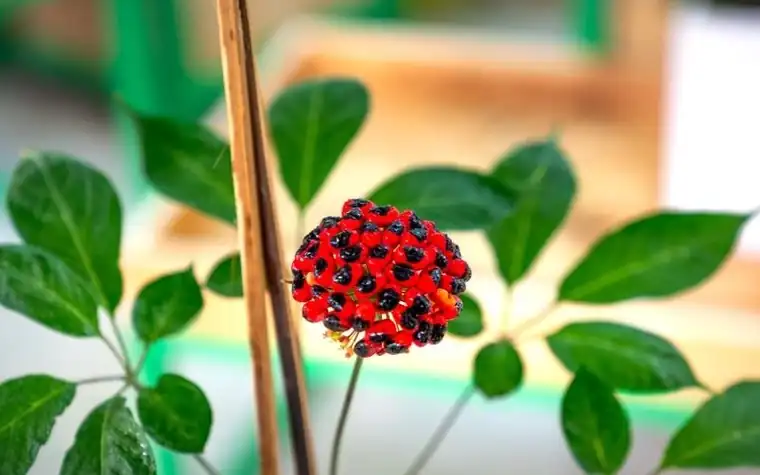
What "ginseng" means on a label
The compounds usually credited are saponins called ginsenosides. A 2024 chemistry review counted 271 of them across the plant and its steamed forms, including 103 in red ginseng and 65 in black ginseng. A 2024 review in the Journal of Ginseng Research says it remains unclear which component directly affects skin.
Part, process and solvent all change the extract
Red and black ginseng are steamed roots, and steaming alters which ginsenosides are present. Suppliers also use berries, leaves and extraction residue, and in one study cited by that review, water, butylene glycol and ethanol each pulled different components from the same residue.
The cream trial: 23 people
The topical study most cited is a 2015 randomized, placebo-controlled trial in Rejuvenation Research. An enzyme-modified ginseng cream was tested on 23 volunteers, and instrument readings of eye-area roughness favored it over placebo. The abstract gives no concentration, and the sample is small.
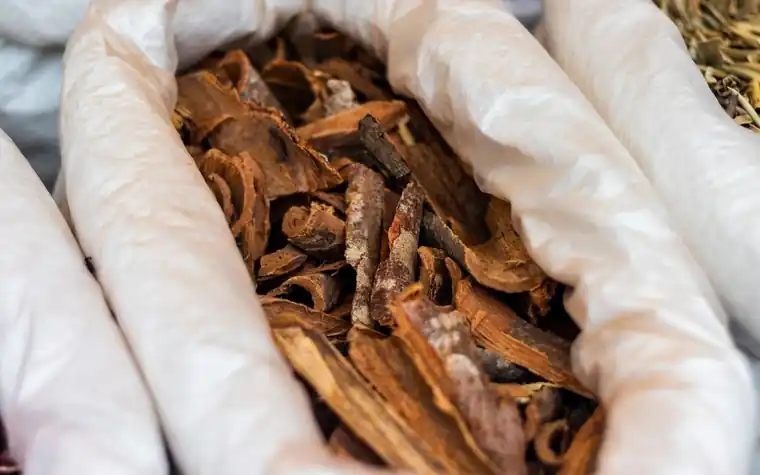
The larger trials were swallowed
A 2016 trial gave 78 people 750 mg capsules of enzyme-treated red ginseng, three a day, for 24 weeks. A 2009 trial gave 82 women over 40 a 3 g daily mixture of red ginseng and two other herbs. The first reported higher elasticity readings, while the second saw no change in elasticity or water content. Neither says what a cream would do.
Can a ginsenoside enter skin?
The "500 Dalton rule" (Bos and Meinardi, 2000) says compounds above roughly 500 Da seldom cross the stratum corneum. Ginsenoside Rb1 is about 1,109 Da, Rg3 about 785 and compound K about 623. It is a heuristic, and formulation matters: a 2014 patch study needed an enhancer to move Rb1 into pig skin, while a 2023 lab study saw compound K cross artificial skin. Same size logic as the topical collagen article.
Why the extracts are fermented or enzyme-treated
Hydrolysis trims sugars off large ginsenosides, leaving smaller molecules. The chemistry is covered in fermented ingredients in K-beauty. "Fermented ginseng" has no standard definition or percentage, a gap also seen with galactomyces ferment filtrate.
Reading a ginseng product, and a safety note
Check the plant part, the processing, and any published testing. I found no documented clash with niacinamide, retinoids or acids, though thin data is not proof of safety. Plant extracts are mixtures, so irritation or allergy remains possible. This article describes studies and promises no result. Patch test first with this method, and ask a dermatologist about any skin concern.
All content is fact-checked under our editorial standards.