
Exosome Skincare, Explained: What the FDA's Warning Letters Actually Say About an Ingredient With No Concentration Standard
Exosome serums are the fastest-growing claim on K-beauty shelves right now, usually marketed with words like "regenerative," "cellular signaling," or "tissue repair." Those words come from real biology, but the products carrying them sit in a regulatory gap that niacinamide or retinol never had to navigate. Here is what an exosome actually is, what the FDA has said about the category, and why you cannot compare an exosome serum's strength the way you compare a 5% niacinamide to a 10% one.
What an exosome actually is
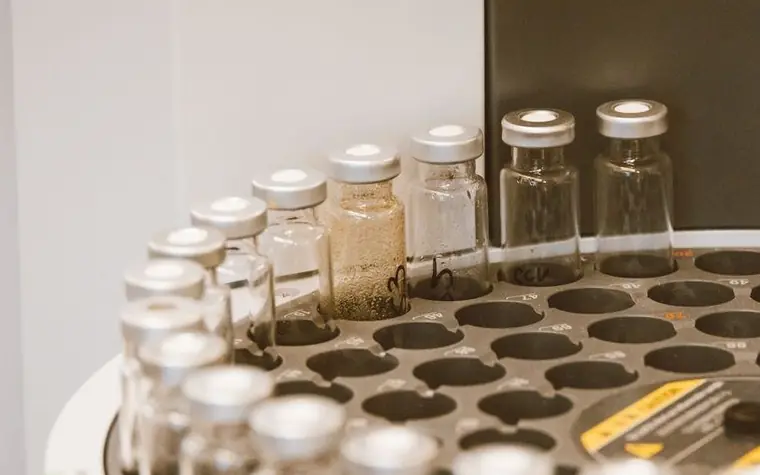
Exosomes are tiny lipid-bound vesicles, roughly 30-150 nanometers across, that cells release to communicate with one another. Inside the shell is "cargo" -- proteins, lipids, and RNA fragments -- that can influence gene expression in a recipient cell. It's a genuinely interesting mechanism to wound-healing researchers, but it has almost nothing in common, regulatory-wise, with how an ingredient like niacinamide, or a signaling ingredient such as copper peptides, built the dose-response evidence behind its own claims.
Two sourcing types, and they are not interchangeable
Skincare exosomes generally come from plant cells (rice, ginseng, rose) or human/animal stem-cell cultures (adipose, umbilical, or amniotic-derived lines). Plant-derived exosomes avoid the pathogen and gene-transfer concerns of animal or human cell lines, which is why most legally sold cosmetic serums use them. The trade-off is reproducibility: getting the same exosome profile out of a plant-cell culture batch after batch is a harder manufacturing problem than growing a standardized stem-cell line, and that inconsistency rarely makes it onto the label.
What the FDA has actually approved for skin: nothing
No exosome-based product has FDA approval for dermatologic use, injected or topical. Cosmetics sold in the US don't require FDA pre-approval to reach shelves, which is what lets exosome serums sit next to your vitamin C without triggering the drug-approval process -- as long as the marketing stays in cosmetic territory (appearance) rather than drug territory (treating or healing tissue). That line is exactly where the FDA's enforcement has landed.
The warning letters: what actually triggered them
As of October 2023 the FDA had issued six public safety notifications and warning letters tied to exosome products, following reports of infections, allergic reactions, and tumor formation. A 2023 warning letter to Kimera Labs documented that its products, marketed even under a cosmetic label, made tissue-healing and disease-treatment claims -- and the agency was explicit that healing claims push a product into unapproved-biologic territory regardless of packaging. Most flagged adverse events trace back to clinic-injected exosome treatments rather than over-the-counter serums, but the lesson applies to both: a brand's willingness to make regenerative claims predicts regulatory risk better than its ingredient list does. The same "injectable evidence doesn't automatically transfer to a topical" gap shows up with PDRN (salmon DNA) serums, which borrow a reputation their topical version was never tested to earn.

Why there's no concentration you can compare across brands
A niacinamide serum tells you 5% or 10% because decades of dose-response trials established what those numbers mean. Exosome serums don't have that literature. Cosmetic patents describe concentrations anywhere from 1 to 150 micrograms of exosomes per milliliter, but that range comes from manufacturing filings, not a clinical trial comparing outcomes at each dose on skin. Some brands report particle counts, some report micrograms, and some -- often the most expensive ones -- disclose nothing at all. Without a shared unit or a dose-response study behind it, "high-potency exosome serum" is a marketing phrase, not a spec you can verify against a competitor's bottle.
Where it shows up, and what not to pair it with
Exosome serums increasingly appear right after in-office microneedling or derma-rolling, when the skin barrier is deliberately broken so ingredients penetrate deeper. That's precisely the context behind the FDA's infection reports: an unregulated biologic applied to compromised skin carries real contamination risk if the product wasn't manufactured under sterile, controlled conditions. There's also no published data on combining exosome serums with retinoids or exfoliating acids, so layering one into an already-active routine is a guess, not a tested combination -- which is exactly the situation a basic patch test is meant to catch before it becomes a bigger reaction.
How to read an exosome serum label
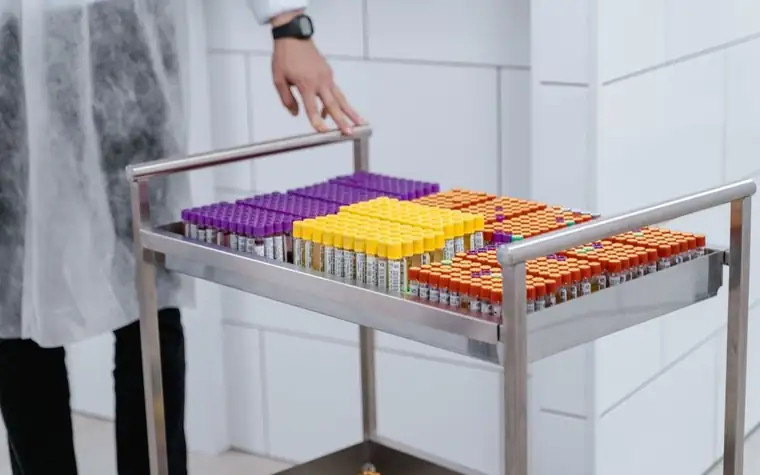
Look for a disclosed botanical or cell-line source and a stated concentration or particle count -- their presence at least means a brand is willing to be checked. Treat "healing," "regenerating," or "repairing" tissue as a warning sign rather than a selling point; that's the exact vocabulary the FDA cited in its enforcement letters, and cosmetic marketing legally isn't supposed to make those claims regardless of what's in the bottle. A serum framed around hydration, barrier support, or antioxidant activity is making a claim a cosmetic is allowed to make. One framed around cellular repair is borrowing language from a category it was never evaluated in.
Quick summary
- Exosomes are lipid-bound cell-signaling vesicles; skincare versions are sourced from plants or stem-cell cultures, and the two aren't interchangeable.
- No exosome product -- injected or topical -- has FDA approval for dermatologic use; cosmetics don't require pre-approval, which is why serums exist at all.
- Six FDA safety notifications as of October 2023 cite infections, allergic reactions, and tumor reports, mostly from clinic-injected products, and target healing/disease claims specifically.
- There's no standardized concentration unit across brands -- micrograms per mL, particle counts, or nothing at all -- and no published dose-response trial behind any of them.
- Avoid layering with retinoids or acids without a patch test, and treat "tissue-repair" marketing language as a red flag, not a benefit.
Sources: FDA public safety notifications and warning letters on exosome products (2023-2025, including the Kimera Labs warning letter); published dermatology and regulatory-law literature on exosome sourcing, cosmetic patent concentration ranges, and cGMP enforcement. This article explains the current science and regulatory status of an ingredient trend and is not a product recommendation. Patch-test any new serum before regular use, and consult a board-certified dermatologist before combining it with prescription actives or post-procedure skincare.
All content is fact-checked under our editorial standards.