
Collagen Supplements and Skin, Explained: What a 2025 Meta-Analysis Found When It Split 23 Trials by Who Paid for Them
Collagen drinks and powders sit next to skincare on Korean pharmacy shelves, pitched as skincare you swallow. The pitch has real biology behind it -- and a 2025 meta-analysis found what the marketing skips.

The Marketing Case for Drinking Your Skincare
Intact collagen protein is too large to cross the skin barrier, which is why a topical collagen cream mostly acts as a surface humectant. Oral collagen skips that barrier by putting peptides into the bloodstream instead.
How a Peptide Is Supposed to Survive Digestion
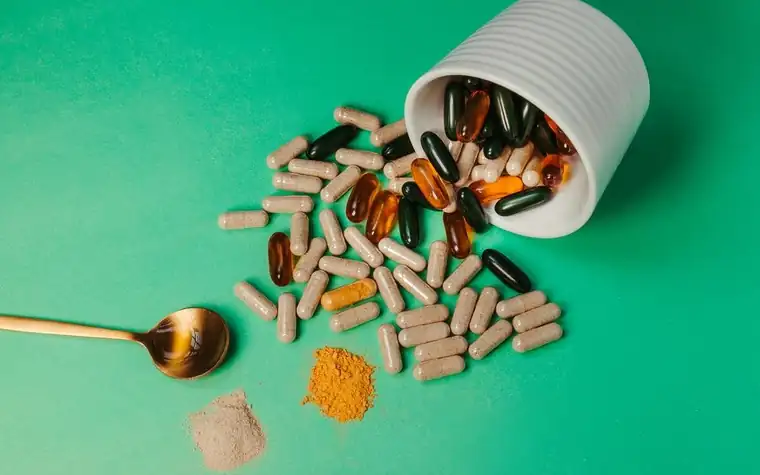
Hydrolyzed collagen is pre-broken into short peptides before bottling, so digestion doesn't undo it. A 2005 study gave volunteers 9.4-23 g of gelatin hydrolysate and found intact collagen dipeptides in their blood afterward -- Pro-Hyp made up roughly half of what circulated.
Early Trials Reported Real Gains
The most-cited proof point: a 2014 double-blind trial gave 69 women aged 35-55 either 2.5 g or 5 g of collagen hydrolysate, or a placebo, daily for eight weeks. The supplement groups showed measurable elasticity gains, anchoring years of "clinically proven" marketing.
A 2025 Meta-Analysis Pooled 23 Trials
Published in The American Journal of Medicine in August 2025, a meta-analysis by Myung and Park pooled 23 randomized trials covering 1,474 participants. At face value the result still looked positive: hydration, elasticity, and wrinkles all improved. Then the authors split the data two more ways.
Split by Funding, the Effect Disappeared
Grouped by funding source, trials with no pharmaceutical or supplement-company backing showed no significant benefit at all. Only industry-funded trials produced the improvements driving the original pooled result.
Split by Quality, the Same Pattern Reappeared
A second split, by methodological quality, told the same story: the highest-quality trials found no significant effect anywhere; only lower-quality trials showed a benefit, and only for elasticity. The authors' conclusion: no clinical evidence currently supports collagen for skin aging.
Bottom Line: Does Drinking Collagen Do Anything for Your Skin?
The biology isn't fabricated -- Pro-Hyp turns up in blood after you swallow hydrolyzed collagen. Whether that shows up as skin you can see depends on who ran the study. If collagen decline is behind a change you're noticing -- common after menopause -- this split argues for treating a supplement as optional, not foundational. The same corneometer that separates oily from dehydrated skin measured these trials, and an instrument reading isn't skin you can tell apart by eye.
Sources: Myung and Park, Am J Med (2025); Proksch et al., Skin Pharmacol Physiol (2014); Iwai et al., J Agric Food Chem (2005). General information, not medical advice. Patch-test any new topical product, and see a dermatologist about a persistent skin change.
All content is fact-checked under our editorial standards.